


Last updated: October 26, 2026
Quick Answer
Bringing houseplants in for winter should start when nighttime temperatures drop into the 50s Fahrenheit, usually weeks before the first frost. Inspect every plant for pests, acclimate it gradually to lower light, and quarantine it away from your other houseplants for two to three weeks. Rushing this process is the main reason plants drop leaves or bring bugs into your home.
Key Takeaways
- Start bringing houseplants in for winter once nights consistently fall below 55°F, not after the first frost warning.
- Tropical plants like pothos and ficus need to come in earlier than hardy succulents.
- Inspect leaves, soil, and pots for pests before the plant ever touches your doorway.
- Quarantine new indoor arrivals for two to three weeks away from existing houseplants.
- Expect some leaf drop and yellowing during the first few weeks. It’s normal shock, not failure.
- Water less often indoors since light and humidity both drop.
- A humidifier helps most tropical plants recover faster from the move indoors.
- Prune damaged growth and clean pots before plants cross the threshold.
When should I bring houseplants inside for winter?
Bring houseplants inside once nighttime lows hit the mid-50s Fahrenheit, which is usually several weeks before your first expected frost. Waiting until frost warnings pop up often means moving plants too fast, which causes more shock.
Most tropical houseplants, like pothos, philodendron, and ficus, start suffering real damage below 50°F. Succulents and cacti tolerate a bit more cold but still prefer to come in before nights dip into the 40s.
I learned this the hard way with a rubber plant I left out “just one more week.” A surprise cold snap turned half its leaves black overnight. Now I start the process as soon as the weather app shows a string of 55°F nights coming.
Decision rule: if your region typically sees first frost in early October, start your move-in process by mid-September.
Which plants actually need to come indoors during winter?
Tropical and subtropical plants need to come indoors, while cold-hardy perennials and most woody shrubs can stay outside. The line usually comes down to where the plant is native to and how it’s labeled at the nursery.
Plants that almost always need to come in:
- Tropical foliage: pothos, philodendron, monstera, ficus
- Tender succulents: most aloe varieties, jade plants not rated for frost
- Citrus trees in containers
- Tropical flowering plants like hibiscus and mandevilla
Plants that usually handle winter outdoors in most US zones:
- Hardy perennials in the ground
- Cold-rated shrubs and small trees
- Hardy succulents labeled for your USDA zone
If you’re building out your indoor collection for the first time, this guide to houseplants for beginners who always kill their plants is a good place to start before winter hits.
How do I prepare plants before bringing them inside?
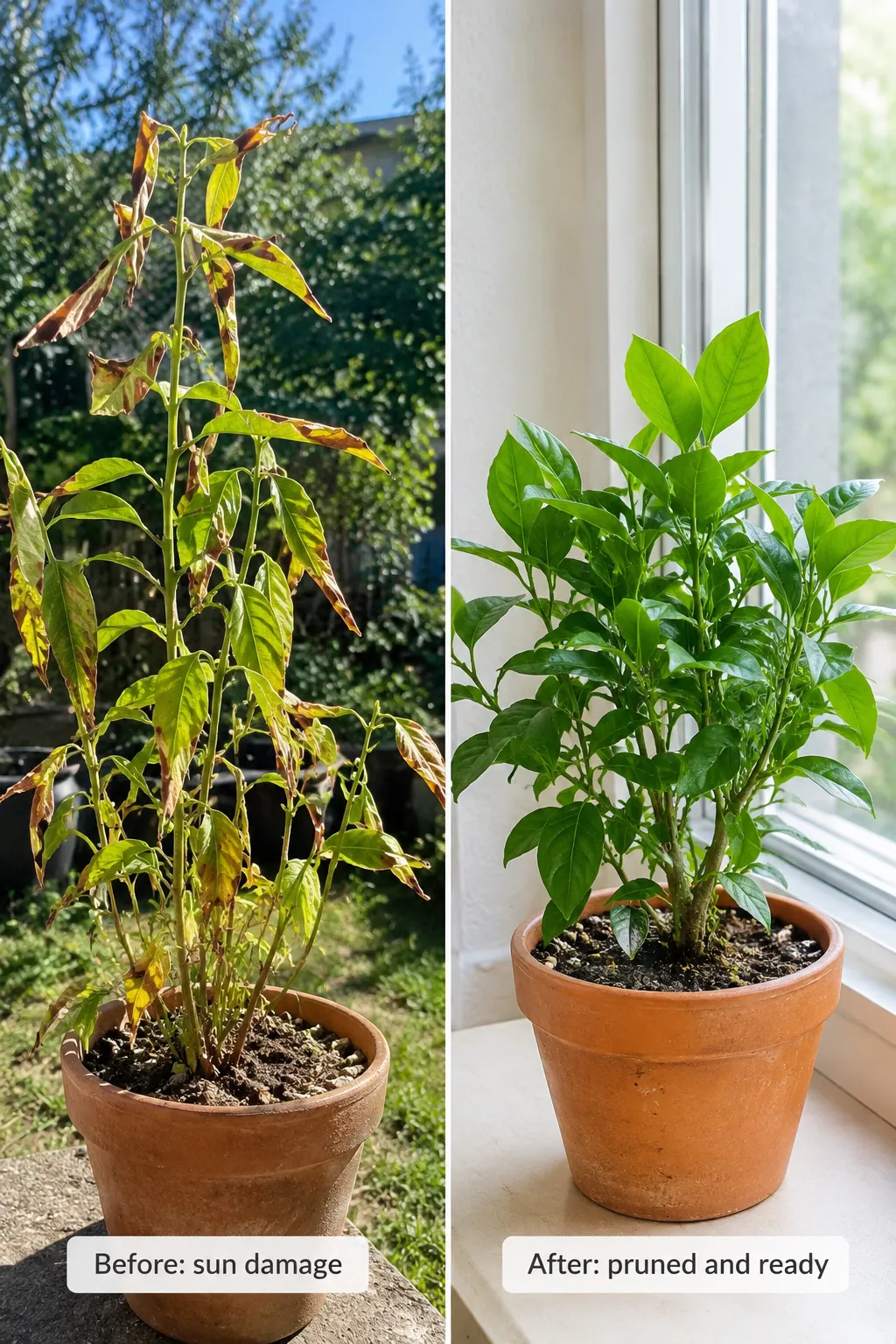
Preparing plants means acclimating them to lower light, pruning damaged growth, and cleaning the pot and soil surface. Skipping prep is one of the biggest reasons plants struggle once indoors, according to The Spruce’s houseplant winter prep guide.
Step-by-step prep checklist:
- Move plants to a shadier spot outdoors for one to two weeks before the final move.
- Trim dead, yellow, or pest-damaged leaves.
- Remove any weeds growing in the pot.
- Wipe down leaves with a damp cloth to remove dust and bugs.
- Rinse the pot exterior if it’s been sitting in dirt or mulch.
Common mistake: moving a plant straight from full outdoor sun into a dim indoor corner. That abrupt light change on top of a location change doubles the shock.
What’s the best way to check for pests before moving plants indoors?
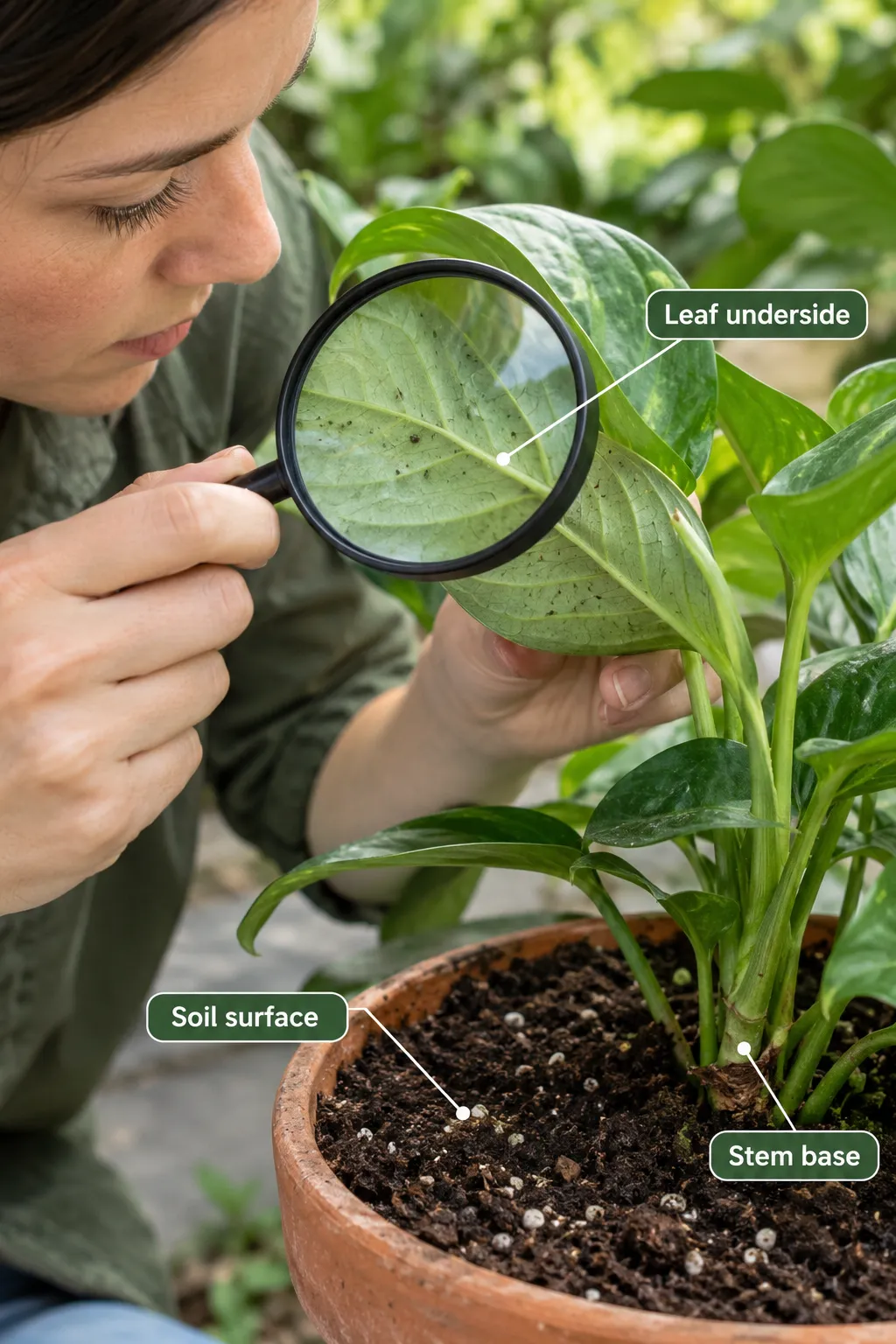
Check the undersides of leaves, the stem base, and the top inch of soil for insects, eggs, and webbing before any plant comes inside. This single step prevents most of the indoor pest outbreaks that happen every fall.

Here’s what to look for:
- Small webs near leaf joints (spider mites)
- Sticky residue on leaves (aphids or scale)
- Tiny white cottony clusters (mealybugs)
- Gnats flying up when you disturb the soil (fungus gnats)
A simple trick: dunk the pot in a bucket of lukewarm water for 15 minutes. This forces soil-dwelling bugs to the surface, as Southern Living’s bug-free plant guide recommends.
Edge case: if you spot heavy infestation, treat the plant outside first and isolate it rather than bringing it straight in.
Can I leave plants outside all winter or do they have to come in?
Hardy, cold-tolerant plants can stay outside all winter, but tropical and tender plants will die if left out once temperatures drop below their tolerance range. The deciding factor is the plant’s native climate, not how big or established it looks.
Check the plant tag or do a quick search for its USDA hardiness zone. If your winter lows fall below that zone’s rating, the plant needs to come in or it won’t survive, according to University of Minnesota Extension.
Choose to leave it outside if: the plant is rated hardy for your zone and shows no cold damage on mild nights already.
Why do plants get shocked when brought inside from outside?
Plants get shocked because indoor conditions, lower light, drier air, and stiller atmosphere, are drastically different from what they had outside. This sudden shift stresses the plant’s systems and often shows up as yellowing or leaf drop.
Outdoor plants are used to:
- Bright, shifting natural light all day
- Higher humidity from rain and morning dew
- Air movement from wind
- Natural temperature swings between day and night
Indoors, all of that changes at once. The plant has to adjust its internal processes to a dimmer, drier, more stable environment, which Country Living’s indoor plant guide notes is completely normal and temporary.
What should I do to my home before bringing plants in?
Prepare your home by choosing bright window spots, checking for drafts, and setting up quarantine space away from existing houseplants. A little setup now saves a lot of cleanup later.
Home prep checklist:
- Pick south or east facing windows for the brightest spots
- Seal obvious drafts near doors and windows where plants will sit
- Set aside a separate room or far corner for quarantine
- Have saucers or trays ready to catch water and soil debris
If you’re short on floor space, these tall planter ideas for empty corners can help you fit more plants into tight indoor spots.
How often should I water plants after moving them indoors?
Water less often indoors than you did outside, since lower light and cooler indoor temperatures slow down how fast soil dries out. Overwatering after the move is one of the fastest ways to kill a recently relocated plant.
A simple approach:
- Check soil moisture with a finger 2 inches deep before watering
- Water only when that top layer feels dry
- Expect to water roughly half as often as you did outdoors
Common mistake: sticking to the same outdoor watering schedule indoors. The plant’s water needs drop fast once it’s out of direct sun and wind.
Do tropical plants need different treatment than other houseplants when coming inside?
Yes, tropical plants generally need warmer spots, higher humidity, and more careful light transition than hardy succulents or cacti. Their natural habitat is warm and humid year-round, so the contrast with a dry heated home is bigger.
Treatment differences:
| Plant type | Light needs indoors | Humidity needs | Cold tolerance |
|---|---|---|---|
| Tropical foliage (pothos, monstera) | Bright, indirect | High | Low, bring in early |
| Succulents and cacti | Bright, direct ok | Low | Moderate, can wait longer |
| Citrus trees | Very bright | Medium | Low, protect from any frost |
Example: a ficus benjamina dropping leaves after moving indoors is almost always humidity and light shock, not disease.
What are the most common mistakes people make bringing plants inside?
The most common mistakes are waiting too long, skipping pest checks, and overwatering right after the move. Each of these alone can set a plant back weeks.

Top mistakes to avoid:
- Waiting until after frost to start the process
- Not inspecting soil and leaf undersides for pests
- Placing plants in a dark corner right away
- Keeping the same watering schedule as outdoor months
- Skipping quarantine and mixing new plants with existing ones immediately
If pests do slip through, Southern Living’s bug prevention tips cover treatment options that won’t harm the plant.
How long does it take for plants to adjust to indoor conditions?
Most houseplants take two to four weeks to adjust to indoor conditions after being brought in from outside. Some leaf drop and slower growth during this window is normal and not a sign of a dying plant.
What to expect during adjustment:
- Week 1: possible wilting or drooping
- Week 2: yellowing or dropping of a few older leaves
- Week 3-4: new growth starts to appear, signaling recovery
Edge case: if a plant shows no new growth after six weeks and keeps dropping leaves, check roots for rot before assuming it’s just adjustment.
What temperature should my house be for plants coming in from outside?
Keep your home between 65°F and 75°F during the day for most houseplants adjusting from outdoor conditions. Avoid letting indoor temperatures drop below 60°F at night, especially for tropical varieties.
Watch out for these temperature traps:
- Cold drafts near doors and single-pane windows
- Heat vents blowing directly on leaves
- Unheated sunrooms that swing cold overnight
The Chicago Botanic Garden’s indoor plant guide recommends keeping plants at least a foot away from both heating vents and cold window glass.
Can pests survive on outdoor plants brought indoors?
Yes, pests like spider mites, aphids, and mealybugs easily survive the trip indoors and can spread to your entire houseplant collection if not caught early. This is why inspection and quarantine matter more than almost any other step.
Signs pests have made it indoors:
- New sticky spots on nearby plants within a week or two
- Tiny flying gnats around multiple pots
- Webbing appearing on plants that were previously clean
Decision rule: if you spot any pest sign during quarantine, isolate that plant immediately and treat it before it touches your main plant shelf.
Do I need a humidifier for plants after bringing them inside?
A humidifier helps most tropical houseplants recover faster from winter heating, which can drop indoor humidity to levels far lower than what these plants are used to outdoors. It’s not strictly required, but it makes a noticeable difference for humidity-loving plants.
Good alternatives if you don’t want a humidifier:
- Group plants together to raise local humidity
- Use a pebble tray with water under pots
- Mist leaves a few times a week, avoiding fuzzy-leaved varieties
For plants that struggle with dim winter rooms, browsing low light houseplants that survive neglect can help you pick better matches for darker indoor spots.
Frequently Asked Questions
Do all houseplants need to come inside for winter?
No. Hardy plants rated for your USDA zone can stay outside. Tropical and tender plants need to come in before frost.
What’s the ideal temperature to start bringing plants in?
Start when nighttime lows consistently fall into the mid-50s Fahrenheit, well before frost arrives.
How long should I quarantine plants indoors?
Two to three weeks away from existing houseplants is enough time for most pests or eggs to show themselves.
Why are my plant’s leaves turning yellow after I brought it inside?
This is usually transplant shock from lower light and humidity, and it typically resolves within a few weeks.
Should I repot plants before bringing them indoors?
Only if the pot is cracked, badly rootbound, or diseased. Otherwise, wait until spring to avoid adding more stress.
Can I use pesticide on plants before bringing them inside?
Yes, a preventive insecticidal soap or neem oil treatment a week or two before the move can reduce pest risk, as noted by AAA’s fall plant prep guide.
Do succulents need the same treatment as tropical plants?
No, succulents tolerate cooler temperatures longer and need less humidity once indoors, but still benefit from a pest check.
What if I forgot and frost already hit my plants?
Bring them in immediately, trim off any blackened or mushy growth, and watch closely over the next few weeks for further damage.
Conclusion
Bringing houseplants in for winter is really about timing and patience. Start early, check carefully for pests, and give your plants a few weeks to settle into their new indoor spot.
Don’t panic over a little leaf drop in the first month. That’s the plant adjusting, not dying.
Next steps: walk your plant collection this week, note which ones are tropical, and pencil in a move-in date based on your local frost forecast. For more indoor plant care ideas once everyone’s settled in, check out Gardenner’s houseplants and indoor growing hub.



10 Comments on “Bringing Houseplants in for Winter: A Step-by-Step Checklist”