
Last updated: October 23, 2026
Quick Answer
If you have killed every plant you’ve ever owned, start with snake plant, pothos, or ZZ plant. These houseplants survive low light, inconsistent watering, and general neglect better than almost anything sold at a garden center. Pick one plant, learn its routine, and skip anything labeled “high care” until you get a win under your belt.
Key Takeaways
- The most forgiving houseplants for beginners are pothos, snake plant, ZZ plant, cast iron plant, and spider plant, according to Iowa State’s Yard and Garden extension.
- Most beginner plant deaths come from overwatering, not neglect.
- Low light does not mean no light. Even “low-light” plants need some indirect light to survive.
- Drainage holes matter more than the type of pot or soil you buy.
- Succulents can absolutely be overwatered and killed, even though people assume they’re tough.
- A plant that looks dead may just be dormant. Check the roots and stems before tossing it.
- ZZ plant and snake plant can go 2 to 3 weeks between waterings in most homes.
- Buying one plant at a time beats buying five and losing track of all of them.
Every plant killer has a story. Mine involves a peace lily, a west-facing window, and a watering can I used every single day because I thought more water meant more love. The plant died in six weeks. I now know that was the single worst habit I could have had, and it’s the same habit tanking most “brown thumb” collections across the country.
This guide is for the person who has a graveyard of dead pothos cuttings on a windowsill, who has bought three succulents and lost all three, and who is one dead fern away from swearing off plants forever. Houseplants for beginners don’t have to be fragile or fussy. The right picks tolerate mistakes, forgetfulness, and bad light, and they’re the same plants that keep showing up on 2026 roundups from The Spruce and Martha Stewart for exactly this reason.
What are the best houseplants for people who always kill plants
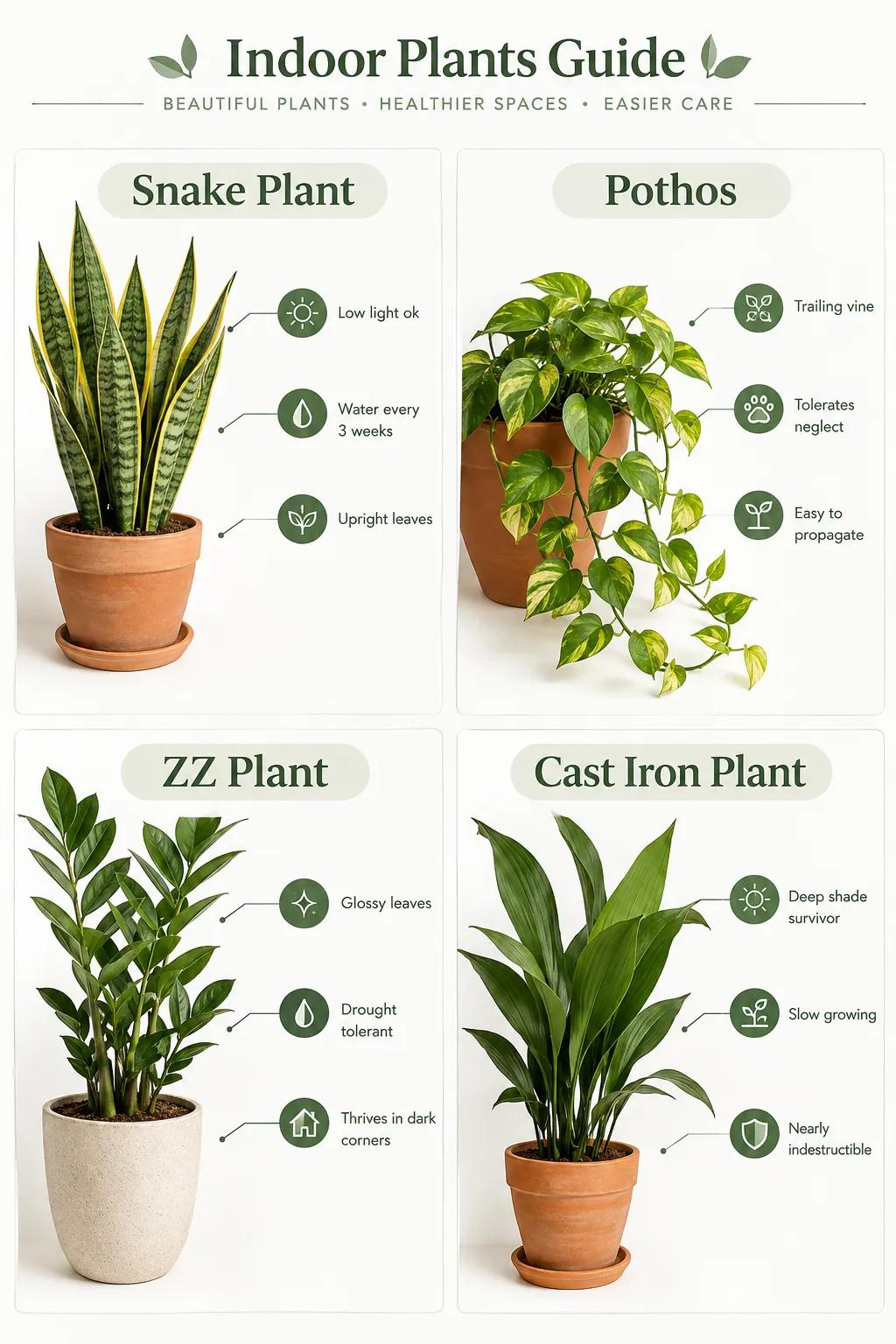
The best houseplants for people who always kill plants are snake plant, pothos, ZZ plant, cast iron plant, and spider plant. These five show up again and again in 2026 expert lists because they tolerate low light, irregular watering, and dry indoor air.
Here’s why each one works for someone with a bad track record:
- Snake plant: a succulent-leaved plant that prefers to dry out completely between waterings. Martha Stewart calls it “the easiest houseplant to grow for non-plant people.”
- Pothos: a trailing vine that tolerates a wide range of light and bounces back after missed waterings, which is part of why Realtor.com homeowner trend data flags it as one of the most popular easy plants added to homes in 2026.
- ZZ plant: described by 1-800-Flowers as a “workhorse” that excels when ignored, even in dark corners.
- Cast iron plant: slow but nearly indestructible, and one of the few true low-light plants according to PlantGrail’s 2026 rankings.
- Spider plant: fast-growing, forgiving, and non-toxic to pets, making it a safe pick for households with cats or dogs.
Choose snake plant or ZZ plant if your main problem is forgetting to water. Choose pothos or spider plant if you want to actually see growth fast, since visible progress keeps beginners motivated.
Why do my houseplants keep dying no matter what i do
Houseplants usually die from overwatering, wrong light, or a mismatch between the plant and your home, not from bad luck. Most people kill plants by loving them too much with the watering can.
The Plant Manual’s 2026 guide puts it plainly: the best plant “depends less on a generic easy label and more on your home” and your habits, as noted in their beginner houseplant breakdown. If your plant keeps dying, check these in order:
- Is the soil soggy or smelly? That’s overwatering.
- Is the room genuinely dark all day? That’s a light mismatch.
- Does the pot have a drainage hole? If not, that’s likely your issue.
- Did you buy a flowering plant for a shady spot? Most blooming plants need bright light to survive long term.
A common mistake: assuming every struggling plant needs more water. In reality, yellow, mushy leaves usually mean too much water, while crispy, dry leaves mean too little.
How often should i actually water indoor plants, and do i water from the top or bottom
Most indoor plants should be watered only when the top 1 to 2 inches of soil feel dry, which for tough beginner plants like snake plant and ZZ plant often means once every 2 to 3 weeks. Watering from the top is fine for most houseplants, but bottom watering works better for plants prone to root rot, like peace lily or African violet.
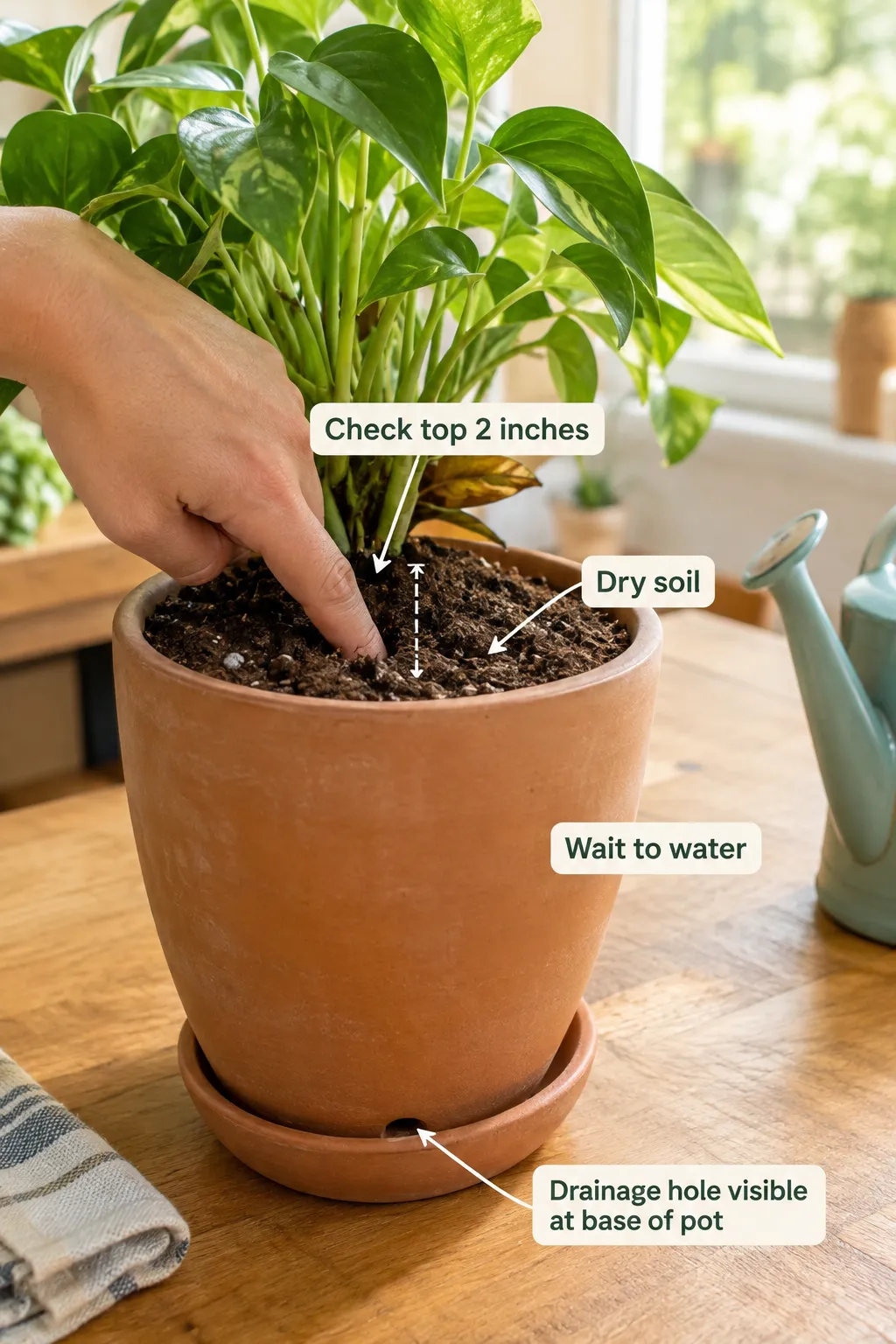
NBC’s indoor plant guide recommends checking soil dryness before every single watering rather than following a fixed calendar. Top watering lets excess drain out the bottom, flushing salt buildup. Bottom watering means setting the pot in a shallow tray of water for 10 to 15 minutes so roots soak up moisture through the drainage hole.
Choose top watering for everyday care. Choose bottom watering if your plant has thin, delicate leaves that mold or spot when wet, like peperomia or certain philodendron varieties.
What’s the easiest houseplant to keep alive and what mistakes do beginners make
The ZZ plant and snake plant are widely considered the easiest houseplants to keep alive because they tolerate drought, low light, and long stretches of neglect. The most common beginner mistakes are overwatering, ignoring drainage, and placing high-light plants in dark rooms.
Real talk: beginners tend to repeat the same handful of errors.
- Watering on a schedule instead of checking the soil first
- Choosing a pot with no drainage hole because it “looked nice”
- Putting a high-light plant like a money tree in a dim hallway
- Panicking and repotting a stressed plant immediately, which often makes things worse
- Buying five plants at once instead of mastering one
GrowYourPlant’s 2026 beginner guide specifically tells new owners to start with one plant and learn its routine before adding more. That single habit shift fixes more plant deaths than any product you could buy.
Can you overwater a succulent and kill it, and what about low light and neglect
Yes, succulents can absolutely be overwatered and killed, despite their reputation as tough plants. Succulents store water in thick leaves and roots, so constant moisture causes rot even faster than it would in a typical foliage plant.
Snake plants, which are technically succulents, prefer to dry out completely between waterings, as NBC’s roundup notes. If you’re prone to overwatering, succulents are actually a trap, not a safe bet.
For low light and genuine neglect, cast iron plant and Chinese evergreen are the top performers. BHG Australia’s indoor plant guide lists both as able to cope with poor light that would kill most other species. Pothos and ZZ plant also tolerate low light decently, though they grow slower in dim corners.
Do i need grow lights indoors, and how do i know what light my apartment has
You don’t need grow lights for most beginner houseplants, but a grow light helps if your apartment has no natural bright spots at all. To figure out your light, stand where the plant will live and watch the shadow your hand casts.
A sharp, defined shadow means bright light. A soft, fuzzy shadow means medium light. No visible shadow at all means low light, and you should stick to cast iron plant, snake plant, or ZZ plant. South and southwest-facing windows usually give the most light throughout the day, while north-facing rooms stay dim year-round.
Proven Winners’ LeafJoy houseplants guide recommends keeping most tropical foliage in the 60-85°F range and matching light level to species rather than guessing, a point echoed across their 2026 easy indoor plants list.
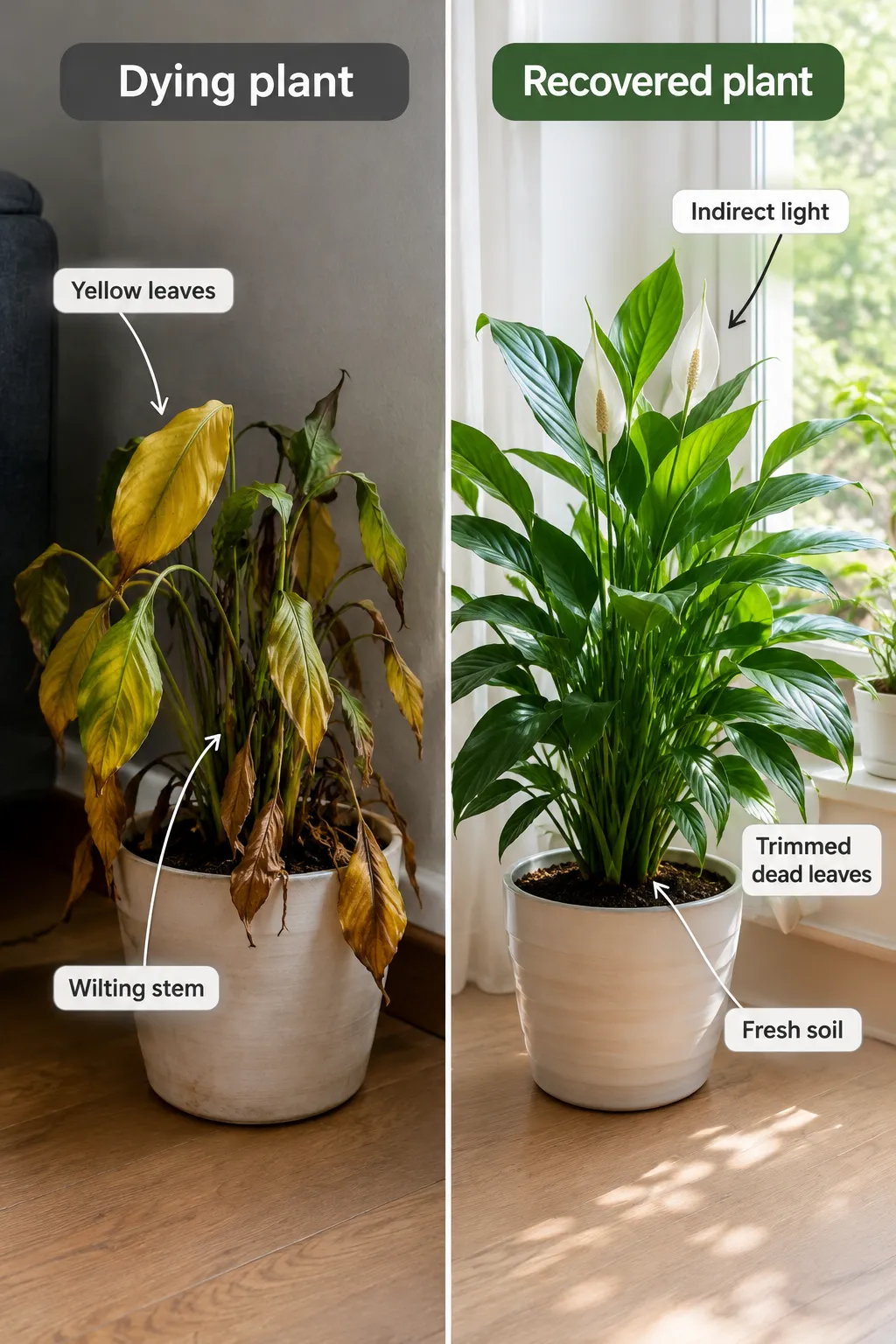
How do i tell if my plant is dead or just dormant, and can i save a dying plant
A plant is likely dormant, not dead, if the stems are still flexible and the roots are white or tan rather than black and mushy. A truly dead plant has brittle, dry roots and a stem that snaps instead of bending.

To save a struggling plant:
- Remove it from the pot and check the roots.
- Trim away any black, mushy, or foul-smelling roots.
- Repot in fresh, well-draining soil.
- Move it to brighter indirect light.
- Hold off on fertilizer until new growth appears.
Edge case: a plant that drops all its leaves after a move isn’t necessarily dying. Many houseplants, including ficus and peace lily, shed leaves from shock and recover within weeks once settled.
Where’s the best place to buy cheap beginner houseplants
Big box garden centers, local nurseries, and online specialty shops all sell solid beginner plants, but local nurseries tend to offer healthier stock and better advice than big-box stores. Online shops are convenient if you can’t find pothos, snake plant, or ZZ plant locally.
When you shop, search by size, light needs, or solution rather than just appearance. Many retailers now let you filter featured or sale plants alphabetically a-z, z-a, by price low to high or high to low, or by date old to new, which makes comparing options across a large catalog much easier. Look for firm leaves, no visible pests, and a pot with a visible drainage hole before you buy.
Do houseplants really need drainage holes, and do they need fertilizer
Yes, most houseplants need drainage holes to prevent root rot, and no, most beginner-friendly plants don’t need frequent fertilizer. Drainage lets excess water escape instead of pooling around roots.
If your favorite pot has no hole, use it as a decorative cover and keep the plant in a plastic nursery pot with drainage inside it. For fertilizer, cast iron plant, snake plant, and ZZ plant grow fine with little to no feeding, especially in their first year. A light, diluted feed once or twice during the growing season is plenty for most low-maintenance houseplants.
Best beginner houseplants at a glance
| Plant | Light needs | Watering | Pet safe |
|---|---|---|---|
| Snake plant | Low to bright | Every 2-3 weeks | No |
| Pothos | Low to bright | When soil is dry | No |
| ZZ plant | Low to medium | Every 2-3 weeks | No |
| Cast iron plant | Low | Every 2 weeks | Yes |
| Spider plant | Medium to bright | Weekly-ish | Yes |
| Peperomia | Medium | When soil is dry | Yes |
More low-maintenance houseplants worth trying
Beyond the core five, a handful of other plants deserve a spot on any beginner’s shortlist. Heartleaf philodendron grows fast and tolerates lower light than most vining plants. Ponytail palm stores water in its trunk, so it handles dry spells like a champ. Dracaena and dragon tree both shrug off inconsistent watering, and peace lily will dramatically droop when thirsty, which is actually helpful since it tells you exactly when to water.
For small spaces, peperomia and philodendron stay compact. For larger statement pieces, parlor palm and rubber plant fill a corner without demanding much care. Avoid delicate flowering plants and high-humidity ferns until you’ve kept one of the tougher plants alive for at least six months.
Frequently asked questions
What are the top 10 best indoor plants for beginners?
The top 10 best indoor plants for beginners are pothos, snake plant, spider plant, ZZ plant, peperomia, heartleaf philodendron, ponytail palm, peace lily, cast iron plant, and dragon tree. All tolerate low light, irregular watering, or both, making them forgiving choices for first-time plant owners.
What is the easiest houseplant to care for and keep alive?
The ZZ plant is widely considered the easiest houseplant to care for because it tolerates drought, low light, and weeks of neglect without dying. Snake plant is a close second, needing water only when its soil is completely dry.
Do you water houseplants from the top or bottom?
Top watering works for most houseplants and flushes excess salts out the drainage hole. Bottom watering suits delicate plants prone to rot, like peace lily or African violet, since it keeps leaves and crowns dry while soaking roots thoroughly.
What is the best low maintenance houseplant?
Snake plant and ZZ plant are the best low maintenance houseplants overall, tolerating low light, infrequent watering, and dry indoor air. Cast iron plant comes close behind for the darkest rooms where almost nothing else survives.
Conclusion
You don’t need a green thumb to keep a houseplant alive. You need the right plant, a pot with a drainage hole, and the discipline to stop watering out of guilt. Start with one plant, snake plant or pothos are great first picks, and learn its actual needs before adding a second.
Check your light honestly, water only when the soil is dry, and resist the urge to fuss over a plant that’s simply adjusting. Houseplants for beginners aren’t about luck. They’re about picking species built for your exact level of attention and letting them do the rest.


22 Comments on “Houseplants for Beginners: The Real Guide for People Who Kill Everything Green”