


Last updated: October 25, 2026
A chipped teacup, a drill, and forty minutes. That’s really all it takes to turn kitchen junk into a planter that looks like it came from a boutique garden shop.
I learned this the hard way after killing three store-bought succulent arrangements in a row. Turns out the pots were the problem, not me. Once I started drilling my own drainage holes into cheap containers, my succulents finally stopped rotting.
This guide covers practical DIY Succulent Planter Ideas for House Plants that fit into a single afternoon, even if you’ve never touched a power drill before. If you travel a lot and want low-maintenance greenery waiting for you when you get home, succulents in homemade pots are about as forgiving as houseplants get.
Quick Answer
Yes, you can build a real succulent planter in under an hour using almost any container you already own, as long as you add drainage holes and use a fast-draining cactus mix. Mason jars, tin cans, teacups, and even old boots work fine. The biggest factors for success are drainage, soil type, and not overwatering.
Key Takeaways
- Most DIY Succulent Planter Ideas for House Plants take 20 to 60 minutes start to finish.
- Drainage holes matter more than the container material itself.
- Cactus or succulent-specific soil beats regular potting mix every time.
- Terra cotta dries faster than ceramic, which matters for watering schedules.
- Recycled items like mason jars, tin cans, and boots all work with a few basic tools.
- Overwatering, not underwatering, kills most homemade succulent planters.
- Grouping three to five succulents of varying height looks more polished than a single plant.
- Pots without drainage holes can still work if you’re careful, but they’re riskier.
What materials do you need to make a succulent planter
You need four basic things: a container, succulent soil, drainage material, and the plants themselves. Everything else is optional styling.

Here’s the realistic shopping list:
- A container (new or recycled)
- Cactus/succulent potting mix
- Small gravel, pebbles, or lava rock for a drainage layer
- A drill or hammer and nail for holes (if the container doesn’t already have them)
- Small succulents, ideally 2 to 3 inches wide
- Optional: activated charcoal, decorative moss, paint, twine
A 2026 roundup of creative succulent planters points out that teacups, coffee mugs, and tin cans remain some of the fastest options because they already have the right size and shape, you just add holes and soil.
If you’re new to keeping plants alive in general, it helps to start with the basics in our beginner houseplant guide before diving into containers.
How do you drill drainage holes in containers
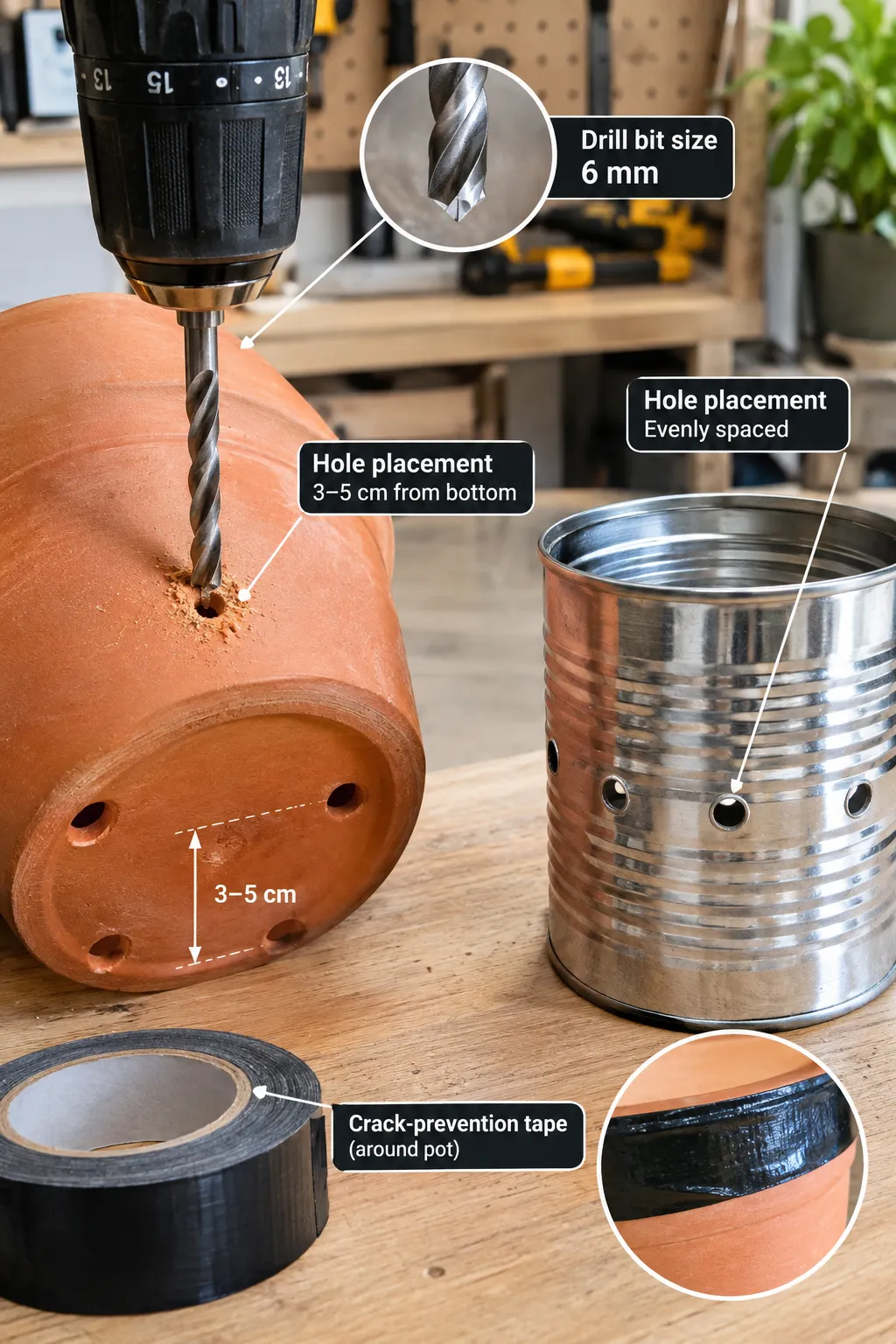
Drilling drainage holes is simple: use a masonry bit for ceramic or terra cotta, a metal bit for tin cans, and go slow to avoid cracking the material. For glass jars, skip drilling and use a thick gravel layer instead.
Step-by-step:
- Mark where you want the hole with tape or a marker.
- Start the drill at a low speed to prevent slipping.
- Apply light, steady pressure, don’t force it.
- Drill 2 to 4 holes depending on container size.
- Smooth sharp edges with sandpaper if needed.
Common mistake: pressing too hard on ceramic or terra cotta, which causes cracks. Let the drill bit do the work.
Edge case: tin cans can have sharp edges after drilling. A quick pass with pliers to bend the edge inward prevents cuts later.
What kind of soil should I use for succulents
Use a cactus or succulent-specific potting mix, never standard potting soil. Regular soil holds too much water and suffocates succulent roots within weeks.
A good mix drains fast and contains:
- Coarse sand
- Perlite or pumice
- A small amount of organic matter
If you can’t find bagged succulent mix, you can make your own with 2 parts regular potting soil, 2 parts coarse sand, and 1 part perlite. This DIY approach is mentioned often in indoor plant decor tutorials as a cheap alternative to store-bought mix.
Choose this mix if: you’re using any recycled container, since fast drainage matters even more when you can’t control hole placement perfectly.
Can you use any container for succulents or do they need special pots
You can use almost any container, succulents don’t require special pots, but they do need either drainage holes or very careful watering habits. Terra cotta, ceramic, glass, metal, wood, and even plastic all work.
What actually matters:
- Depth (succulents have shallow roots, so 3 to 5 inches is plenty)
- Drainage ability
- Whether the material will rot or rust over time (wood and untreated metal eventually will)
“The container is just a vessel. Drainage and soil are what keep succulents alive.”
How long does it take to make a DIY succulent planter
Most DIY Succulent Planter Ideas for House Plants take between 20 minutes and an hour, depending on the container. Simple mason jar terrariums take about 15 to 20 minutes. Drilling holes in ceramic or upcycling boots and tires can take closer to an hour.
Rough time breakdown:
| Project Type | Time Needed |
|---|---|
| Mason jar or glass jar | 15-20 minutes |
| Tin can or mug | 20-30 minutes |
| Terra cotta or ceramic pot | 30-40 minutes |
| Upcycled boot, tire, or tote bag | 45-60 minutes |
| Tiered wok tower | 60+ minutes |
A February 2026 trash-to-planter guide walks through 12 projects using items like cowboy boots and old tires, all doable with basic tools in roughly an hour.
What’s the difference between terra cotta and ceramic for succulents
Terra cotta is porous and dries out faster, making it more forgiving for people who tend to overwater. Glazed ceramic holds moisture longer, which means you need to water less often but watch more carefully for standing water.
- Terra cotta: breathable, dries fast, best for beginners
- Glazed ceramic: stylish, retains moisture longer, needs careful drainage
Choose terra cotta if: you tend to forget about watering schedules or water too often. Choose ceramic if: you want a polished look and are comfortable checking soil moisture before watering.
How do you prevent root rot in homemade planters
Prevent root rot by using well-draining soil, adding a gravel layer at the bottom, and never letting the pot sit in standing water. Root rot is the single biggest killer of DIY succulent planters.

Steps to avoid it:
- Add a 1-inch gravel layer before soil
- Use succulent-specific mix, not regular soil
- Let soil dry out completely between waterings
- Empty any saucer that collects runoff water
Common mistake: watering on a fixed schedule instead of checking the soil. Succulents don’t follow calendars, they follow moisture levels.
Can succulents survive in pots without drainage holes
Yes, succulents can survive in pots without drainage holes, but it requires more careful watering and a thicker gravel layer to catch excess moisture away from the roots. This is a riskier setup and not ideal for beginners.
If you’re using a no-hole container like a sealed glass jar or vintage teacup you don’t want to drill:
- Add a 1 to 2 inch gravel layer at the bottom
- Add a thin layer of activated charcoal to control odor and bacteria
- Water sparingly, about half of what you’d use in a drained pot
Edge case: this setup works better for display pieces you water rarely, not for plants you want to grow quickly.
How often should you water succulents in DIY planters
Water succulents roughly every 1 to 2 weeks, letting the soil dry out completely between waterings. The exact frequency depends on your climate, pot material, and whether the container has drainage holes.
General guide:
- Terra cotta with drainage: every 1 to 2 weeks
- Ceramic with drainage: every 2 to 3 weeks
- No-drainage containers: every 3 to 4 weeks, sparingly
If you travel often, this is one of the biggest reasons succulents make sense as house plants. They tolerate neglect far better than most greenery, similar to what we cover in our guide to low-light houseplants that survive neglect.
Where can I find cheap containers for succulent planters
Thrift stores, dollar stores, and your own kitchen cabinets are the cheapest sources for succulent containers. You likely already own something usable right now.
Good cheap sources:
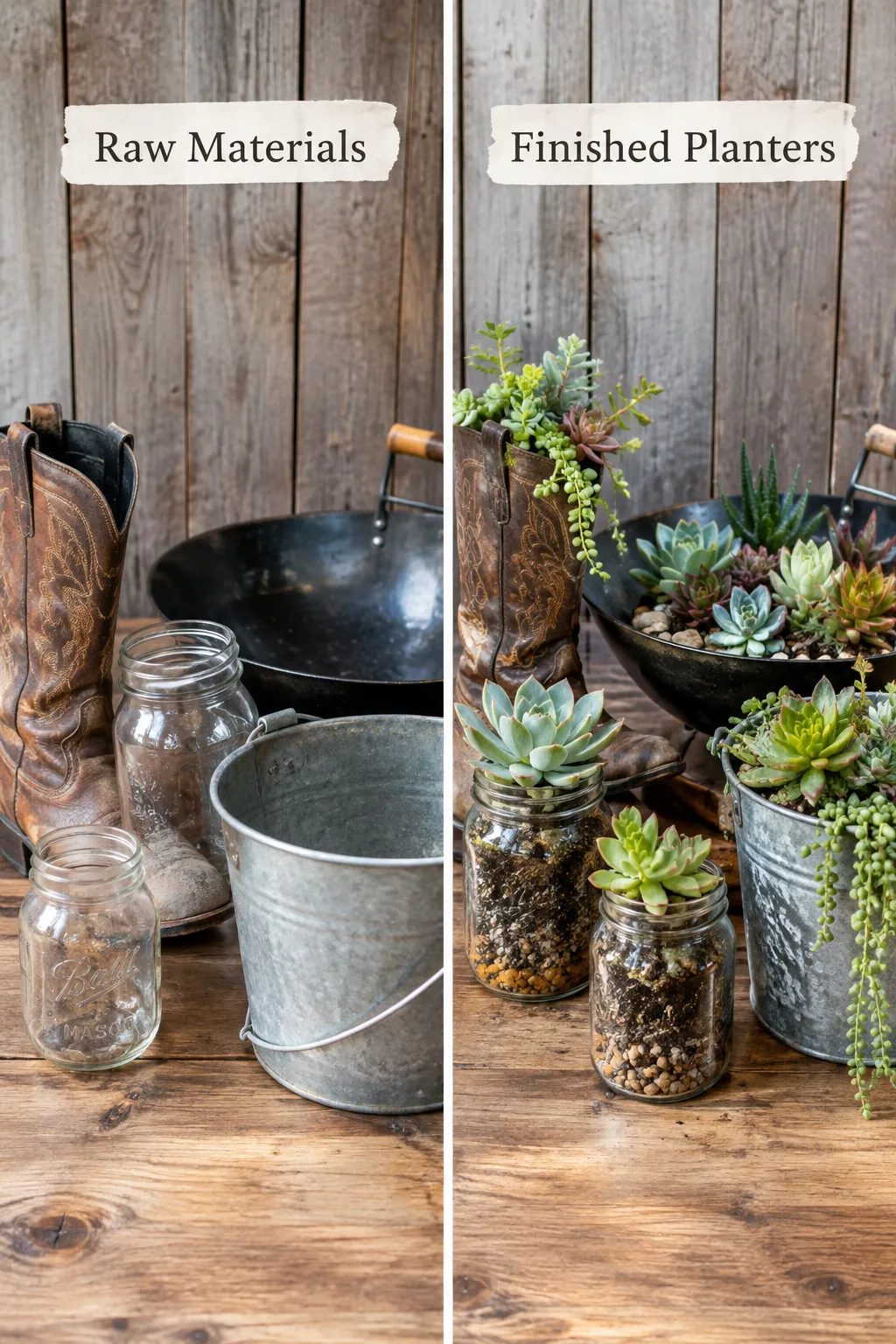
- Thrift store mugs, teacups, and bowls
- Dollar store tin containers and baskets
- Old mason jars from pantry items
- Worn-out boots or tote bags headed for the trash
- Takeout containers with lids removed
The House Digest trash-to-planter guide specifically highlights jeans, plastic water bottles, and stainless steel pots as free-to-cheap options that just need basic tools like nails or a utility knife.
What are common mistakes people make with DIY succulent planters
The most common mistakes are using regular potting soil, skipping drainage entirely, and overwatering out of habit. These three issues cause the majority of succulent deaths in homemade planters.
Other frequent errors:
- Packing soil too tightly around roots
- Choosing containers that are too deep for shallow succulent roots
- Placing planters in low light and expecting them to thrive
- Overcrowding too many succulents into one small pot
Decision rule: if your succulent’s leaves look mushy or translucent, stop watering immediately. That’s a root rot warning sign, not a thirst signal.
Is making a succulent planter easy for beginners
Yes, making a succulent planter is one of the easiest plant projects for beginners. It requires no special skills, minimal tools, and succulents themselves are forgiving if you get the basics right.
Beginner-friendly checklist:
- Pick a container you don’t mind drilling into
- Add drainage holes or a thick gravel layer
- Use cactus soil, not regular potting mix
- Plant 1 to 3 small succulents
- Water lightly, then wait a week before watering again
If you’ve struggled with houseplants before, this project is a solid confidence builder. It pairs well with other easy starter plants covered in our houseplants for beginners guide.
How do you arrange multiple succulents in one planter
Arrange multiple succulents by grouping varying heights and textures together, placing taller rosettes toward the back or center and trailing varieties near the edges. This creates depth instead of a flat, uniform look.
Simple arrangement rules:
- Odd numbers (3 or 5 plants) look more natural than even numbers
- Taller succulents in the center or back
- Trailing types like string of hearts near the edge where they can spill over
- Leave small gaps for top dressing like gravel or moss
A 2026 tiered wok planter project uses this same layered logic at a bigger scale, stacking woks with trailing succulents like burro’s tail cascading down each tier for a dramatic effect.
Can you use recycled items like mason jars for succulent planters
Yes, mason jars and other recycled glass items work well for succulent planters, especially for small tabletop displays. The key is a solid gravel layer since most mason jars lack drainage holes.
Basic mason jar method:
- Add a 1-inch layer of small rocks
- Add a thin layer of activated charcoal (optional, controls odor)
- Fill with succulent soil
- Plant your succulent and lightly firm the soil
- Water sparingly, about once every 3 weeks
This layered approach is echoed across several 2026 succulent planter tutorials, which recommend the same rock-charcoal-soil structure for a clean, modern look that still keeps roots relatively healthy despite no drainage hole.
FAQ
Do succulent planters need sunlight to survive indoors?
Yes, most succulents need at least 4 to 6 hours of bright, indirect light daily. A windowsill facing south or west usually works well indoors.
Can I use regular potting soil instead of cactus mix?
No, regular potting soil holds too much moisture and increases the risk of root rot. Cactus or succulent mix drains much faster and is worth the extra few dollars.
What’s the cheapest container option for a quick planter?
Tin cans and mason jars you already have at home are typically free and require minimal prep, just a few drainage holes or a gravel layer.
How many succulents fit in a small planter?
A planter roughly 4 to 6 inches wide comfortably fits 2 to 3 small succulents without overcrowding their roots.
Is it bad to water succulents on a fixed schedule?
Yes, it’s better to check soil moisture before watering rather than following a strict calendar, since humidity and light levels change watering needs.
Can I use essential oil tins or candle jars after cleaning them?
Yes, as long as they’re thoroughly cleaned and you add a drainage solution like a gravel layer since most don’t have drainage holes.
Do succulent planters work well for travelers who are away often?
Yes, succulents tolerate being ignored for one to three weeks, making them one of the most travel-friendly houseplant options available.
What tools do I actually need to start?
A drill (or hammer and nail), small gravel, succulent soil, and a container are the only essentials for most projects.
Conclusion
Building your own succulent planter doesn’t require a workshop or a green thumb. It takes a container, some drainage, the right soil, and maybe an hour of your afternoon.
Start small. Grab one container from your kitchen or a thrift store trip, drill a couple of holes, and plant one succulent. Once that survives a few weeks, try a bigger project like a tiered wok tower or a wreath frame planter.
If you want more low-effort plant ideas that fit a busy or travel-heavy lifestyle, browse our full houseplants and indoor growing category for more guides like this one.



4 Comments on “DIY Succulent Planter Ideas for House plants You Can Make in an Afternoon”