
Last updated: November 8, 2026
Frost doesn’t wait for you to finish raking leaves. One cold snap in early December can undo months of work in a garden bed you forgot to tuck in. That’s the real reason December garden tasks matter so much: this is the month where small, cheap actions (a layer of mulch, a wrap of burlap, a few extra waterings) decide whether your plants limp into spring or bounce back strong.
I’ve lost a few prized perennials to a surprise freeze because I thought “it’s just December, I have time.” I didn’t. This guide walks through exactly what to do, in what order, and why timing matters more than almost anything else on this checklist.
Quick Answer
December garden tasks center on protecting what’s already in the ground: mulching beds after the soil freezes, wrapping tender plants and containers, pruning dormant deciduous trees and shrubs, winterizing tools and water features, and keeping evergreens and wildlife fed through the cold. Skip heavy digging and skip fertilizing; this is a protect-and-wait month, not a growth month.
Key Takeaways
- Mulch perennial and bulb beds with 2 to 3 inches of shredded bark or compost, but only after the ground has frozen hard, per Chicago Botanic Garden guidance.
- Keep watering young trees and shrubs on days above about 40°F until the ground freezes solid, says University of Maryland Extension.
- Avoid walking on frozen or wet soil; compaction damages structure for the whole next season.
- Wrap containers and tender plants in burlap or horticultural fleece before hard frosts arrive, as outlined by Stihl’s winter gardening advice.
- Prune only dormant deciduous trees and shrubs; save spring bloomers for after flowering.
- December is a fine month to plant bare-root roses, trees, and shrubs in milder zones.
- Clean, sharpen, and oil tools now so they’re ready come spring.
- Keep bird feeders filled and water unfrozen to support garden wildlife through winter.
What garden tasks should I actually do in December?
December garden tasks are mostly about protection, not production: you’re insulating roots, shielding tender growth, and tidying up so pests and disease don’t carry over into next year. Think “tuck in,” not “plant out.”
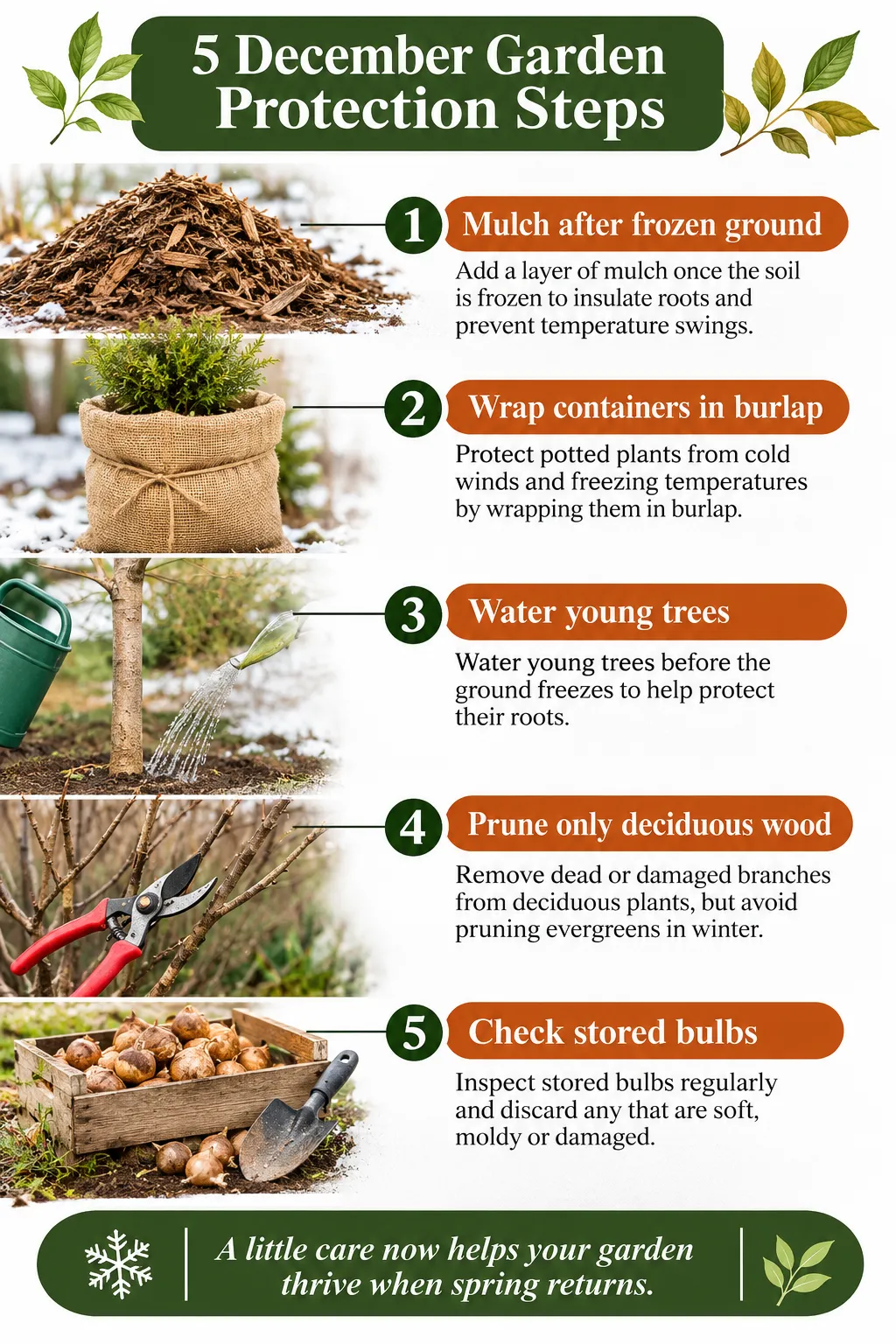
The core list looks like this:
- Mulch beds once soil is frozen
- Wrap or move tender container plants
- Prune dormant deciduous trees and shrubs
- Plant bare-root roses, trees, and shrubs where the ground allows
- Force bulbs indoors for winter color
- Care for evergreens against windburn and snow load
- Keep feeders stocked for birds and other garden wildlife
- Do a final lawn and leaf cleanup
- Clean and sharpen tools, drain hoses
- Plan next year’s garden layout
A quick example: if you’ve got a Japanese maple in a pot, December’s job is simple. Move it against a sheltered wall, wrap the pot in burlap, and water lightly until the soil freezes. That’s it, no fertilizer, no repotting.
How do I winterize garden beds properly?
Winterizing beds properly means applying mulch at the right depth, at the right time, and leaving the soil structure alone once frozen. Do it too early and you trap heat that triggers new growth; do it too late and roots suffer frost damage.
Here’s the sequence that works:
- Wait until the ground has frozen hard on the surface.
- Apply 2 to 3 inches of shredded bark, composted manure, or garden compost around perennials and bulb beds, a depth recommended in Chicago Botanic Garden’s winter checklist.
- Keep mulch off plant crowns to prevent rot.
- Check moisture under mulch after big weather swings, since checklists from Guru Gardeners note beds can dry out even under a protective layer.
- Skip tilling or digging. UC Marin Master Gardeners and similar programs warn that wet or frozen soil compacts easily and loses the air pockets microbes need.
Common mistake: mulching the week after Thanksgiving because “it’s cold enough.” If the soil hasn’t actually frozen at the surface, you’re insulating warmth in, which can delay dormancy and invite rot.
What’s the best way to protect plants from frost and freezing?
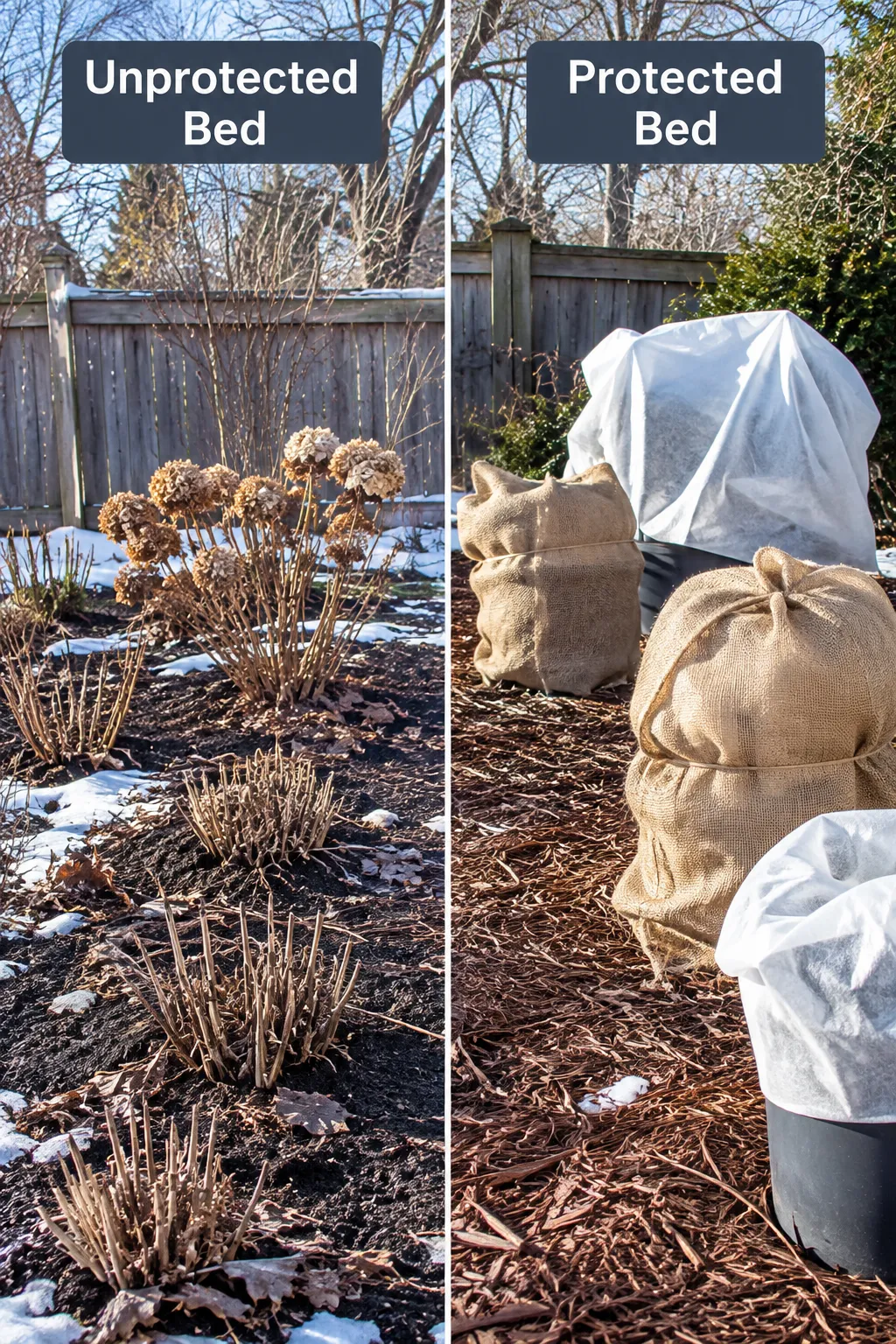
The best frost protection combines physical covers, smart placement, and moisture management, not just one trick. Horticultural fleece, burlap wraps, and sheltered positioning each solve a different problem.
- Containers: wrap pots in hessian or bubble wrap and move them against a sheltered wall, as recommended by Stihl’s garden maintenance guide.
- Tender plants: drape horticultural fleece over foliage whenever frost is forecast, then remove it once temperatures rise.
- Evergreens and shrubs: tie branches to prevent snow splay and install burlap windbreaks, per New York Botanical Garden’s winter chore list.
- Trunks: wrap young tree trunks to prevent bark splitting and deer damage before deep winter sets in.
Choose fleece over plastic sheeting if you can; plastic traps condensation against leaves and can actually cause more cold damage than no cover at all.
Should I keep watering my garden in December?
Yes, but selectively. Water newly planted trees, shrubs, and container plants on days above roughly 40°F, then stop entirely once the ground is frozen solid.
University of Maryland Extension and Colorado State University Extension both point to winter watering as one of the most overlooked December garden tasks. Dry roots going into a hard freeze are far more likely to suffer die-back than roots with a little residual moisture.
Keep soil just moist, not wet, in containers too. Soggy compost around roots in cold weather is a fast way to rot a plant that would have survived a dry freeze just fine.
What’s the difference between mulch and compost for winter protection?
Mulch insulates; compost feeds. Mulch (shredded bark, straw, or leaves) sits on top of soil to buffer temperature swings and lock in moisture, while compost is decomposed organic matter that adds nutrients as it breaks down.
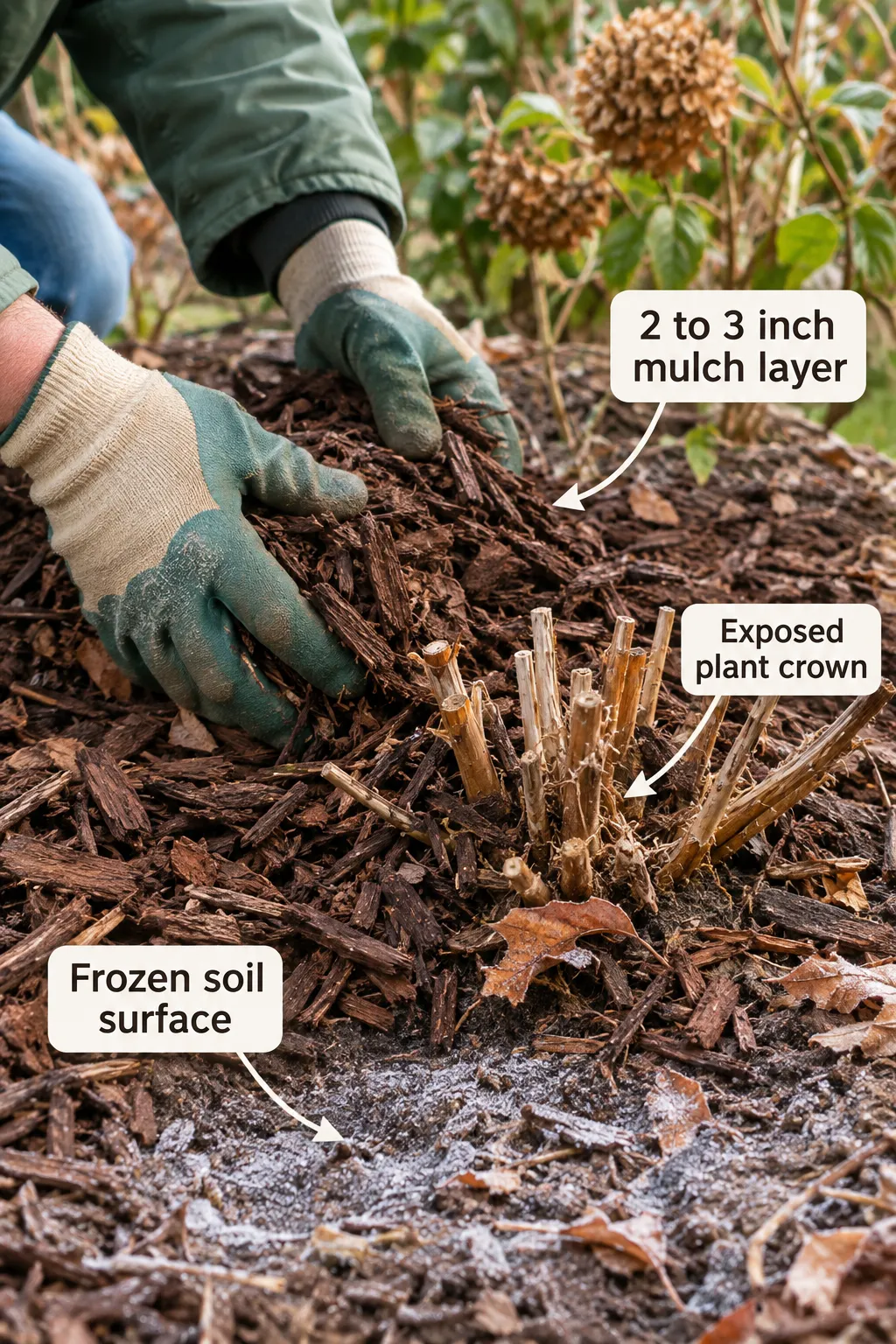
For December, you want mulch as your primary tool. A 2 to 3 inch layer of shredded bark or even composted manure used as mulch works fine, per Chicago Botanic Garden. Don’t dig fresh compost into beds now; soil disturbance in winter does more harm than good and the nutrients won’t be used until spring growth resumes anyway.
Can I still plant anything in December, or is it too late?
You can still plant bare-root roses, trees, and shrubs in December as long as the ground isn’t frozen solid, especially in milder zones. It’s too late for most perennials, bulbs meant for spring bloom (those should’ve gone in by late fall), or anything needing active root establishment before deep cold.
- Good December planting: bare-root roses, deciduous trees, shrubs
- Still fine: forcing bulbs like paperwhites or amaryllis indoors for winter color
- Too late: spring-flowering bulbs outdoors, tender annuals, most vegetable transplants
If your soil is workable (not frozen, not waterlogged), bare-root stock can go in right up until the ground locks up for the season.
Do I need special fabric to cover my garden beds?
Special fabric helps but isn’t strictly required for every garden. Horticultural fleece is lightweight, breathable, and the standard choice for frost protection because it lets moisture escape while trapping a few degrees of warmth.
Alternatives that work in a pinch:
- Old bed sheets or towels (remove during the day)
- Cardboard boxes over individual plants overnight
- Straw piled loosely over crowns
- Cloches or overturned buckets for small specimens
Choose true horticultural fleece if you garden somewhere with regular hard freezes; it’s reusable for years and won’t trap condensation the way plastic sheeting does.
Why are my plants still dying even after I covered them?
Plants often die after covering because the cover trapped moisture, touched the foliage directly, or came off too early before a late freeze. Covering isn’t magic; it has to be done correctly to work.
Common mistakes:
- Letting fleece or plastic touch leaves directly (frost can still transfer through contact points)
- Removing covers too early in a warm spell, then getting caught by a late cold snap
- Covering a plant that was already stressed from drought or poor drainage
- Using plastic instead of breathable fabric, trapping humidity that encourages rot
Edge case: if a plant was already struggling before the freeze (say, underwatered all fall), no amount of covering in December will fix that underlying stress. Prevention earlier in the season matters as much as the cover itself.
Alternatives to mulch for protecting plants in winter
Alternatives to mulch include cold frames, row covers, raised bed caps, and simply relocating potted plants indoors or into a garage. These work well when mulch isn’t practical, like in small raised beds or container gardens.
- Cold frames: mini unheated greenhouses that buffer temperature swings for low-growing crops
- Row covers: lightweight fabric tunnels over support hoops
- Moving pots: shift containers into an unheated garage or shed, out of direct wind
- Straw bales: stack around raised bed exteriors as insulation
If you’re short on time, moving containers to a sheltered spot against the house is often more effective than any single product you could buy.
December garden checklist for beginners: what do I need?
A beginner only needs a handful of tools to handle December garden tasks well: mulch, fleece or burlap, pruning shears, a watering can, and a notebook for planning next year. You don’t need anything fancy.
Basic shopping list:
- Bag of shredded bark mulch (2-3 inches depth per bed)
- Horticultural fleece or burlap
- Sharp bypass pruners for dormant trees and shrubs
- A hori hori knife for digging, dividing, and general garden chores (check 5 star reviews from gardeners who swear by theirs for winter bed work)
- Bird feeder and seed to support wildlife
- Garden journal or app to track what worked this year
If you’re new to indoor plant care during winter months too, it’s worth reading up on bringing houseplants in for winter since many gardeners move containers indoors this time of year.
Common mistakes people make when preparing gardens for winter
The biggest mistake is doing everything too early or walking on wet soil out of habit. Both undo the benefit of proper winter prep.
- Mulching before the ground freezes (traps warmth, delays dormancy)
- Walking across lawns and beds during a winter thaw, compacting soggy soil
- Pruning spring-flowering shrubs now and losing next year’s blooms
- Fertilizing dormant plants, which wastes nutrients and can stress roots
- Forgetting to check stored bulbs like dahlias and cannas for rot or mold
Guru Gardeners’ checklist specifically flags testing stored seed viability in December, so you’re not caught ordering replacements you didn’t need come spring.
Do December garden tasks change if you have raised beds?
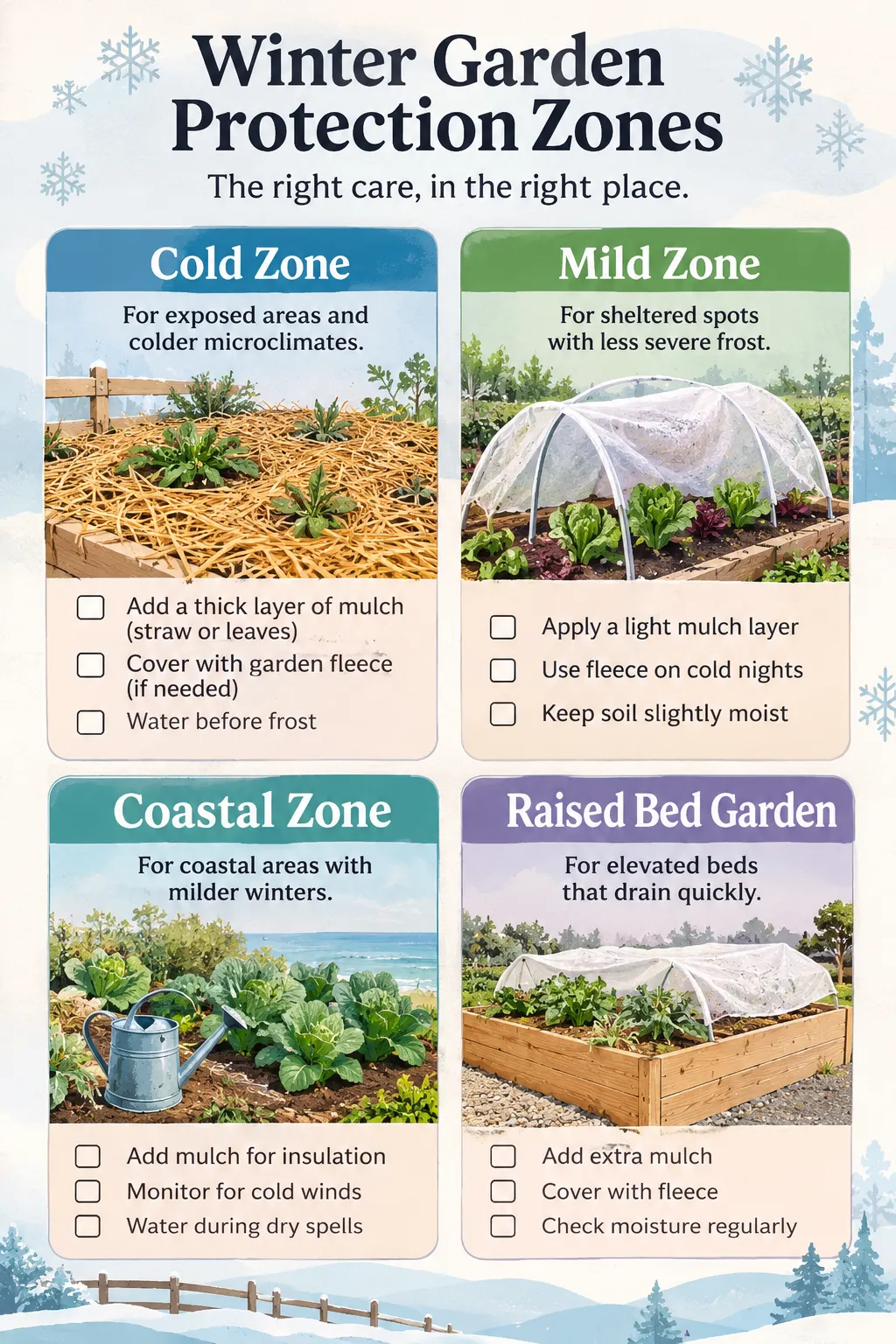
Yes, raised beds often need lighter protection than in-ground beds because they drain faster and warm up quicker, but they also lose heat faster in deep cold. Insulating the sides matters more than it does for ground-level plantings.
- Line exterior walls with straw bales or bubble wrap for extra insulation
- Use row covers over hoops rather than loose mulch if the bed is small
- Check drainage holes aren’t blocked by ice
- Raised beds in containers may need to be moved or wrapped entirely in colder zones
If you garden in raised beds in a mild climate, you may be able to skip mulching altogether and rely on row covers alone.
What mulch thickness should I use in December?
Use 2 to 3 inches of mulch for most perennial and bulb beds, applied only after the soil surface has frozen. This depth, recommended by Chicago Botanic Garden, balances insulation against airflow so crowns don’t rot underneath.
Go thinner (1 to 2 inches) around shallow-rooted plants and thicker (3 to 4 inches) around exposed bulb beds in colder zones. Never pile mulch directly against stems or trunks; leave a small gap to prevent moisture buildup and pest habitat.
Is it too late to winterize if I didn’t do fall prep?
No, it’s not too late in most regions as long as the ground hasn’t frozen solid yet. December still offers a workable window to mulch, wrap containers, and water before deep winter sets in.
If you missed fall cleanup entirely:
- Mulch now, as soon as the soil surface is frozen
- Wrap any containers or tender plants immediately
- Skip pruning if you’re unsure of plant type, wait until you can identify dormant deciduous wood
- Accept some losses are possible, but late action still beats no action
Zone-specific timing matters here. Gardeners in the USDA hardiness zones 3-5 should move fast since hard freezes arrive earlier, while zones 7-9 have more flexibility into late December.
Zone-specific December tips
Your exact December garden tasks should shift based on your USDA hardiness zone, since “frozen ground” might happen in late November in zone 4 but not until January in zone 8.
- Cold zones (3-5): mulch early, water before the first hard freeze, bring in all containers
- Mid zones (6-7): watch forecasts closely, mulch after first real freeze, protect evergreens from windburn
- Mild zones (8-9): you may still be planting bare-root stock through December, delay mulching until an actual cold snap arrives
US Growers Guide’s zone-by-zone breakdown is a solid reference if you’re unsure which bucket your garden falls into.
Final lawn and leaf cleanup, tool care, and holiday gift ideas
A final lawn and leaf cleanup, paired with basic tool winterizing, closes out your December garden tasks before the ground locks up for good. This is also the month gardeners start shopping for holiday gifts for the plant lovers on their list.
For the lawn and beds:
- Rake remaining leaves off turf so grass doesn’t suffocate under a wet mat
- Clear diseased plant debris from vegetable plots, but don’t dig wet soil
- Drain and detach garden hoses before a hard freeze cracks them
- Sharpen and lightly oil metal tool blades, then store off concrete floors
- Wipe tools with a mild bleach solution (around 10%) to prevent disease carryover, a tip echoed by extension programs at Oregon State and UC Marin
And since December is also gift-shopping season, here are gardening gifts that actually get used:
Gardening gifts under $50: pruning shears, seed starting trays, a sturdy garden journal, packets of heirloom seeds for spring.
Gardening gifts $50 to $100: a quality hori hori knife, insulated gardening gloves, a small cold frame kit.
Gardening gifts $100 to $150: a soil testing kit bundle, a compact wheelbarrow, or a membership to a local botanical garden or master gardener program.
Whether you’re shopping for women’s gardening gifts or picking something for the men in your gardening life, practical tools beat decorative ones almost every time. A hori hori knife, for example, works for weeding, dividing, planting bulbs, and even light pruning, which makes it one of the most versatile tools in any home garden shed. If you want a broader list by budget, our plants to grow in December guide also covers seasonal picks that double well as gift ideas for indoor growers.
For families with kids, free printable garden coloring pages are a nice way to keep young gardeners engaged indoors during the cold months while the actual garden rests under mulch.
Why December gardening matters even when it’s cold
December gardening matters because the decisions you make this month determine how much winter damage your beds absorb and how fast they recover in spring. Skipping it isn’t neutral, it’s a cost you pay later.
A garden left completely unattended in December often shows up in March with winter-killed perennials, cracked pots, and rodent damage around unprotected trunks. The fix isn’t complicated. It’s mulch, water, wraps, and a bit of attention on the days you’d rather stay inside.
I’ll admit, some years I only manage the bare minimum: mulch the beds, wrap the pots, and call it done. Even that partial effort has saved plants that a full freeze would’ve otherwise killed.
FAQ
What garden tasks should I actually do in December?
Mulch beds after the ground freezes, wrap tender plants and containers, prune dormant deciduous trees and shrubs, water young plants until the soil freezes, and clean up leaf debris and tools.
How do I winterize garden beds properly?
Apply 2 to 3 inches of mulch once the soil surface has frozen, avoid walking on wet or frozen ground, and skip tilling until spring.
Should I keep watering my garden in December?
Yes, water young trees, shrubs, and containers on days above about 40°F, then stop once the ground freezes solid.
Can I still plant anything in December, or is it too late?
Bare-root roses, trees, and shrubs can still go in if the soil isn’t frozen. It’s too late for most perennials and spring bulbs.
Do I need special fabric to cover my garden beds?
Horticultural fleece is ideal because it’s breathable, but old sheets, cardboard, or straw work as backups for occasional frost nights.
Why are my plants still dying even after I covered them?
Covers often fail if they touch the foliage directly, trap moisture like plastic does, or come off too early before a late freeze hits.
What mulch thickness should I use in December?
Use 2 to 3 inches for most perennial and bulb beds, applied only after the soil has frozen at the surface.
Is it too late to winterize if I didn’t do fall prep?
No, as long as the ground hasn’t frozen solid, you can still mulch, wrap containers, and water before deep winter arrives.
Final thoughts: make December your garden’s best month
December garden tasks aren’t glamorous, but they’re the cheapest insurance policy your garden will get all year. A few hours spent mulching, wrapping, and watering now saves you from replacing dead perennials and cracked pots come spring.
Start with what’s most urgent: containers and tender plants first, then beds, then tools. Check the forecast before you cover anything, and resist the urge to walk across wet or frozen lawns. If you want more seasonal guidance, browse our houseplants and indoor growing section for tips on plants that move indoors this time of year, including specific care notes for pothos through winter.
Before you close your laptop, do a quick search for your local frost dates, check your settings or privacy preferences on gardening apps you use to track tasks, and jot down one thing you’ll do differently next December. Your future self, and your garden, will thank you.

