

Last updated: October 28, 2026
Yellow pothos leaves show up in almost every home I’ve visited between November and February. It’s one of the most common houseplant complaints during the colder months, and most of the time it’s fixable in a week or two. This Pothos Plant Care Winter Checklist walks through exactly why it happens and what to do about it.
Quick Answer
Pothos leaves turn yellow in winter mostly from overwatering, cold drafts, or low light stress, not from one single cause. The fix usually means watering less often, keeping the plant away from cold windows and heating vents, and giving it brighter indirect light. Follow a simple Pothos Plant Care Winter Checklist and most plants recover within two to four weeks.
Key Takeaways
- Cut watering frequency in half once temperatures drop, and always check soil before adding water.
- Cold drafts below 50°F can cause yellowing just as fast as overwatering.
- Short winter days mean less light, so move pothos closer to a bright window.
- Skip fertilizer entirely from late fall through early spring.
- One yellow leaf here and there is normal aging, not a crisis.
- Humidity below 30% can stress pothos leaves and dull their color.
- Avoid repotting or big location changes during winter months.
- Pothos is one of the easier plants for beginners, even in winter, if you follow a basic routine.
Why do pothos leaves turn yellow in winter
Pothos leaves turn yellow in winter mainly because of too much water sitting in cold, slow-draining soil, plus reduced light and temperature swings. Cold soil holds moisture longer, roots use less water, and the combination suffocates roots over time.
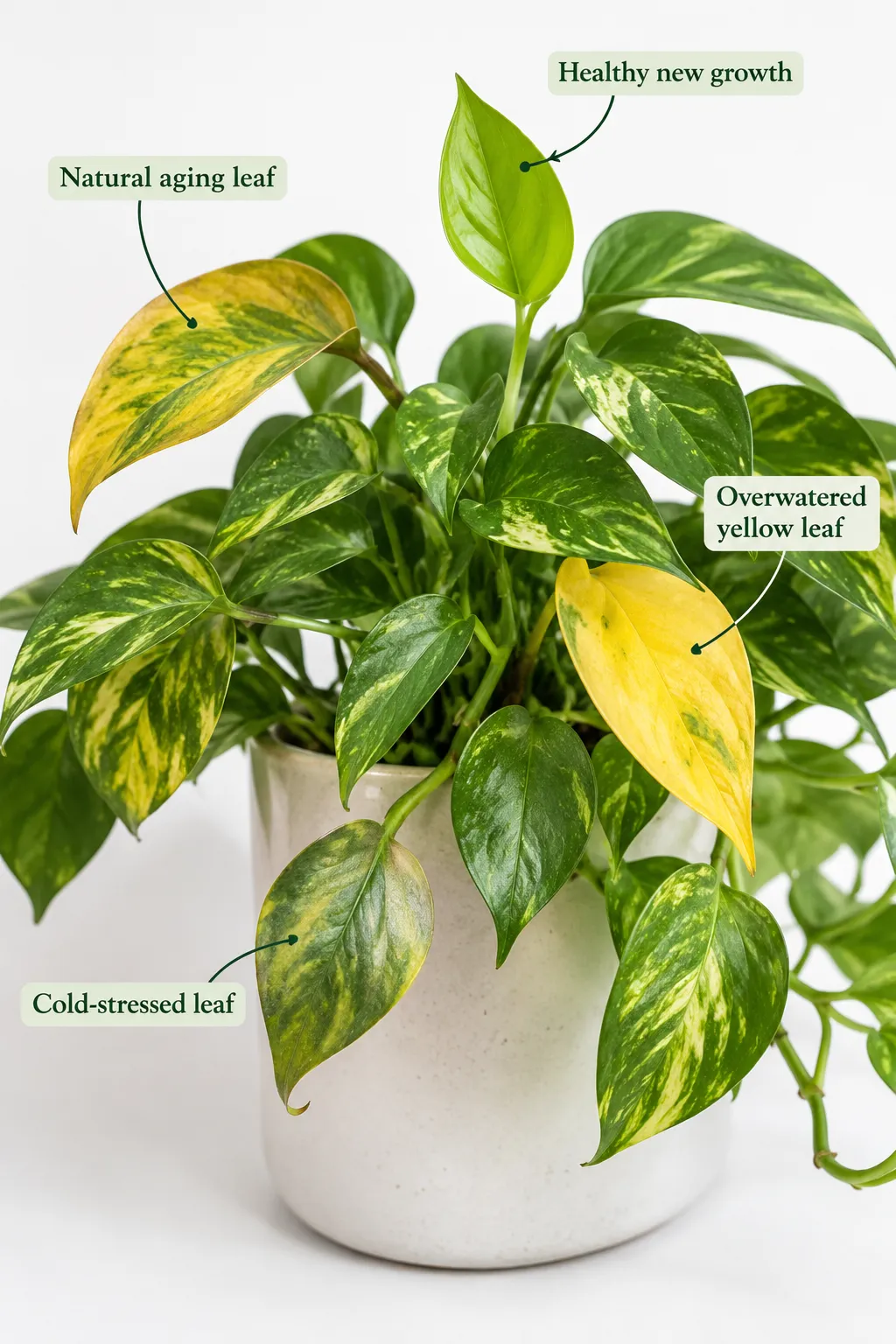
Here’s what’s usually going on:
- Soil stays wet longer because the plant isn’t using water as fast in cooler temps
- Roots sitting in soggy soil start to rot, and yellowing follows
- Lower light levels slow photosynthesis, so older leaves get sacrificed first
- Dry heated air from furnaces stresses leaf tissue
According to Homes & Gardens, inconsistent watering and poor light are two of the most frequent culprits behind winter yellowing. If you see yellowing starting at the base of the vine and working upward, that’s often age-related and not a true problem.
How do I know if my pothos is overwatered vs cold stressed
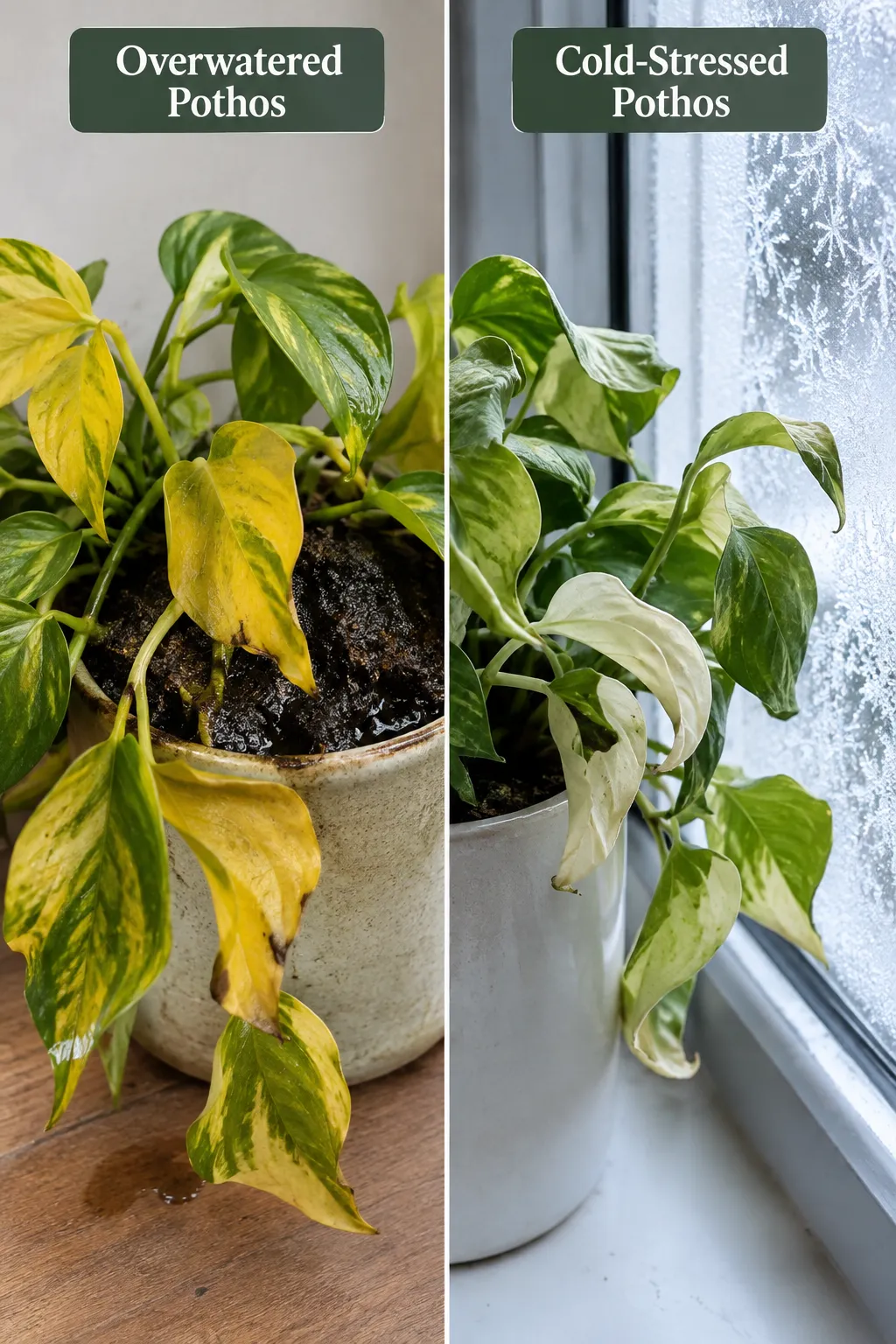
Overwatered pothos usually has soft, mushy yellow leaves and a smell coming from the soil, while cold-stressed pothos gets pale, limp leaves with no odor. Checking the soil texture and the plant’s location tells you which one you’re dealing with.
Quick comparison:
| Symptom | Overwatering | Cold Stress |
|---|---|---|
| Soil feel | Soggy, heavy | Normal moisture |
| Leaf texture | Mushy, limp | Pale, papery |
| Smell | Musty or sour | None |
| Location clue | Far from drafts | Near window or vent |
Choose overwatering as the cause if the pot feels heavy and the soil smells off. Choose cold stress if the plant sits near a drafty window or door. The Spruce notes that root rot from excess moisture is the single biggest cause of pothos yellowing overall.
What’s the best watering schedule for pothos in winter
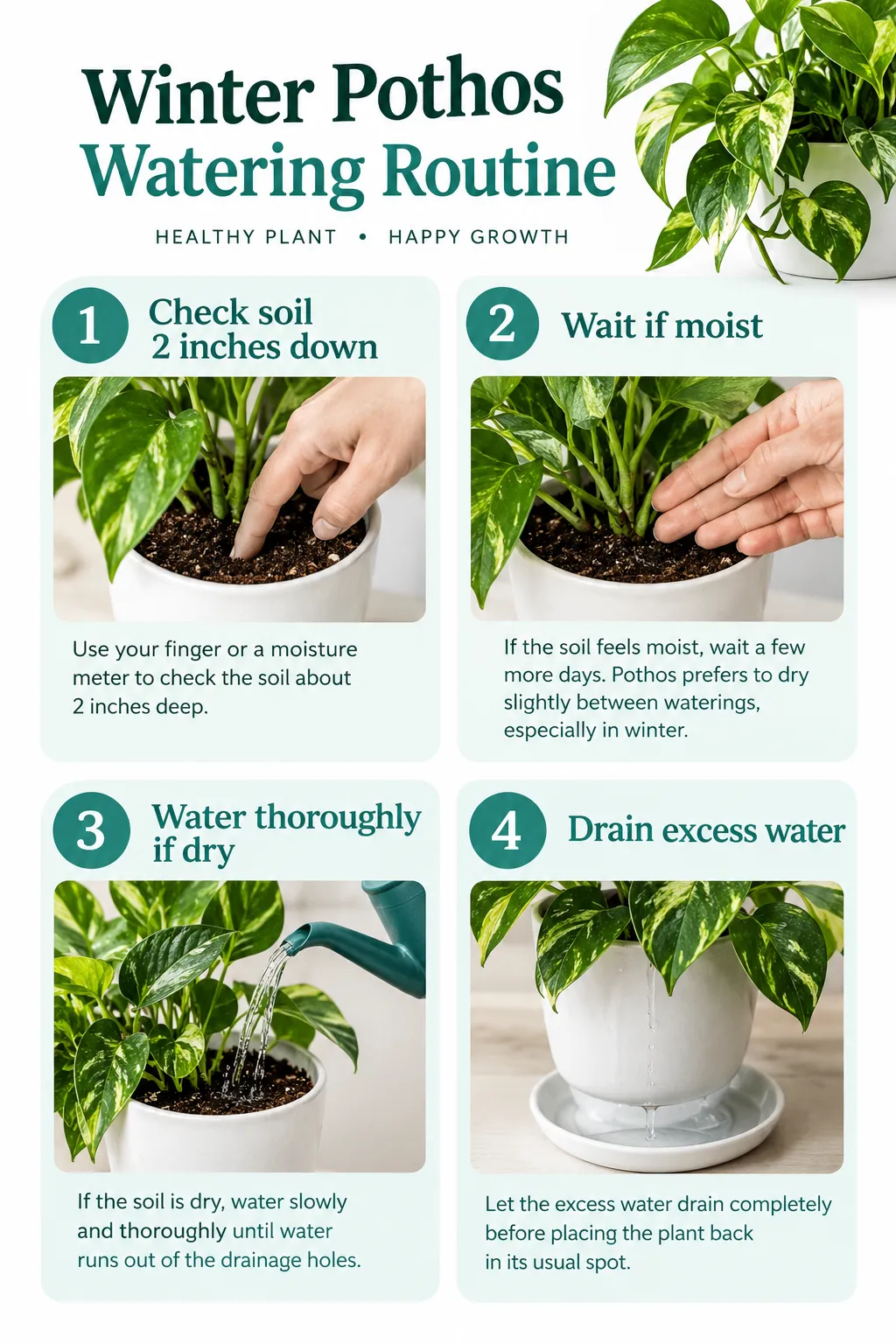
The best winter watering schedule for pothos is to water only when the top one to two inches of soil feel completely dry, which usually stretches the gap to every two to three weeks. This is slower than the summer schedule because growth slows down.
Steps to follow:
- Stick a finger two inches into the soil before watering
- If it feels dry, water slowly until it drains from the bottom
- Empty the saucer so roots never sit in standing water
- Skip a scheduled watering day if the soil still feels damp
A common mistake is sticking to a summer watering calendar out of habit. Pothos needs far less water once light and temperature drop, according to Clemson Cooperative Extension.
Can pothos survive in a cold room or garage
Pothos can tolerate brief dips into the 50s°F, but it will suffer real damage below 50°F and can die if exposed to near-freezing temperatures for long. A cold garage or unheated sunroom is risky for overwintering.
- Ideal range: 65-85°F
- Stress zone: 50-60°F, leaves yellow and growth stalls
- Danger zone: below 50°F, tissue damage and leaf drop
Choose to move your pothos indoors if nighttime temps in that room regularly drop under 55°F. If you’re bringing multiple plants in from a porch or patio, this step-by-step winter houseplant checklist covers the full transition process.
How to revive yellowing pothos leaves
Reviving yellowing pothos leaves starts with removing the damaged leaves, correcting the watering routine, and moving the plant to better light. Most plants show new, healthy growth within a few weeks once the root cause is fixed.
Recovery checklist:
- Trim off fully yellow leaves with clean scissors
- Let soil dry out fully if overwatering caused the problem
- Relocate to bright, indirect light away from cold glass
- Check roots if yellowing is widespread; trim any black, mushy roots
- Hold off on fertilizer until spring
“Pothos is forgiving, but it still needs its basic needs met consistently, especially in winter.” – a theme echoed across multiple plant care guides, including PlantRef.
Does pothos need a grow light in winter
Pothos doesn’t strictly need a grow light in winter, but one helps if your home doesn’t have a bright window, since natural daylight hours shrink significantly. A simple LED grow light for six to eight hours a day can prevent leggy growth and pale leaves.
- Skip a grow light if your pothos sits within three feet of an east or west-facing window
- Add a grow light if your space is mostly north-facing or dim
- Keep lights on a timer so the plant gets consistent hours
What temperature is too cold for pothos plants
Anything consistently below 50°F is too cold for pothos and will cause leaf damage over time. Pothos is a tropical plant, so it prefers warm, stable conditions year-round.
- Keep pothos away from single-pane windows during cold snaps
- Don’t let leaves touch cold glass directly
- Avoid placing pots near drafty doors that open often in winter
An edge case: a brief overnight dip to 45°F during a power outage probably won’t kill the plant, but repeated exposure will cause lasting damage.
Should I fertilize pothos during winter months
No, you should skip fertilizing pothos during winter since the plant isn’t actively growing and extra nutrients can build up in the soil and burn roots. Resume feeding in early spring once new growth appears.
- Winter: no fertilizer
- Early spring: resume at half-strength
- Summer growing season: full-strength monthly feeding
The Healthy Houseplants guide notes that yellowing can sometimes be mistaken for a nutrient issue when it’s really just a seasonal growth slowdown.
Is pothos a good plant for beginners in winter
Yes, pothos remains one of the best beginner plants even in winter because it tolerates missed waterings and lower light better than most houseplants. It’s forgiving of small mistakes, which makes it a good training plant for new growers.
If you’re newer to houseplants in general, this beginner houseplant guide pairs well with this checklist for building good winter habits.
How to increase humidity for pothos in winter
Raising humidity for pothos in winter means grouping plants together, using a pebble tray, or running a small humidifier nearby, since heated indoor air often drops below 30% humidity. Pothos prefers closer to 40-50%.
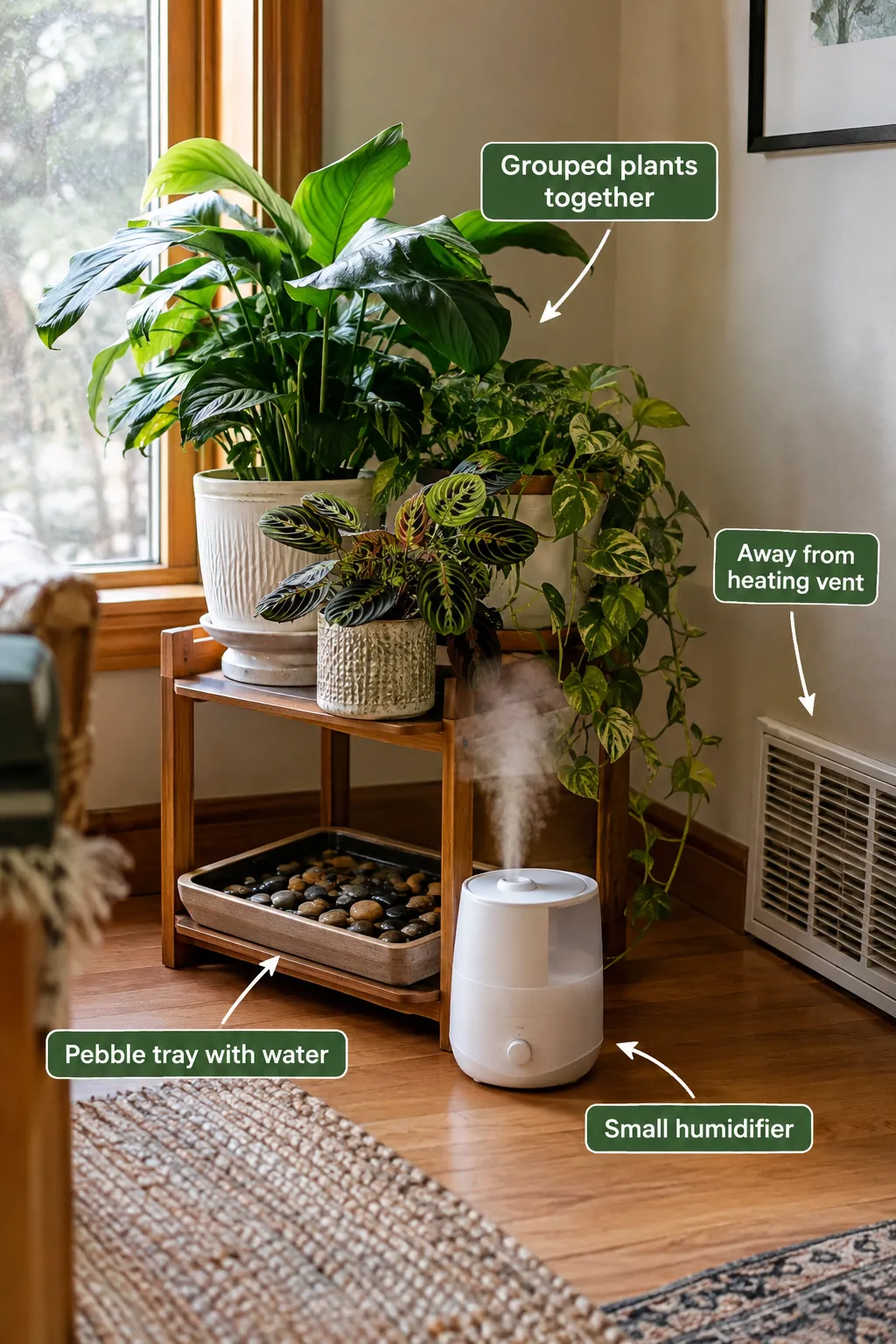
- Group plants to create a shared microclimate
- Set pots on a tray of pebbles and water, without roots touching water
- Run a small humidifier in dry rooms
- Keep plants away from direct heat vents
Pothos vs philodendron which is easier in cold weather
Pothos is generally easier than philodendron in cold weather because it tolerates lower light and inconsistent watering slightly better. Philodendron can be a bit more sensitive to sudden temperature drops.
| Trait | Pothos | Philodendron |
|---|---|---|
| Cold tolerance | Good down to ~55°F | Similar, slightly less forgiving |
| Light needs | Low to bright indirect | Medium to bright indirect |
| Watering flexibility | High | Moderate |
| Beginner friendly | Yes | Yes, with more attention |
Choose pothos if you want the lowest-maintenance option for a dim winter room.
Can I propagate pothos cuttings in winter
Yes, you can propagate pothos cuttings in winter, but rooting takes longer because growth slows down with less light and cooler temperatures. Expect roots in four to six weeks instead of two to three.
- Cut just below a node with a few leaves attached
- Place in water or moist soil near a bright window
- Keep away from cold drafts while rooting
- Be patient, since winter rooting is naturally slower
What are the common mistakes people make with pothos in winter
The most common mistake is watering on the same schedule used in summer, which drowns roots since the plant is using less water. Other frequent errors include placing pots too close to cold glass or heating vents.
- Watering too often out of habit
- Leaving plants pressed against frosty windows
- Setting pots directly on top of radiators or vents
- Repotting mid-winter when the plant is dormant
- Panicking and fertilizing to “fix” yellow leaves
The NYBG Pothos guide points out that pothos is native to tropical conditions, which is exactly why sudden cold or dryness hits it so hard indoors.
How long does it take to fix yellowing pothos leaves
Most pothos plants show visible improvement within two to four weeks once the watering, light, and temperature issues are corrected. Already-yellow leaves won’t turn green again, but new growth should come in healthy.
- Week 1-2: yellowing stops spreading
- Week 2-4: new leaf growth appears green and firm
- Beyond 4 weeks with no change: recheck for root rot
If nothing improves after a month, it’s worth checking the roots directly, since Penn State Extension notes persistent yellowing often points back to root health.
Frequently Asked Questions
Can one yellow leaf mean something is seriously wrong?
No, a single yellow leaf, especially an older one near the base, is usually normal aging and not a sign of a bigger problem.
Should I mist my pothos in winter?
Misting gives a short humidity boost but isn’t a long-term fix; a humidifier or pebble tray works better.
Is brown instead of yellow a different problem?
Yes, brown crispy edges usually point to low humidity or too much direct heat, while yellow usually points to watering or light issues.
Can I move pothos outside once winter ends?
Yes, once nighttime temps stay reliably above 55°F, pothos can move to a shaded porch for part of the year.
Does trimming yellow leaves help the plant?
Yes, removing yellow leaves redirects energy to healthy growth and improves the plant’s appearance right away.
Will pothos drop leaves in winter even when healthy?
Some natural leaf drop is normal; it’s only a concern if multiple leaves yellow at once rapidly.
Conclusion
Yellow pothos leaves in winter almost always trace back to three things: too much water, too little light, or too much cold. Walk through this Pothos Plant Care Winter Checklist, fix one variable at a time, and give the plant a few weeks to respond.
Start simple: check the soil before watering, move the pot away from cold glass, and brighten up the spot near a window. For more ideas on styling your indoor plant collection through the season, check out this Christmas houseplant decorating guide or browse more tips in the houseplants and indoor growing section.



4 Comments on “Pothos Plant Care Winter Checklist: Why Leaves Turn Yellow and How to Fix It”