Last updated: November 14, 2026
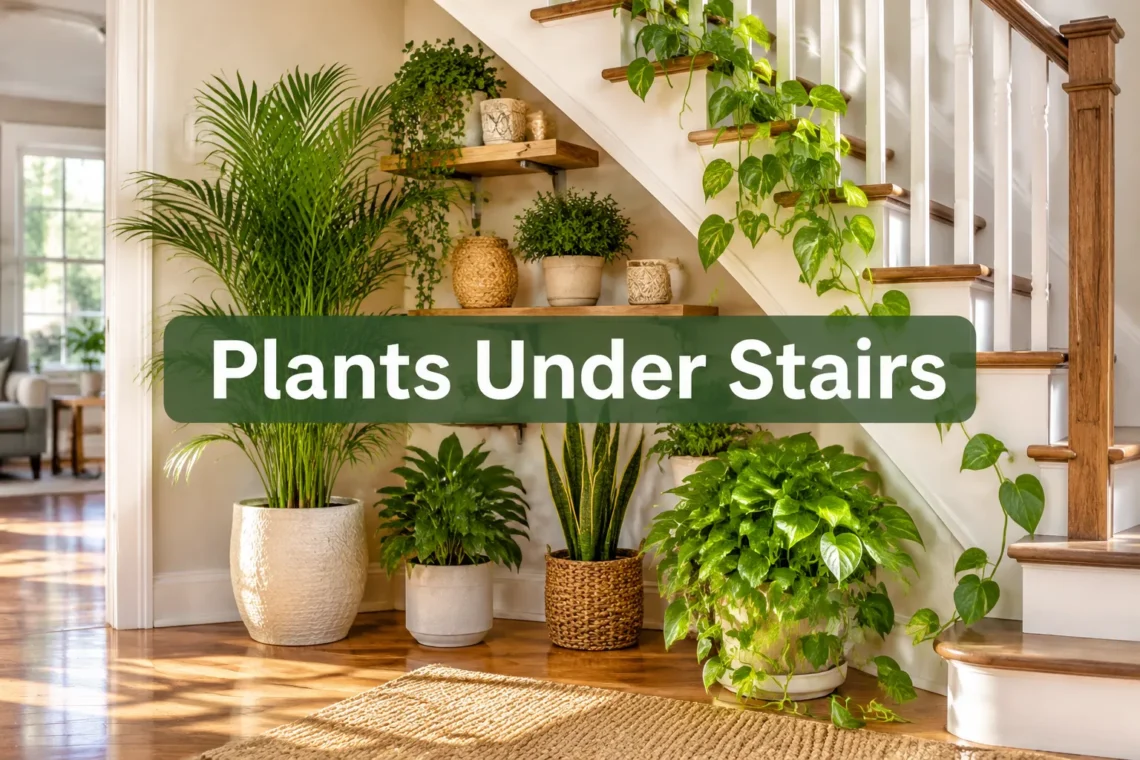
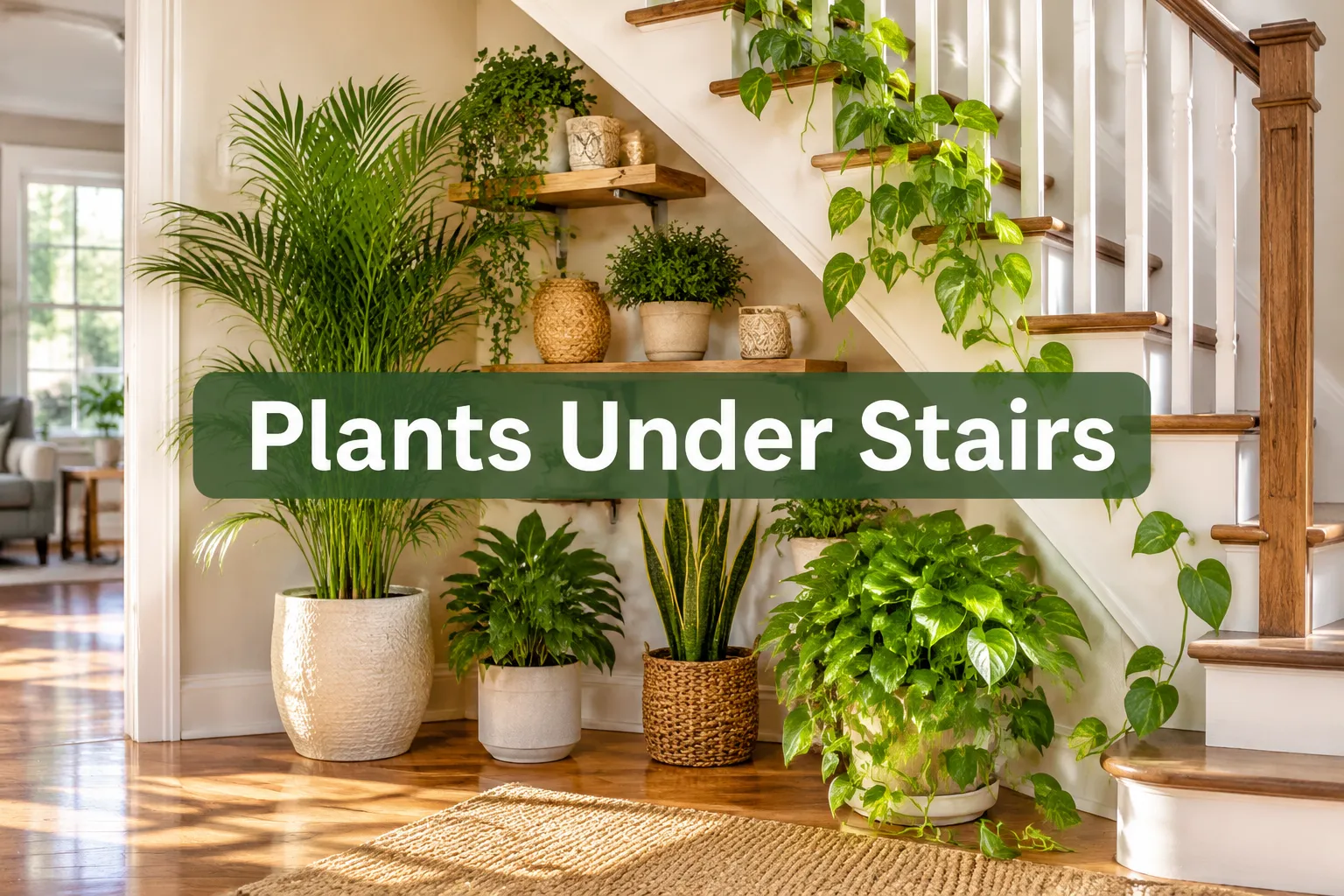
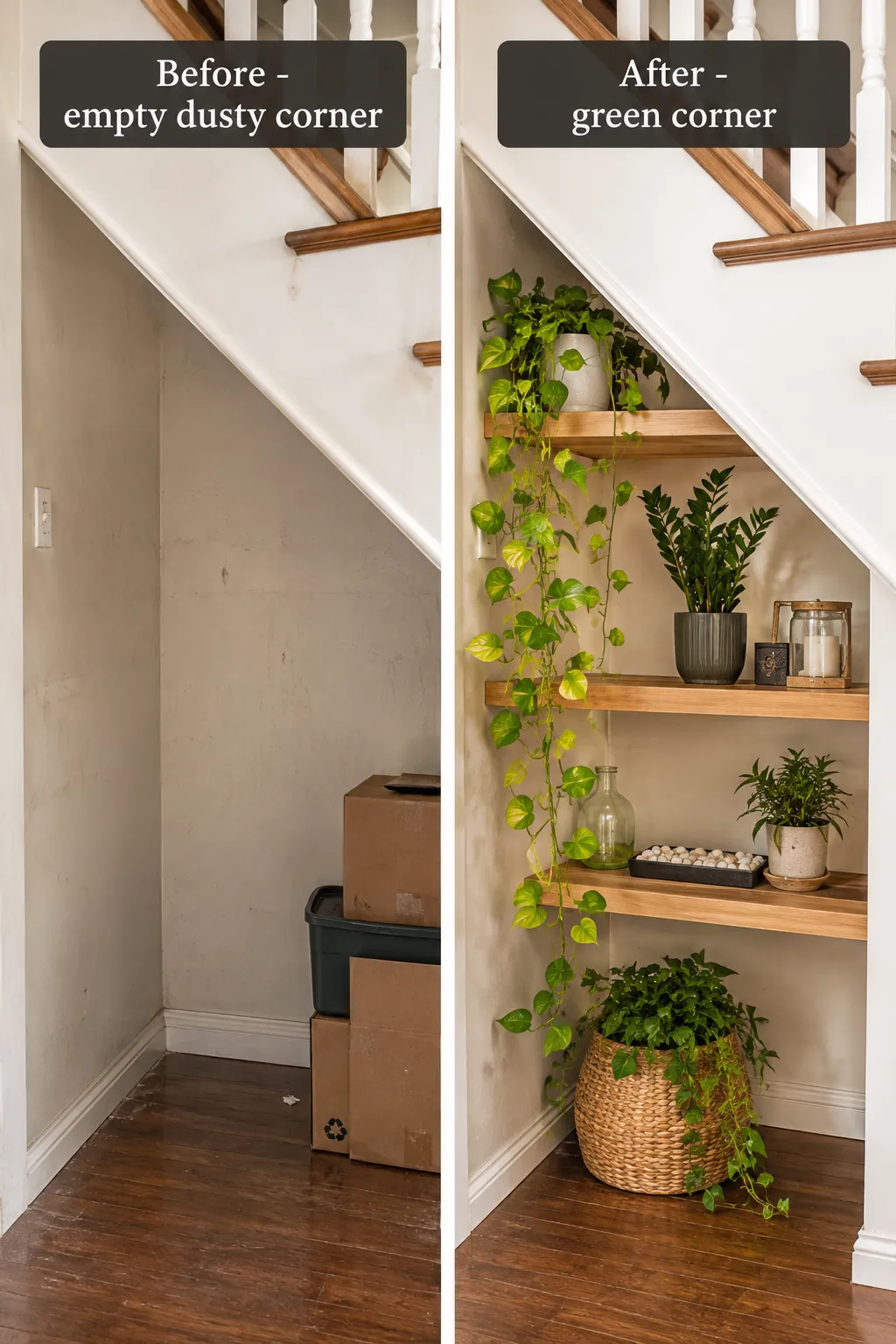
Most staircases waste the triangle of space underneath them. It becomes a dumping ground for shoes, vacuum cleaners, and boxes nobody wants to open. But that same awkward wedge is often the perfect spot for plants under stairs, and designers have been turning it into a genuine green corner for years.
Quick Answer
Plants under stairs work best when you match the plant to the light level, give it enough headroom to grow, and keep moisture in check. Low light champions like pothos, ZZ plants, snake plants, and parlor palms are the safest bets, and you can layer them on shelves, in hanging baskets, or along the stair edges to build a layered “mini jungle” look.
Key Takeaways
- Low light plants are the top recommendation for under-stairs spots, since most staircases get little to no direct sun.
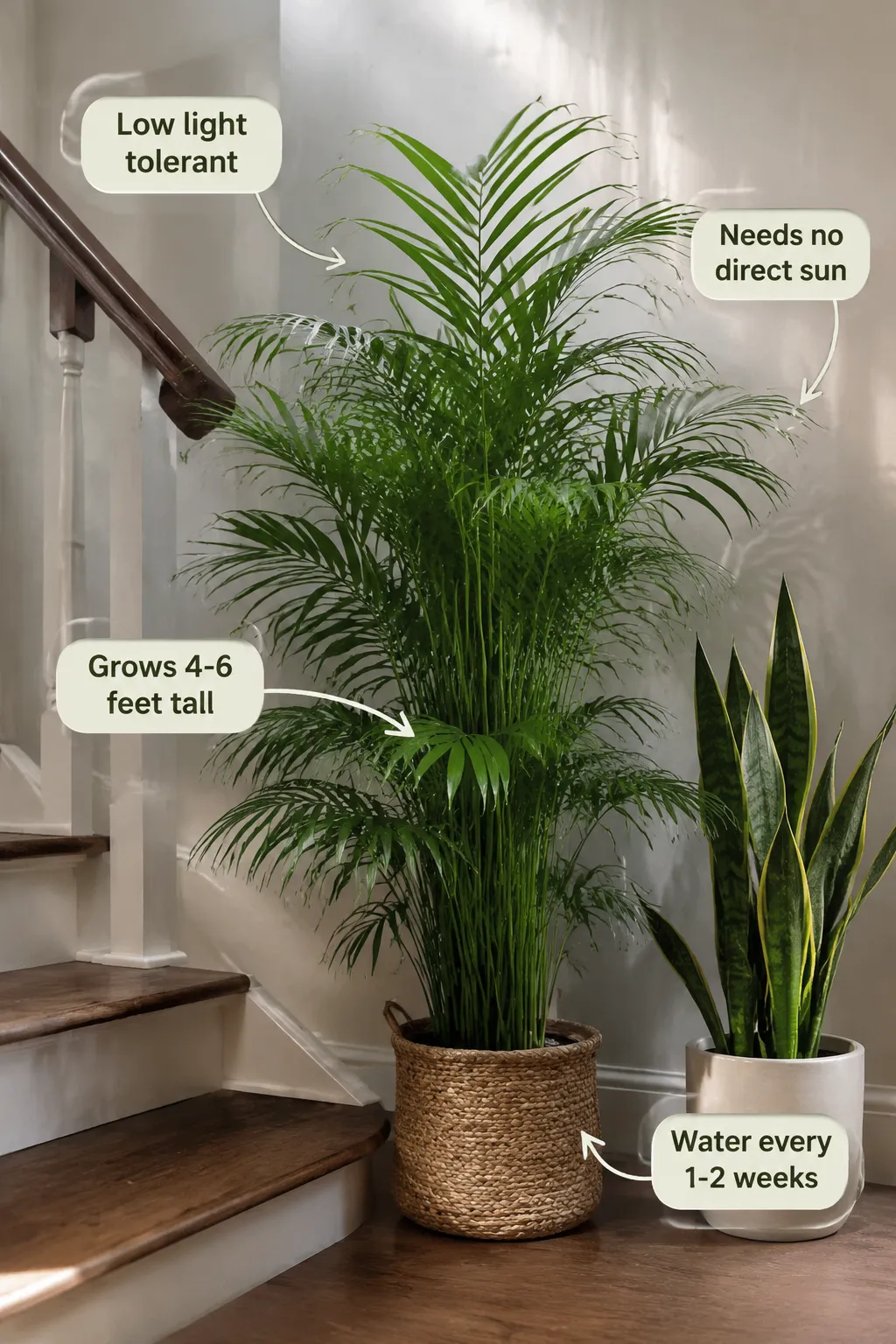
- Parlor palms handle very dim stairwells well and are a go-to pick for deep, shady corners.
- Three-tier layouts (tall, medium, trailing) create a fuller, more intentional look than a single pot.
- Grow lights are a smart fix if your staircase has zero windows nearby.
- Moisture and mold are the biggest risks, not lack of plants, so airflow matters as much as watering.
- Hanging baskets and wall shelves save floor space better than floor pots in narrow spots.
- Fake plants are a reasonable backup for truly lightless nooks, but they need dusting and don’t help air quality.
- Pebble trays and mini ponds are a growing design trend that pairs well with under-stairs greenery.
What plants grow well in low light under stairs
Pothos, snake plants, ZZ plants, and parlor palms are the most reliable choices for low light under stairs, because they evolved as forest-floor plants and tolerate shade naturally. These four show up again and again in staircase garden guides for good reason.
Parlor palms in particular are often highlighted as a proven choice for very dim stairwells, since they can handle lower light levels than most houseplants while still growing into a tall, lush shape that fills vertical space nicely, according to CASACOR’s guide on species for under-stair gardens.
Other solid picks include:
- Pothos – trails beautifully off shelves or stair edges
- Snake plant – upright, sculptural, barely needs attention
- ZZ plant – glossy leaves, tolerates near-total shade
- Peace lily – adds a flower if light is moderate, not deep shade
If you want a broader list beyond these four, check our guide to houseplants for low light that survive neglect.
How do you keep plants alive under stairs without windows
Keeping plants alive under stairs with no windows means relying on artificial light, careful watering, and plants bred for deep shade. Skip anything labeled “bright light” or “full sun” entirely.
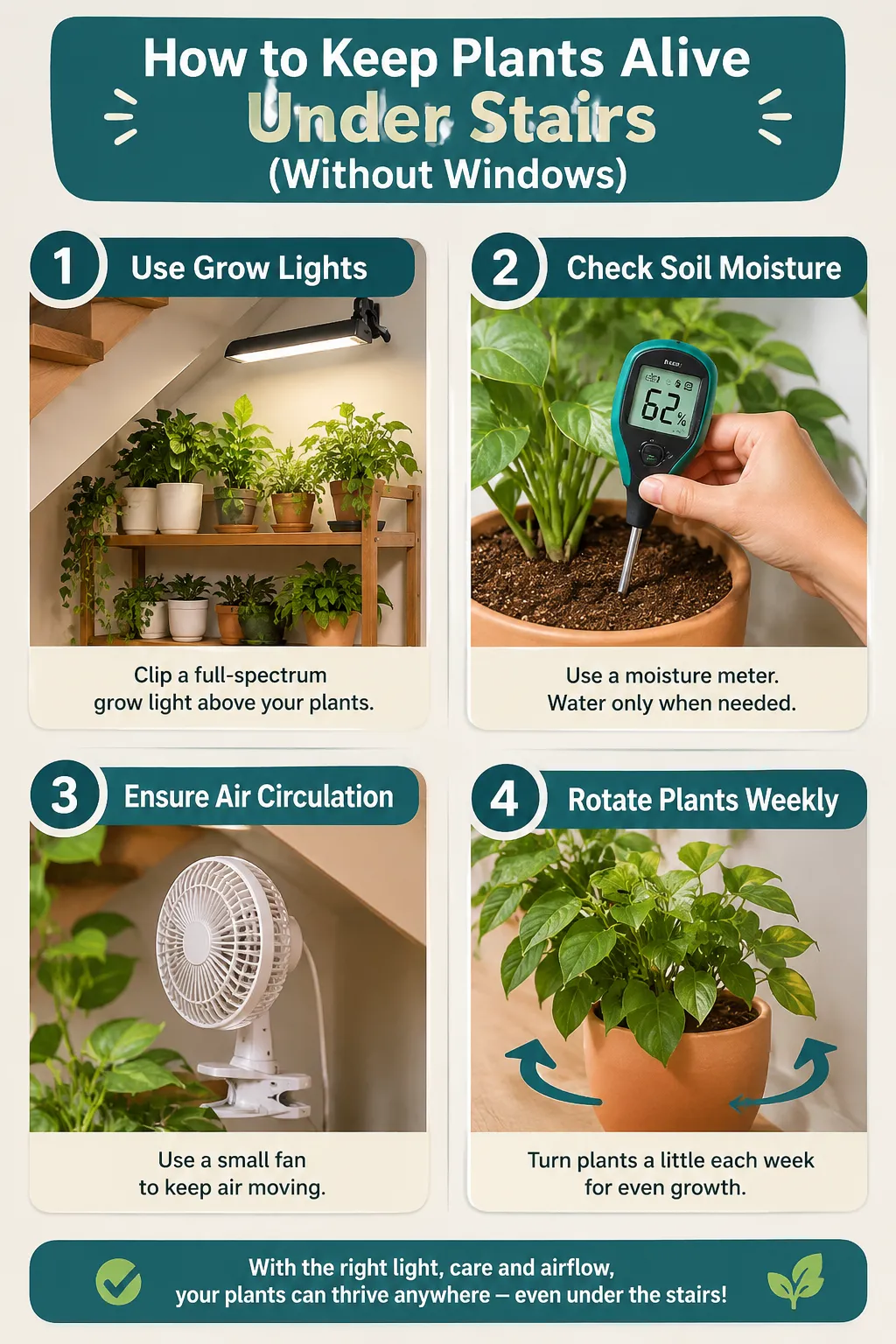
Here’s what actually helps:
- Add a small LED grow light on a timer, 10-12 hours a day
- Rotate pots every week or two so growth stays even
- Choose only confirmed low-light species (see list above)
- Check soil moisture before watering, not on a fixed schedule
A reader once told me her under-stairs pothos looked fine for months, then suddenly dropped half its leaves. The fix wasn’t more water. It was a cheap clip-on grow light, since the hallway had gone darker after she repainted the walls a deep navy, which absorbed more light than the old cream color.
Best low light plants for small spaces
The best low light plants for small spaces are compact growers that don’t need to spread wide, like ZZ plants, pothos, and smaller snake plant varieties. Bulky plants fight the narrow footprint of a stair nook.
Look for plants that grow up, not out. A tall narrow pot with a trailing vine uses less floor space than a bushy fern. If your under-stairs area is genuinely tiny, you might also like our ideas for tall planters for empty corners, which apply well here too.
Choose compact growers if your space is under 2 feet wide. Choose a single statement plant if your nook is deep enough for a parlor palm or small fiddle leaf fig.
Can you use grow lights under stairs
Yes, grow lights work well under stairs and are now treated as a core part of the design, not an afterthought. Lighting, both natural and artificial, has become something designers plan for deliberately rather than hoping a plant survives on ambient light alone, as noted in guides on smart indoor stair garden ideas.
Simple LED strip lights or small clip-on grow lamps do the job for most houseplants. You don’t need expensive greenhouse-grade fixtures for a hallway corner. Put the light on a plug-in timer so you don’t have to remember to turn it off.
Common mistake: placing the light too far from the leaves. Most small grow lights need to sit within 12-18 inches of the foliage to make a real difference.
How much do plants cost for an under stairs garden
A basic under-stairs plant setup, including two or three low light plants, pots, and a small grow light, typically runs in the range most beginner houseplant projects cost, though exact prices depend on plant size and pot material. I won’t guess a specific dollar figure here since costs vary a lot by region and retailer.
To keep costs down:
- Start with cuttings or small starter plants instead of mature ones
- Reuse containers you already own before buying new pots
- Add a grow light only if the space truly has no natural light
If budget is tight around the holidays, our Christmas plant gift guide has easy-care picks under $30 that double well as under-stairs starters.
Easiest plants to keep alive under stairs
ZZ plants and snake plants are the easiest plants to keep alive under stairs because they tolerate irregular watering, low light, and dry indoor air without complaint. If you’ve killed a few houseplants already, start here.
Pothos is a close third. It’s forgiving, grows fast, and tells you clearly when it’s thirsty by drooping, then perks back up fast after a drink. For more beginner-proof options, our houseplants for beginners who always kill their plants guide covers the full lineup.
Edge case: if your under-stairs spot sits near a heating vent, even tough plants can dry out faster than expected. Move the vent airflow away from the pot if you can.
Do plants need special humidity control under stairs
Most common houseplants don’t need special humidity control under stairs, but stagnant air can cause problems over time. The real issue is airflow, not humidity itself.
Closed-in stair nooks sometimes trap moist air near the walls. A small fan on low speed, run occasionally, keeps air moving and reduces the risk of mold on soil or nearby drywall. Ferns and peace lilies appreciate slightly higher humidity, so a pebble tray with water underneath the pot (not touching the roots) helps those specific plants.
Why do plants die under stairs
Plants usually die under stairs from too little light, not too little water, since owners often overcompensate by watering more when growth slows. The dim light causes weak growth, and the extra water then causes root rot.
Other common causes:
- Picking a plant that needs bright indirect light for a genuinely dark corner
- No airflow, leading to fungal issues on leaves or soil
- Pots without drainage holes sitting in a tight space
Decision rule: if your under-stairs spot gets zero natural light and you don’t want a grow light, choose artificial plants instead of fighting the space.
How deep does the space need to be to grow plants
A workable under-stairs plant space usually needs at least 12-18 inches of depth for small pots, and closer to 2-3 feet if you want a taller plant like a parlor palm. Shallower spaces still work with wall-mounted shelves or hanging baskets.
Measure the shortest point of the triangle, since the sloped ceiling under a staircase limits how tall a plant can grow near the low end. Put taller plants near the deepest, tallest part of the nook and smaller ones toward the shallow end.
What about mold and moisture problems under stairs
Mold risk under stairs comes mainly from poor airflow and overwatering, not from having plants there in general. Well-draining pots and a bit of air circulation solve most problems before they start.
Steps to prevent mold:
- Use pots with drainage holes and a saucer underneath
- Let the top inch of soil dry out between waterings
- Avoid clustering too many pots with zero gap between them
- Wipe down nearby walls occasionally if the space feels damp
If you notice yellowing leaves alongside a musty smell, check our guide on indoor plant yellow leaves causes and fixes, since overwatering and mold often show up together.
Should you use fake plants instead of real ones
Fake plants are a reasonable choice for under-stairs spots with zero light and no plan to add a grow light. They won’t purify the air the way real plants can, but they solve the “dead corner” look instantly.
A practical middle ground: mix a few real, tough plants (ZZ plant, snake plant) with one or two realistic fake ones in the darkest patch. This keeps some living greenery while covering the spot where nothing would survive anyway.
How often do you water plants under stairs
Most low light plants under stairs need watering every 1-2 weeks, since slower growth in dim conditions means they use less water than plants in bright rooms. Overwatering is the bigger risk here, not underwatering.
Check the soil with a finger before watering. If the top 2 inches feel dry, water thoroughly until it drains out the bottom. If it still feels damp, wait a few more days.
What if your staircase gets no natural light at all
If your staircase gets no natural light at all, a small LED grow light paired with the toughest shade plants, or a mix with artificial greenery, is your most reliable path. Don’t try to force a plant that needs any real sunlight into a windowless hallway.
ZZ plants and snake plants are the most forgiving in this exact scenario, since they’re documented as tolerating very low light conditions better than almost any other common houseplant.
Are hanging baskets or pots better for under stairs
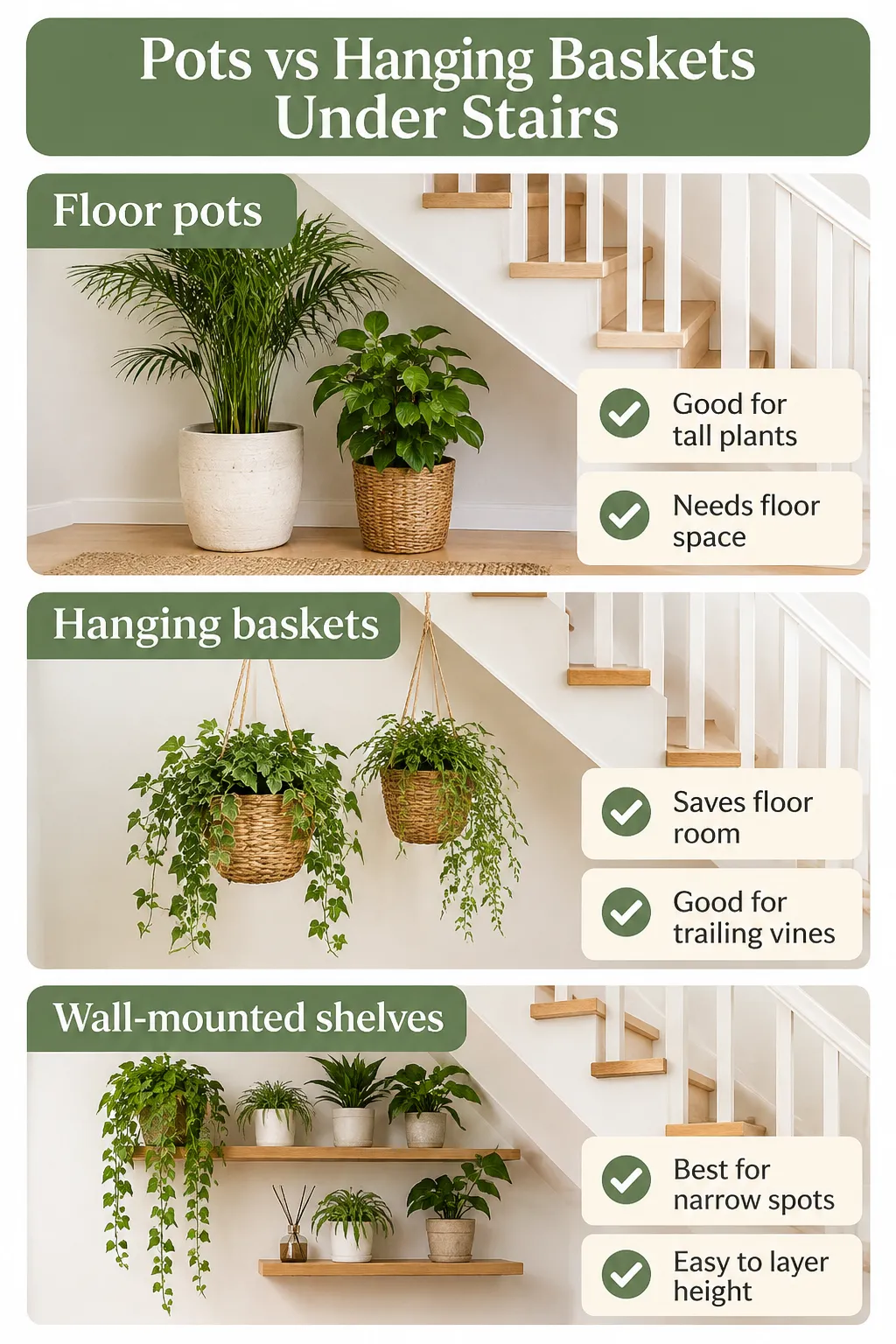
Hanging baskets save floor space and work well in narrow under-stairs nooks, while floor pots suit deeper spaces where you want a taller statement plant. The choice comes down to how much width you actually have.
| Option | Best for | Watch out for |
|---|---|---|
| Hanging baskets | Narrow or low-ceiling nooks | Drips when watering |
| Floor pots | Deep spaces, tall plants | Takes up walking room |
| Wall-mounted shelves | Layered “three-tier” looks | Needs secure wall anchors |
| Step-edge planters | Staircases with wide treads | Risk of knocking over |
Designers increasingly mount ring planters right onto stair edges and balustrades to save floor space entirely, a trend covered in ideas for the space under your stairs. Curved staircases often call for an “anchored” composition, where one tall plant sits at the base and smaller ones step up alongside the curve, following the natural height ratio of the stairs themselves, per indoor staircase garden ideas.
10 Ways to Build Your Green Corner
- Layer in three tiers – tall plant in back, medium in middle, trailing vine in front, a layout repeated across most expert staircase designs.
- Add a pebble tray or mini Zen garden underneath the plants for texture, a pairing designers use often, as shown in pebble garden ideas under the stairs.
- Mount a vertical wall garden if floor space is nearly zero, following the wall-mounted trend covered in smart indoor stair garden ideas.
- Mix leaf textures for a “mini jungle” feel, combining broad pothos leaves with spiky snake plant blades.
- Clip a grow light to a shelf edge if the spot sits far from any window.
- Use step-edge planters on wide stair treads to avoid using floor space at all.
- Pick one statement plant, like a parlor palm, as the anchor piece for curved or open staircases.
- Group plants by light need so you’re not stressing a sun-lover next to a shade-lover.
- Add a small fan nearby if the nook feels stuffy or damp.
- Swap in fake plants for the darkest, deadest corner where nothing real will thrive.
For more inspiration on building out this kind of corner, decorating under stairs ideas and indoor garden on the staircase ideas are both worth a browse. Under-stairs green corners are increasingly discussed as part of the broader plant-corner and home storage-optimization movement, and biophilic stair design looks set to keep growing as more homeowners look for ways to use dead space well.
FAQ
Can any plant survive under a dark staircase?
No. Stick to confirmed low light plants like ZZ plants, snake plants, and pothos. Anything needing bright or direct light will decline fast.
Do I need a grow light if my staircase has a small window nearby?
Usually not, if the window provides some indirect daylight for several hours a day. A grow light becomes necessary only when there’s no natural light reaching the spot at all.
How tall can plants get under stairs?
It depends on the ceiling slope. Near the tall end of the triangle, plants like parlor palms can reach several feet; near the shallow end, stick to compact pots.
Will plants under stairs damage the stairs or walls?
Not if you use pots with drainage and saucers, and keep airflow decent. Water damage happens from overflow or poor drainage, not from the plants themselves.
Is it okay to mix real and fake plants in the same nook?
Yes, this is a common and practical approach, especially when part of the space gets light and another part doesn’t.
What’s the single easiest plant to start with?
A pothos or a ZZ plant. Both tolerate low light and inconsistent watering better than almost anything else.
Conclusion
Plants under stairs turn one of the most ignored spots in a home into something you’ll actually enjoy walking past. Start small: pick one or two low light plants, check how much depth and light your space really has, and add a grow light only if you truly need one.
Watch moisture more than anything else, since that’s what causes most failures, not darkness alone. Once you’ve got the basics working, layer in a second tier, a pebble tray, or a hanging basket, and your dead space becomes the green corner guests actually notice.
For more room-by-room plant ideas, browse our full houseplants and indoor growing section.