Last updated: November 14, 2026
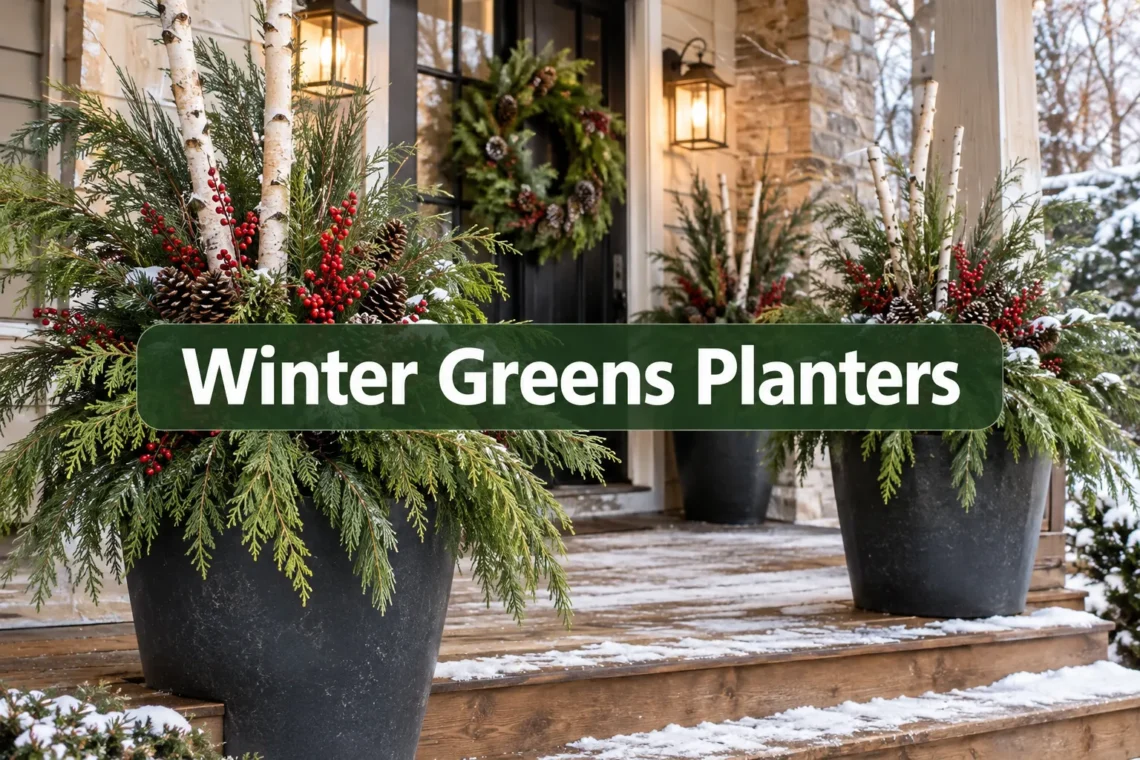
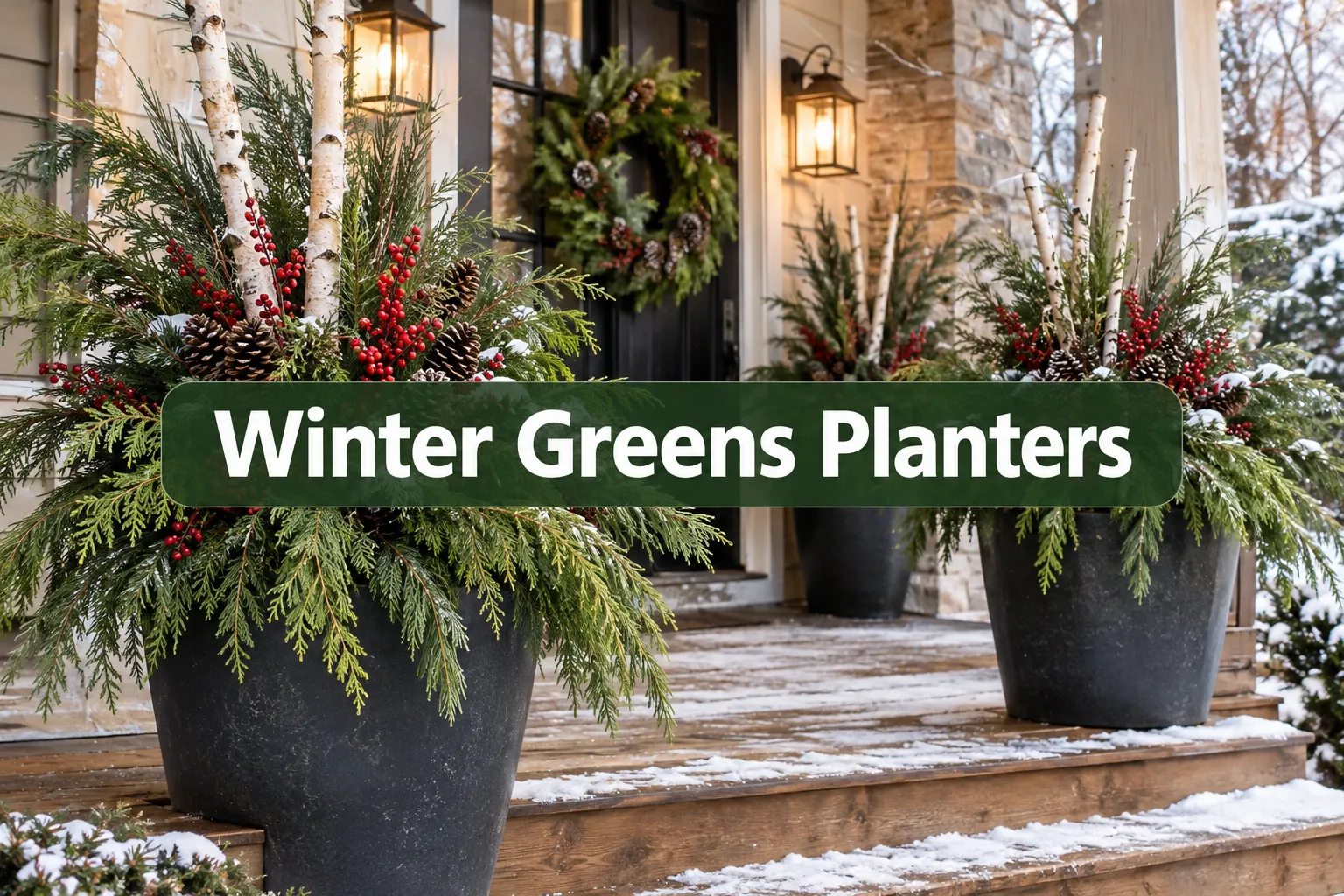
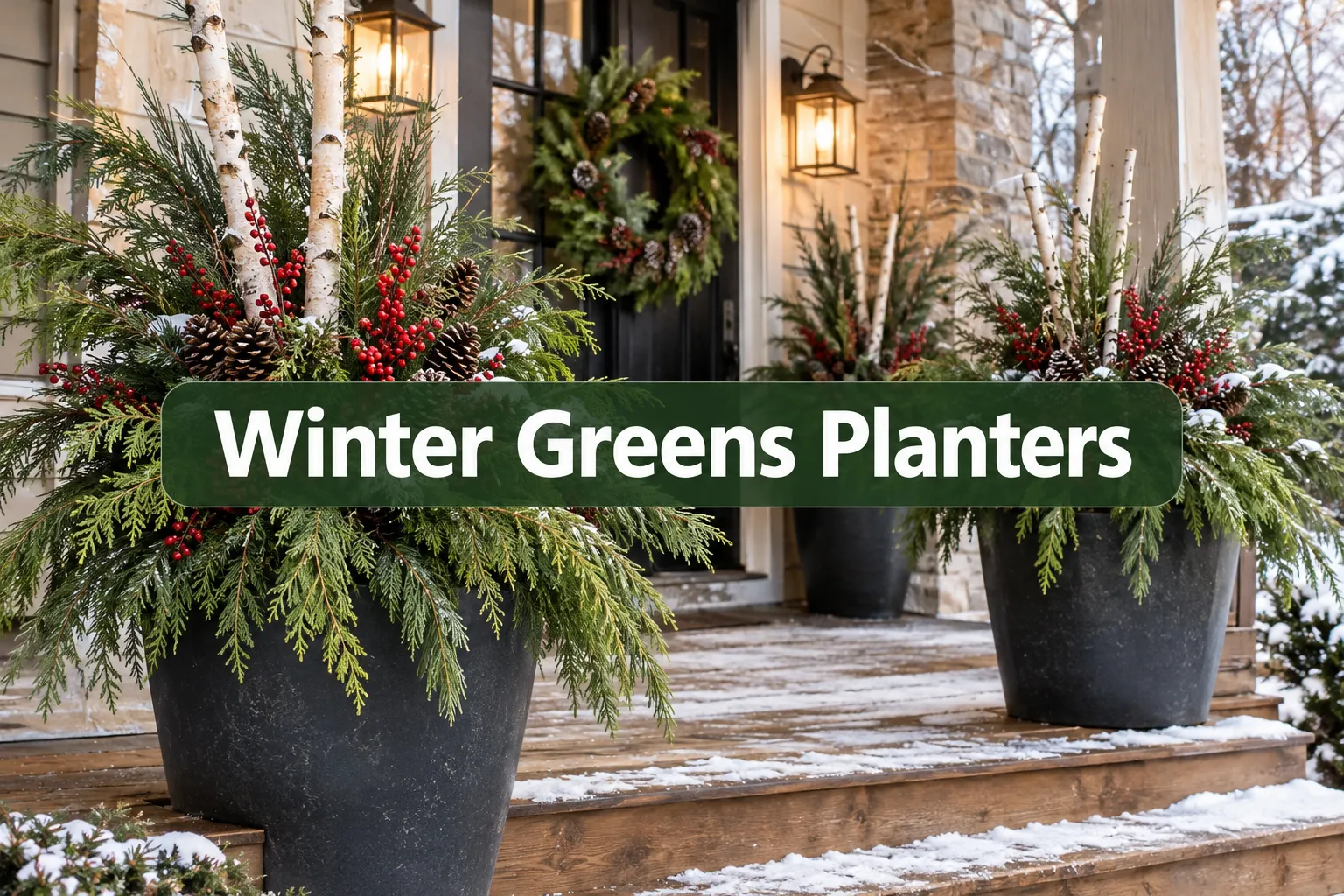
Most porch plants die by January not because of the cold, but because the pot itself is wrong. A cracked terra-cotta container, a pot with no drainage, or soil that stays soggy will kill evergreens faster than any frost. Get the container right, and winter greens planters can look full and alive from Thanksgiving straight through March.
Quick Answer
Winter greens planters work best when you pair cold-hardy evergreens like boxwood, skimmia, or dwarf spruce with a sturdy, crack-resistant pot (resin, metal, or stone, not ceramic). Water sparingly, place in a spot with some sun or bright shade, and build the display in layers using a “thriller, filler, spiller” approach for a porch container that stays attractive all winter.
Key Takeaways
- Choose hardy evergreens such as boxwood, skimmia, pittosporum, hebe, or dwarf Alberta spruce for lasting winter color, as recommended by Homes & Gardens.
- Avoid terra-cotta and ceramic pots. Resin, metal, and stone containers resist cracking in freeze-thaw cycles, per Midwest Living.
- Build containers after the first hard cold snap but before the potting soil freezes solid, usually around Thanksgiving in much of the U.S.
- Water less often in winter, soil dries out slower in cold temperatures.
- Use the “thriller, filler, spiller” layout: a tall focal plant, mid-height fillers, and trailing greens at the edges.
- Reused fall soil and yard trimmings (boxwood, pine, leftover Christmas tree branches) can build a planter at little to no cost.
- Group pots together and insulate roots to protect against extreme cold snaps.
- Browse more hardy porch picks for outdoor pots if you want extra plant options beyond this list.
What evergreens are best for winter porch planters
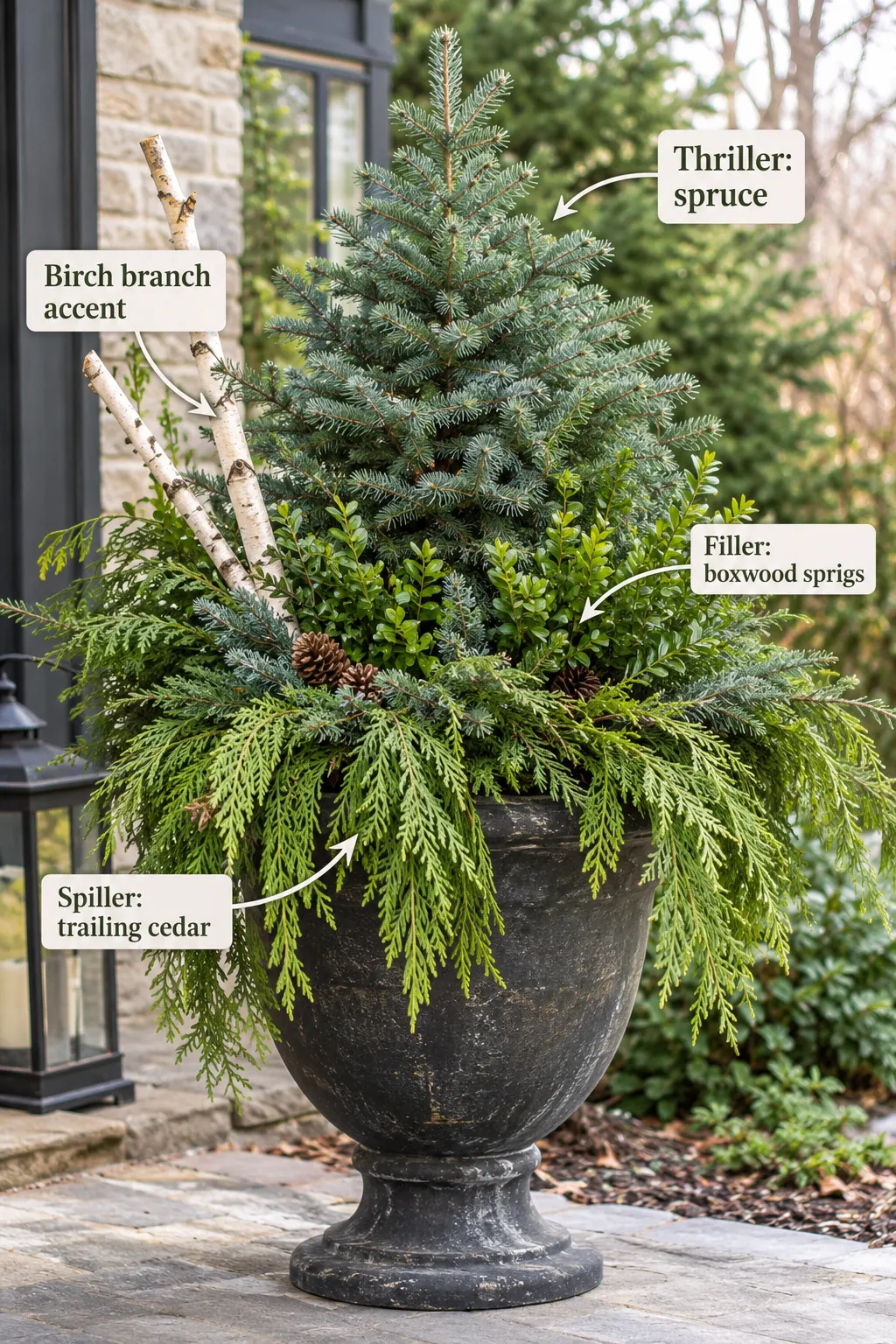
The best evergreens for winter porch planters are structural, slow-growing plants that hold their color and shape for months without fading. Think boxwood, bay laurel, Japanese skimmia, pittosporum, hebe, hart’s tongue fern, and winter daphne.
These plants earned their reputation because they tolerate cold snaps and still look sharp into late winter, according to Homes & Gardens.
A few reliable picks:
- Boxwood (Buxus): Dense, classic, holds shape well in cold.
- Skimmia: Glossy leaves plus red berry clusters for color.
- Pittosporum: Variegated foliage adds texture without needing flowers.
- Dwarf Alberta spruce: A natural “thriller” centerpiece, often used in holiday urns.
- Wintergreen: Low, leathery foliage with red berries, great for front-of-pot placement, as noted by Real Simple.
Choose boxwood or skimmia if you want year-round structure. Choose wintergreen if you want a low, berry-forward accent plant near the front of the container.
How to keep container plants alive in freezing temperatures
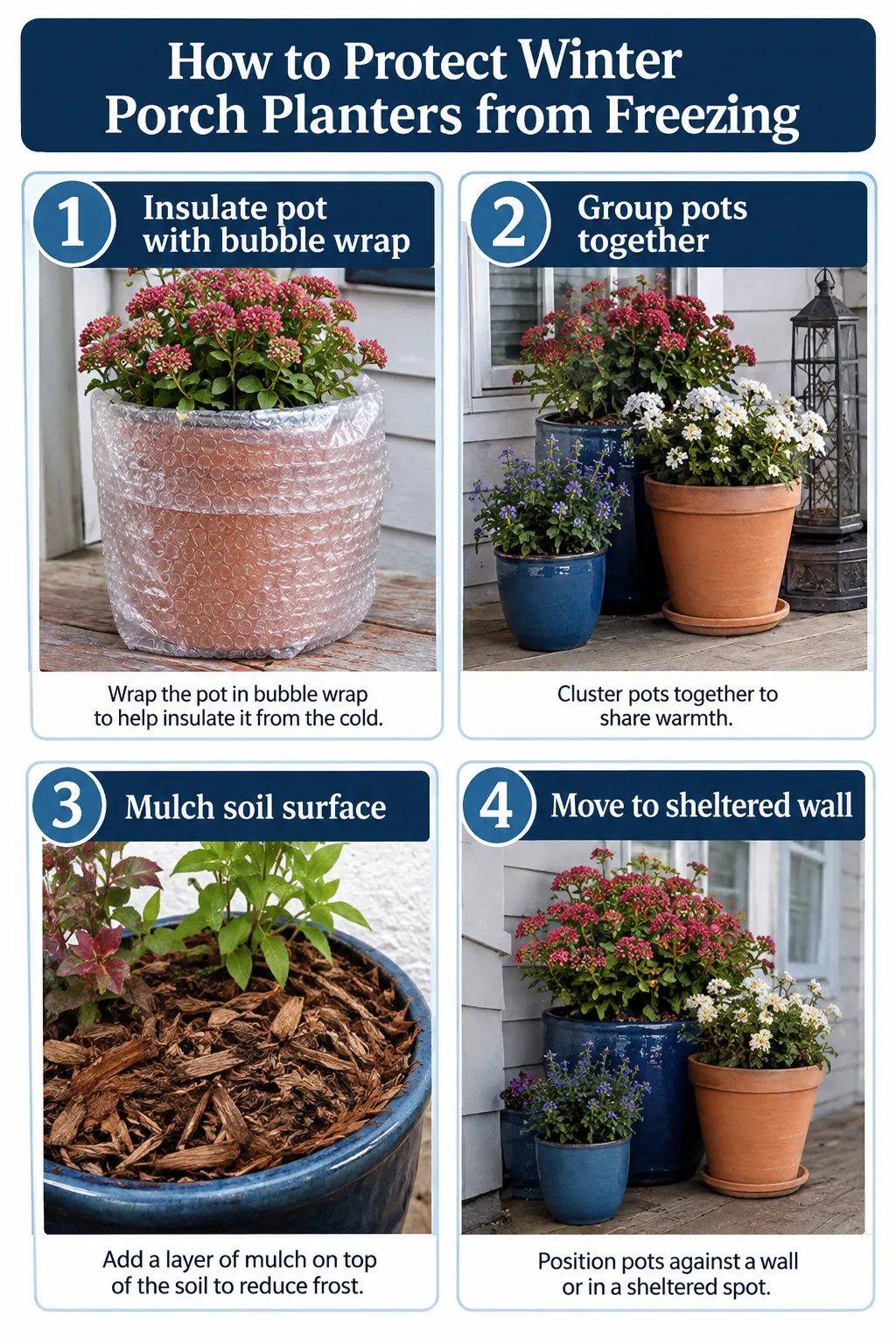
Container plants survive freezing weather best when their roots are insulated and the pot itself can’t crack from ice expansion. Roots in pots are more exposed to cold than roots in the ground, so a few extra steps matter a lot.
Try these:
- Group several pots together, they insulate each other.
- Wrap pots in bubble wrap or burlap for extra root protection.
- Mulch the soil surface with bark or straw.
- Move containers against a sheltered wall or under a porch roof.
- Avoid letting pots sit in standing water or ice.
Common mistake: leaving a single small pot exposed on an open railing. Small pots freeze through fastest because there’s less soil mass to buffer the cold.
Do winter planters need special soil or regular potting mix
Regular potting mix works fine for winter greens planters, you don’t need a special “winter” blend. What matters more is drainage.
Soil that stays wet and freezes solid can suffocate and damage roots. A well-draining mix, even reused soil from fall containers, is usually enough, according to Midwest Living. Just make sure the pot has real drainage holes.
Edge case: if you’re using mostly cut greenery (branches with no roots) rather than live rooted plants, soil quality barely matters since the branches aren’t actively growing or feeding.
Why are my winter planter plants dying or turning brown
Browning evergreens usually come down to one of three causes: root freeze, wind desiccation, or poor drainage. Cold wind dries out foliage faster than the roots can replace moisture, which is why evergreens in exposed, windy spots brown out first.
Quick checklist to diagnose the problem:
- Brown tips only: likely wind burn, move the pot to a more sheltered spot.
- Whole plant wilting and brown: check for frozen or waterlogged roots.
- Yellowing before browning: could be a drainage issue, similar to what causes yellow leaves on indoor plants.
- Sudden total collapse after a cold snap: the plant likely wasn’t cold-hardy enough for your zone.
Choose plants rated for your USDA hardiness zone or one zone colder, since pots offer less insulation than ground soil.
What size pots should I use for winter greens
Use the largest pot you can comfortably manage, bigger pots hold more soil mass and that soil mass insulates roots from extreme cold. A 14 to 20 inch diameter container is a solid middle ground for most porches.
Smaller pots (under 10 inches) dry out and freeze faster, and they can’t anchor tall branches like birch poles or spruce tops without tipping over. If you’re working with small spaces, grouping several medium pots together mimics the insulation benefit of one large pot.
Can winter planters survive in shade or do they need sun
Most evergreens used in winter planters tolerate partial shade just fine, since winter sun is weaker anyway and many porches are naturally shaded by roofs. Full shade all season can slow growth, but it won’t kill a dormant evergreen the way deep cold can.
Choose shade-tolerant options like hart’s tongue fern, skimmia, or hebe if your porch gets limited light. Choose boxwood or pittosporum if you get a few hours of direct winter sun, they’ll hold color better with some light.
How often should I water winter porch containers
Water winter porch containers far less than you would in summer, usually once every 1 to 2 weeks, depending on your climate. Cold temperatures slow evaporation and plant growth, so soil stays moist longer.
Check the top two inches of soil with a finger before watering. If it’s still moist or frozen, skip watering that week. Overwatering in winter is a more common mistake than underwatering, since gardeners often water on habit rather than actual need.
What companion plants go well with evergreens in planters
Ornamental grasses, heuchera, hardy herbs, and even edible greens like Swiss chard or mustard pair well with evergreens for texture and color contrast. This layering approach turns a basic evergreen pot into a more dynamic winter display, as highlighted by Virginia Living.
Good companion combos:
- Boxwood plus feathery ornamental grass for height contrast.
- Skimmia plus heuchera for leaf color variation.
- Dwarf spruce plus trailing ivy for a classic thriller-spiller look.
- Pine or cedar cuttings plus red-stem dogwood for vertical drama.
If you enjoy mixing edible plants into containers, check out these kitchen herb and greenery ideas for inspiration that can extend into porch pots too.
Winter planter ideas for small apartments and balconies
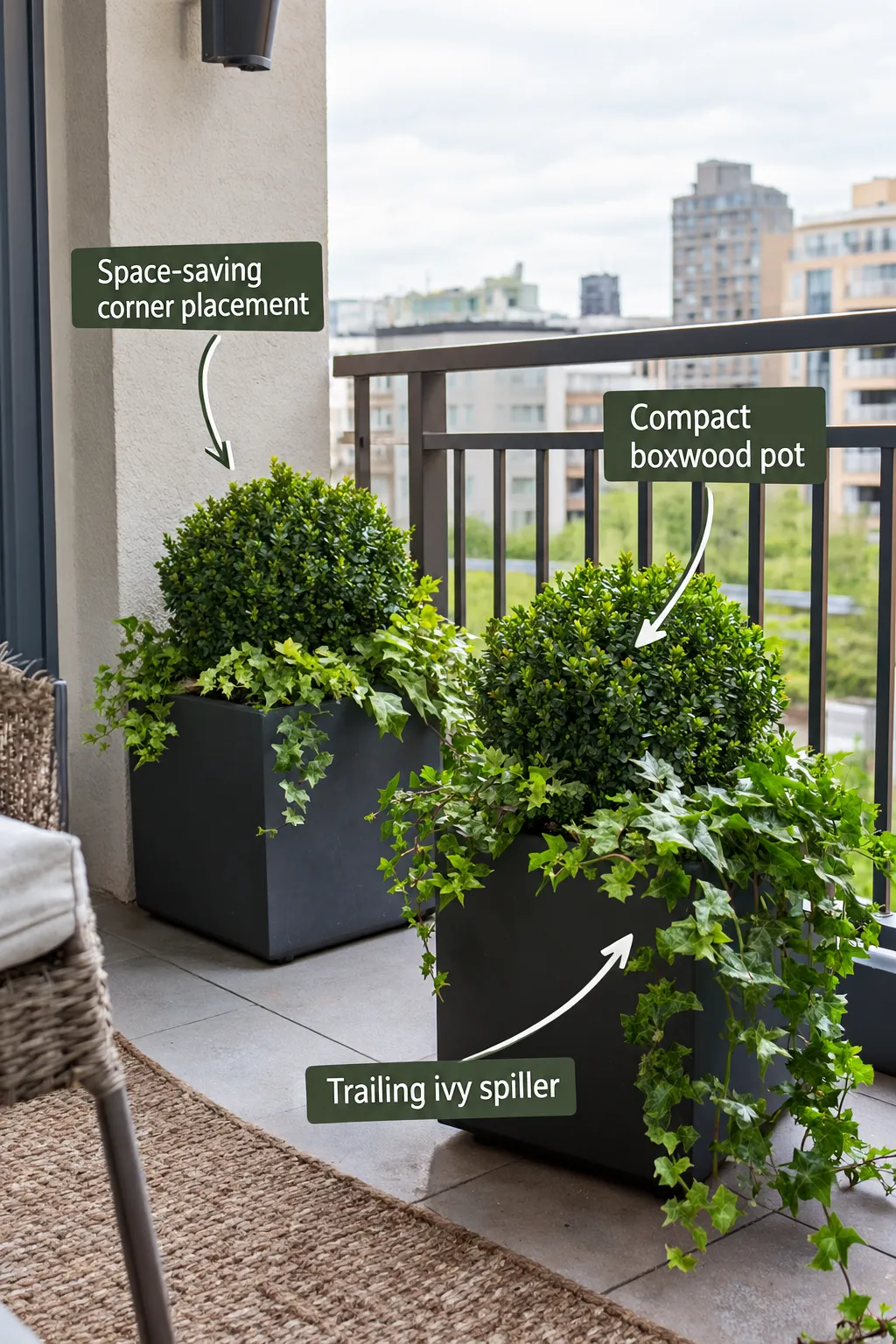
Small spaces do best with compact evergreens in medium pots, since oversized containers can overwhelm a balcony or block walkways. Stick to plants under 2 feet tall unless you have real floor space to spare.
Ideas that work well in tight footprints:
- A single boxwood ball in a 12 inch pot by the door.
- Two matching small evergreen pots flanking a balcony railing.
- A narrow upright juniper tucked into a corner.
- Mixed succulent-and-evergreen combos for a modern look, similar in spirit to these DIY succulent planter ideas.
Are plastic or ceramic pots better for winter containers
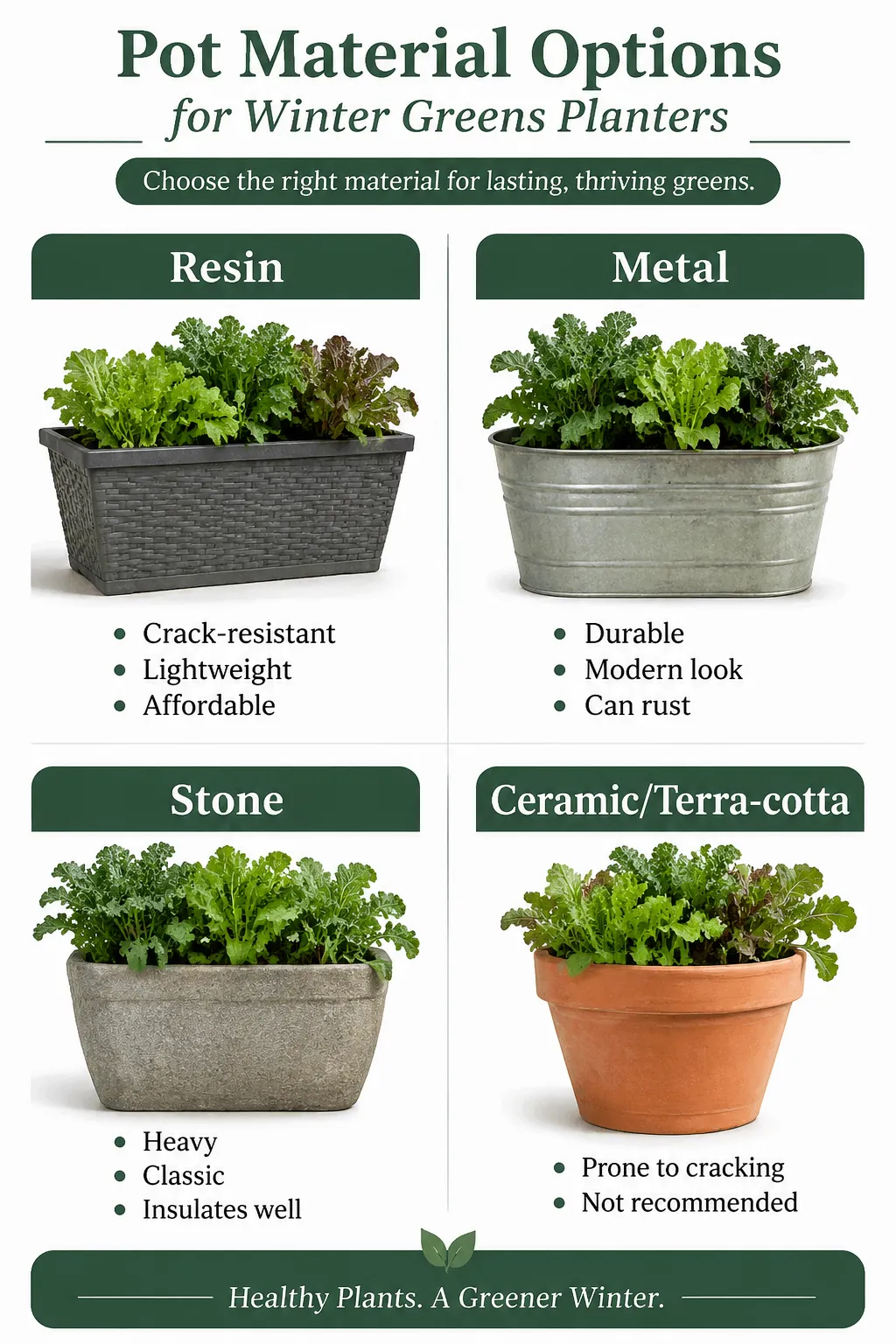
Plastic and resin pots are generally better than ceramic for winter containers because ceramic and terra-cotta can crack when water inside the clay freezes and expands. This is one of the most repeated warnings from experienced gardeners.
Better options for cold climates:
- Resin or plastic: lightweight, affordable, won’t crack.
- Metal (galvanized buckets, watering cans): durable and stylish, though it can get very cold to the touch.
- Stone or concrete: heavy and durable, insulates well, but expensive and hard to move.
Choose ceramic only if you plan to bring the pot indoors or store it somewhere protected once temperatures drop below freezing regularly.
Common mistakes people make with winter planters
The most common mistake is using the wrong pot material, followed closely by overwatering and placing containers in wind-exposed spots. Each of these mistakes can undo an otherwise well-planned winter greens planter.
Other frequent errors:
- Choosing plants not rated for your climate zone.
- Packing the pot too tightly, leaving no room for roots to breathe.
- Forgetting drainage holes entirely.
- Watering on a fixed schedule instead of checking soil moisture.
When should I plant evergreens for winter planters
Plant or build evergreen winter containers after the weather has turned consistently cold but before the potting soil freezes solid, which is typically around Thanksgiving in much of the U.S. according to guidance referencing Reiman Gardens at Iowa State University.
Waiting until after a hard freeze locks the soil and makes it nearly impossible to insert branches or settle root balls. Planting too early, while it’s still warm, can stress cold-hardy plants that need a dormancy trigger.
If you’re also prepping houseplants for the season, this guide to bringing houseplants in for winter covers the indoor side of the same seasonal shift.
How to protect winter planters from extreme cold
Protect winter planters from extreme cold by insulating the pot, grouping containers together, and sheltering them from wind, ideally against a wall or under a roof overhang. These three steps address the main ways cold damages container plants: root freeze, wind desiccation, and pot cracking.
During an unusually harsh cold snap (well below your normal winter lows), consider temporarily covering plants with frost cloth overnight. Remove the cover during the day so plants still get light and air.
What’s the cheapest way to make winter porch planters
The cheapest way to build winter porch planters is to reuse existing soil-filled containers from fall and fill them with free yard cuttings instead of buying new plants. Gardeners have built full, attractive displays using boxwood, Andromeda, rhododendron, pine trimmings, and leftover Christmas tree branches as both vertical “thriller” stems and trailing “spiller” greens, as described by Stacy Ling.
Budget-friendly checklist:
- Reuse fall containers, don’t buy new pots.
- Clip extra branches from your own yard or a friend’s.
- Save Christmas tree trimmings after the holidays.
- Add pinecones or dried seed heads instead of store-bought ornaments.
This approach works because most “winter greens planters” people admire are built from cut branches, not expensive nursery plants, so the real cost is mostly your time.
Pros and cons of evergreen porch containers
| Pros | Cons |
|---|---|
| Lasts months with little upkeep | Upfront cost for hardy pots |
| Adds curb appeal through winter | Needs careful pot material choice |
| Can be built with free yard clippings | Some evergreens struggle in deep shade |
| Low watering needs | Extreme cold snaps still need protection |
FAQ
Do winter greens planters need fertilizer?
No. Most evergreens are dormant or semi-dormant in winter and don’t need fertilizer until spring growth resumes.
Can I use real cut branches instead of rooted plants?
Yes. Cut branches like pine, cedar, and birch are common in winter displays and don’t need soil to stay fresh for weeks in cold weather.
Will my evergreen planter survive snow?
Yes, light snow actually insulates soil and foliage. Heavy, wet snow piling on branches can bend or break them, so brushing off excess snow helps.
How long do winter porch planters last?
A well-built container with hardy evergreens or fresh-cut greens typically looks good from late November through February or March, depending on your climate.
Can I reuse the same soil from my summer or fall planters?
Yes, reused potting soil works fine for winter displays as long as it drains well and isn’t compacted.
What’s the ideal spot for a winter planter on my porch?
A spot that gets some daylight but is sheltered from direct wind, often near the front door or under a roof overhang, works best.
Should I bring winter planters indoors during a deep freeze?
Only if the pot material is fragile (ceramic) or the plants aren’t cold-hardy for your zone. Hardy evergreens in resin or metal pots can usually stay outside.
Conclusion
Winter greens planters don’t need to be complicated or expensive. Pick a sturdy pot that won’t crack, choose evergreens rated for your zone, and layer in some texture with grasses, berries, or trailing greens.
Build your container before the ground freezes, water sparingly, and give it a sheltered spot out of harsh wind. That’s really the whole formula.
If you want to keep the momentum going indoors too, take a look at styling houseplants for Christmas or check this month’s winter garden task checklist to stay on top of the rest of your yard.