
Last updated: November 15, 2026
Spider plants drop more leaves to cold drafts than to actual frost. That one fact surprises a lot of plant owners, because most assume winter trouble means the temperature is too low. In reality, the biggest threat is usually a heating vent, a drafty window, or a watering can that hasn’t slowed down with the season.
Quick Answer
Spider Plant Winter Care comes down to four things: water less often, keep temperatures above 50°F (10°C), give it bright indirect light even on short days, and stop fertilizing until spring. Get those right and your plant will coast through winter with minimal fuss.
Key Takeaways
- Water only when the top 1-2 inches of soil feel dry, usually every 1-2 weeks in winter.
- Keep spider plants between 55-75°F (13-24°C); below 50°F (10°C) causes stress.
- Yellowing in winter is often tied to overwatering or chlorinated tap water, not cold alone.
- Spider plants need bright indirect light year-round, even in winter months.
- Skip fertilizer from late fall through late winter while growth slows down.
- Keep plants away from drafty windows, exterior doors, and heater vents.
- Propagation is possible in winter, but it is slower than warm-season propagation.
- Spider plants don’t go fully dormant, but growth does noticeably slow.
How often should I water my spider plant in winter?
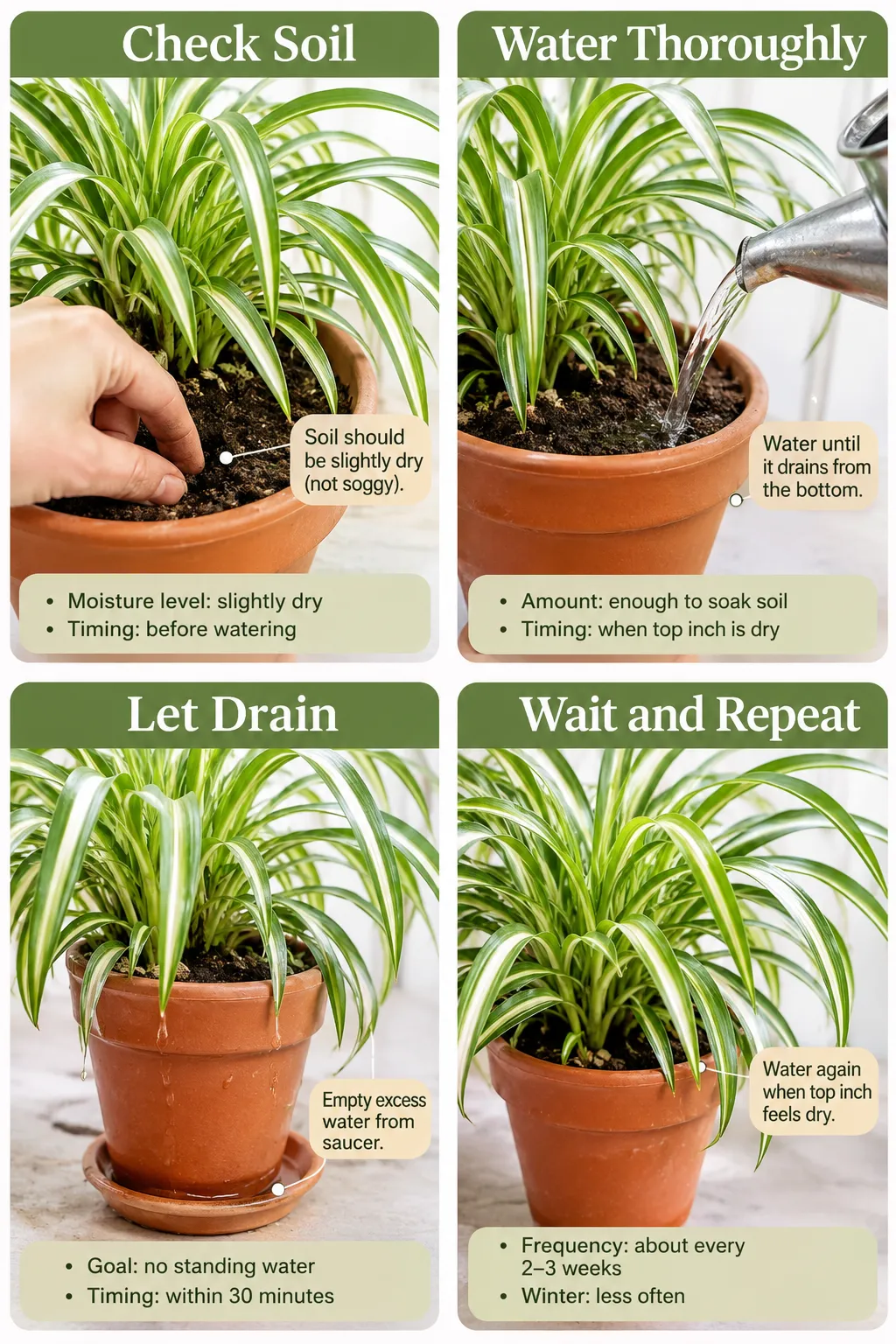
Water less often in winter than you do in spring or summer. Check the soil before you water, and only water when the top one to two inches feel dry to the touch.
Spider plants store some water in their thick, fleshy roots, so they tolerate short dry spells better than constant soggy soil. In winter, lower light and cooler room temperatures slow down how fast the plant uses water, which means the soil stays moist longer.
A simple routine:
- Stick a finger into the soil up to the second knuckle.
- If it feels dry, water thoroughly until it drains from the bottom.
- If it feels damp, wait a few more days and check again.
Most homes see spider plants needing water every one to two weeks in winter, compared to weekly in summer. This isn’t a strict rule though, it depends on your home’s heating and humidity.
Common mistake: sticking to a fixed weekly watering schedule all year. Soil dries slower in winter, so a fixed calendar often leads to root rot.
What temperature do spider plants need in winter?
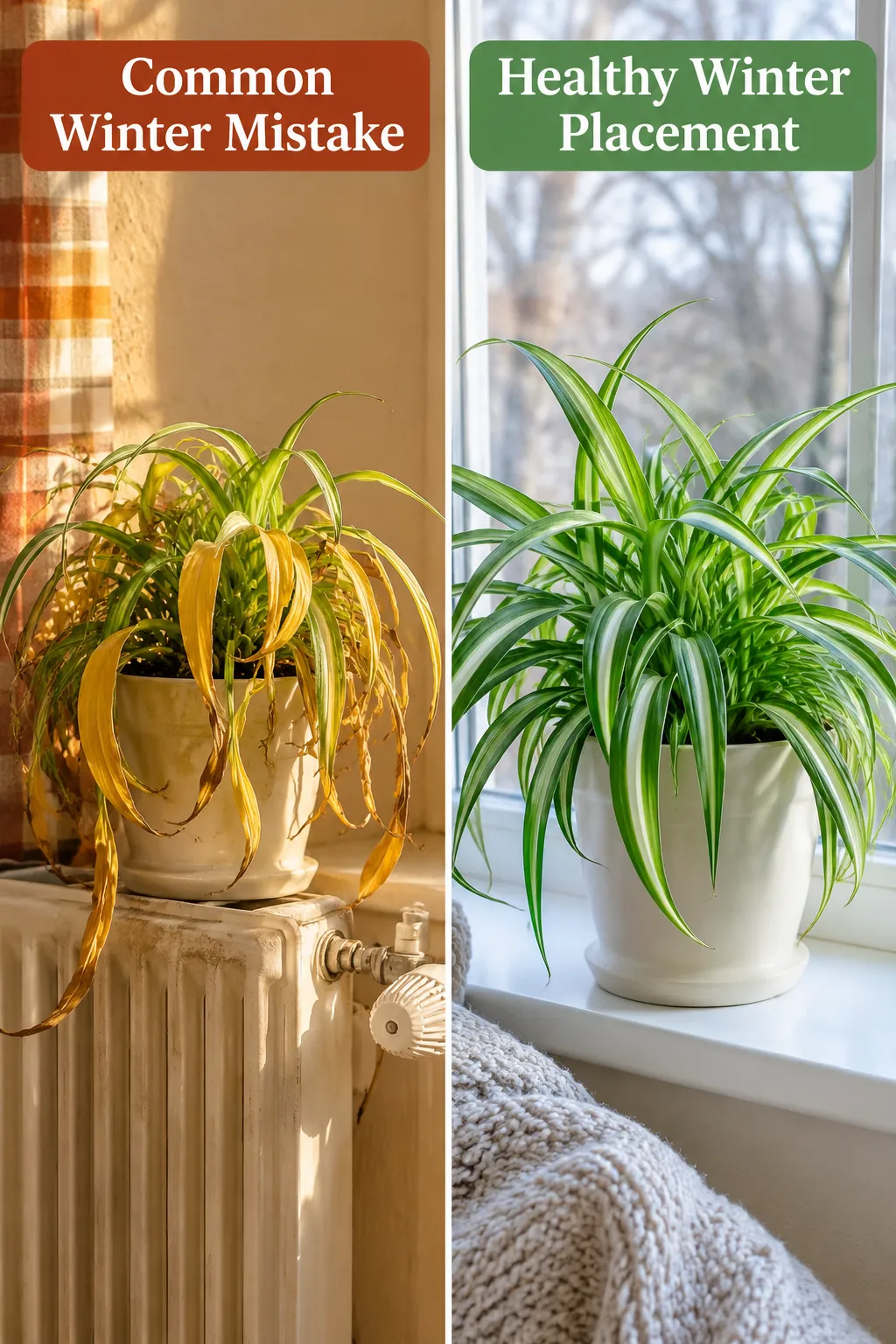
Spider plants do best between 55-75°F (13-24°C) and start to struggle below 50°F (10°C). Keep them away from cold glass, drafty doors, and sudden temperature swings.
These plants are native to tropical and subtropical regions of Africa, so they’re not built for cold snaps. A brief dip isn’t fatal, but sustained cold stress shows up as mushy or blackened leaf tips within a day or two.
Watch for these danger zones in your home:
| Location | Risk Level | Why |
|---|---|---|
| Next to drafty window | High | Cold air pools directly on leaves |
| Near exterior door | High | Temperature swings each time it opens |
| On a heated windowsill | Medium | Day/night temperature swing is large |
| Interior room, away from vents | Low | Stable temperature all day |
Decision rule: if your window glass feels cold to the touch in winter, move the plant at least a foot back from it, or add a sheer curtain as a buffer.
Why is my spider plant turning yellow in winter?
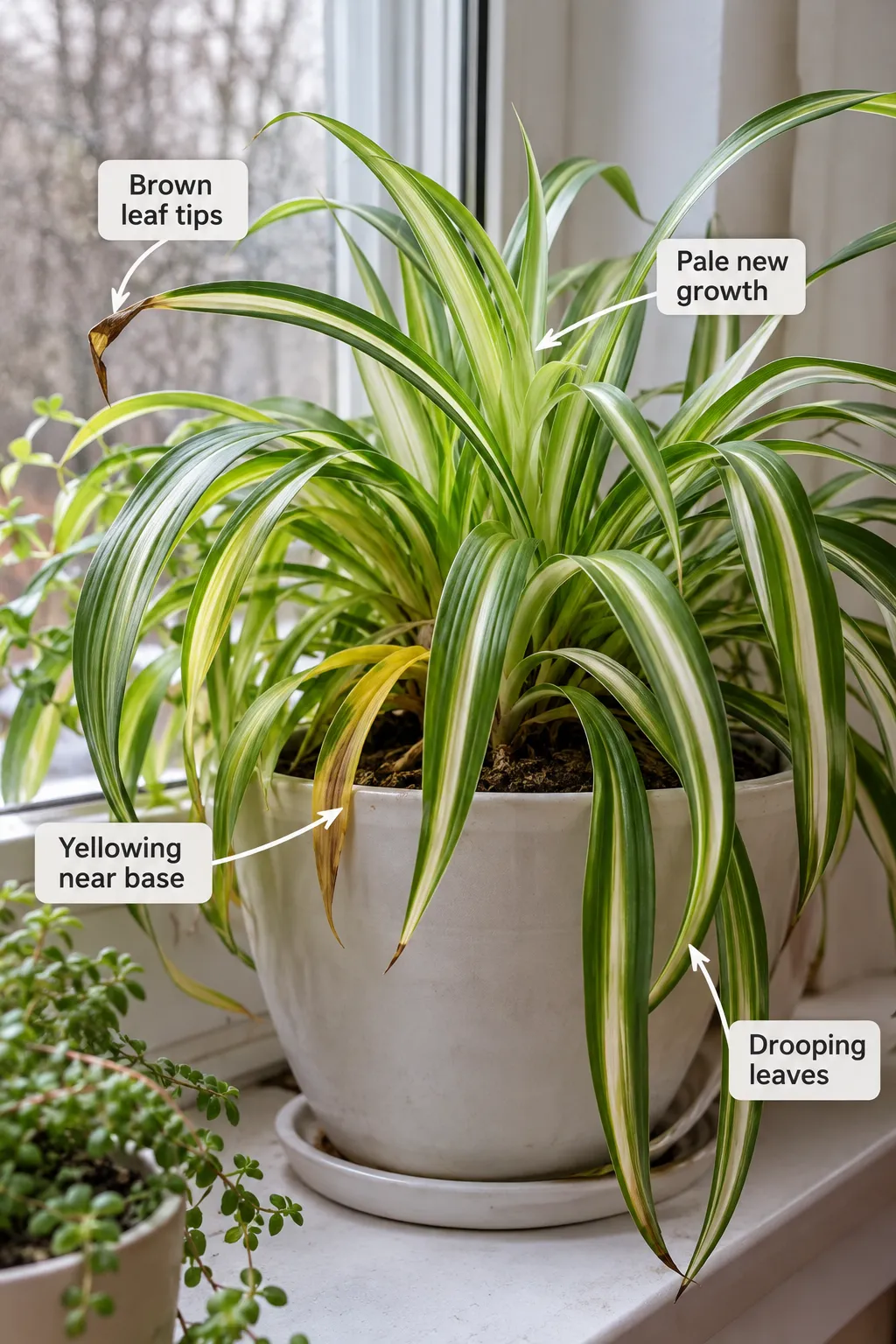
Yellowing in winter is usually caused by overwatering, fluoride or chlorine in tap water, or low light, not cold temperatures alone. Spider plants are actually well known for being sensitive to fluoride, which can show up as brown tips and yellowing edges according to North Carolina State Extension’s plant guide.
A few quick checks to narrow down the cause:
- Yellow leaves at the base, soil feels wet: likely overwatering.
- Brown crispy tips, otherwise green: often tap water minerals or low humidity.
- Pale, washed-out new growth: usually not enough light.
- Whole leaf yellowing and dropping: could be natural aging of older leaves, which is normal.
If you want a broader troubleshooting guide for other houseplants too, this breakdown of indoor plant yellow leaf causes and fixes is worth a look.
Do spider plants need light during winter?
Yes, spider plants need bright, indirect light even in winter, and shorter days mean you may need to adjust placement to compensate. They tolerate lower light better than many houseplants, but growth slows and leaves can fade without enough brightness.
South-facing windows tend to offer the most consistent winter light since the sun sits lower in the sky. East or west windows work too, just rotate the pot every couple of weeks so growth stays even.
If natural light is limited where you live, a simple grow light on a timer for 10-12 hours a day can fill the gap. This is becoming a more common setup as smart plugs and timers get cheaper and easier to use.
Can spider plants survive cold temperatures?
Spider plants can tolerate brief dips into the 40s°F (around 4-9°C) without dying, but sustained cold below 50°F (10°C) causes visible damage and can eventually kill the plant. They are not frost-hardy and will die if exposed to actual freezing temperatures.
According to the Royal Horticultural Society’s growing guide, spider plants are best kept as houseplants in cooler climates and should be brought indoors well before the first frost if they spent summer outside.
Edge case: if a plant did get a cold shock, don’t cut off damaged leaves immediately. Wait a week or two to see how much tissue actually dies back, since partial damage sometimes stops spreading.
Should I fertilize spider plants in winter?
No, skip fertilizer during winter. Spider plants slow their growth significantly when daylight hours drop, and feeding a plant that isn’t actively growing can lead to salt buildup in the soil and root burn.
Resume feeding in early spring once you notice new leaf growth picking up again. A diluted balanced liquid fertilizer every four to six weeks during the active growing season is plenty for most spider plants.
How to tell if spider plant is getting too cold
Look for leaves that turn limp, dark, or almost water-soaked in appearance, especially near the tips or edges. This is the clearest sign of cold stress and it can show up within 24-48 hours of exposure.
Other cold stress signals:
- Leaves feel soft or mushy rather than firm.
- Growth stalls completely, even compared to normal winter slowdown.
- Leaf color shifts toward dark green-black patches.
Quick example: a plant sitting on a windowsill that drops to 45°F (7°C) overnight may show blackened tips within two days, even though the room feels comfortable to you during the day.
What humidity do spider plants need when it’s winter?
Spider plants prefer moderate humidity, roughly 40-50%, and indoor heating in winter often drops humidity well below that. Low humidity is a common cause of the brown, crispy leaf tips people notice in colder months.
Ways to boost humidity without much effort:
- Group plants together to create a shared humid microclimate.
- Set the pot on a tray of pebbles with water, keeping the pot above the waterline.
- Run a small humidifier nearby if your home runs very dry.
- Mist occasionally, though this has limited lasting effect compared to the other methods.
Is it okay to move spider plants around in winter?
Yes, but minimize how often you move them and avoid sudden temperature changes when you do. Spider plants adjust to light and temperature conditions over time, so frequent relocation can slow growth and cause leaf stress.
If you do need to move a plant, for example from a cooling porch back indoors, do it gradually rather than one dramatic shift. A good source on this transition is this checklist for bringing houseplants indoors for winter, which covers timing before frost risk sets in.
Can you propagate spider plants in winter?
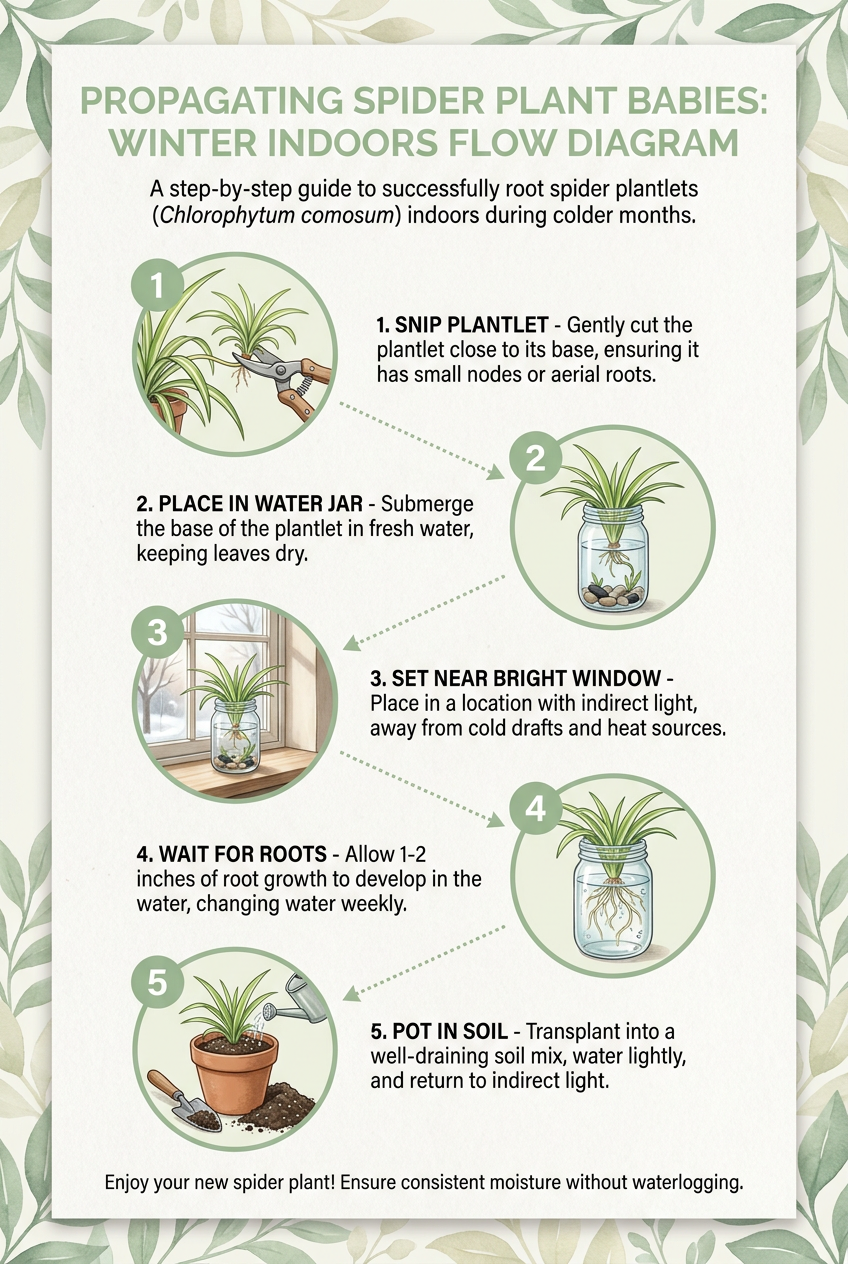
Yes, you can propagate spider plant babies in winter, but expect slower root development than during the growing season. Lower light and cooler temperatures mean roots take longer to form.
Basic steps:
- Snip a plantlet with a few inches of stem attached.
- Place the cut end in a jar of water, or directly into moist potting mix.
- Set it near a bright window, avoiding direct cold drafts.
- Wait for roots to form, which can take several weeks longer in winter than summer.
- Once roots are an inch or two long, pot into soil if started in water.
If you enjoy growing plants this way, this guide on easy jar cuttings for plants you can grow in water has more options worth trying.
Common mistakes people make with spider plants in winter
The biggest mistake is watering on the same schedule used in summer, which leads to soggy soil and root rot during the slower winter growth period. The second most common mistake is placing plants directly against cold window glass or right next to a heating vent.
Other frequent missteps:
- Fertilizing out of habit even though the plant isn’t actively growing.
- Assuming yellow leaves always mean the plant needs more water.
- Letting tap water with heavy chlorine or fluoride sit as the only water source.
- Ignoring low humidity caused by indoor heating.
Do spider plants go dormant or stop growing in winter?
Spider plants don’t go fully dormant, but their growth rate slows noticeably due to shorter days and lower light levels. You’ll likely see fewer new leaves and fewer plantlets forming compared to spring and summer.
This slowdown is completely normal and not a sign of a sick plant. Don’t try to force growth with extra fertilizer or water, since that tends to backfire as discussed earlier.
Will my spider plant die if I underwater it in winter?
A single missed watering is unlikely to kill a spider plant, since the thick roots store moisture reserves. Spider plants are actually more forgiving of underwatering than overwatering, especially during the slower winter months.
That said, prolonged neglect over several weeks can cause leaves to go crispy and brown at the tips, even if the plant survives overall. If you tend to forget watering, this is one of the more resilient houseplants to own, similar in toughness to pothos, which is covered in this winter care checklist for pothos.
How is winter care different from spring and summer care?
Winter care means less water, no fertilizer, closer attention to drafts, and extra effort to maintain humidity, compared to the more frequent watering and feeding schedule of warmer months. Light needs stay the same year-round, but you may need to reposition the plant to compensate for weaker winter sun.
| Factor | Spring/Summer | Winter |
|---|---|---|
| Watering | Weekly, soil dries faster | Every 1-2 weeks |
| Fertilizer | Every 4-6 weeks | Pause completely |
| Light | Natural bright light plentiful | May need repositioning or grow light |
| Humidity | Usually adequate | Often needs boosting |
| Growth | Active, new plantlets form | Slower, fewer plantlets |
If you’re managing several houseplants through the cold months, this broader houseplants and indoor growing resource hub is a good place to cross-check care for other species too.
FAQ
How often should I water a spider plant in winter?
Check the soil first. Water only when the top one to two inches feel dry, which is usually every one to two weeks depending on your home’s heat and humidity.
What’s the lowest temperature a spider plant can handle?
Spider plants start struggling below 50°F (10°C) and can suffer permanent damage or die if exposed to actual freezing temperatures.
Why does my spider plant have brown tips in winter?
Brown tips in winter are commonly caused by low humidity, tap water with fluoride or chlorine, or inconsistent watering.
Should I mist my spider plant in winter?
Misting offers limited lasting humidity benefit. A humidifier or pebble tray works better for sustained results.
Can I keep a spider plant outside in winter?
No, spider plants should be brought indoors before the first frost, since they are not frost-tolerant.
Do spider plants need a grow light in winter?
Not always, but a grow light helps if your home doesn’t get much natural bright light during shorter winter days.
Is it normal for a spider plant to stop producing babies in winter?
Yes, fewer plantlets in winter is normal and tied to slower overall growth, not a problem with the plant.
Can tap water hurt my spider plant in winter?
Yes, spider plants are sensitive to fluoride and chlorine in tap water, which can cause brown leaf tips over time.
Conclusion
Spider Plant Winter Care really just means slowing down to match the plant’s own slower pace. Water less, skip the fertilizer, keep it warm and away from drafts, and don’t panic over a little yellowing here and there.
Check your plant’s soil weekly even if you don’t water every time. Move it away from cold glass or heater vents if you haven’t already. And if you spot brown tips, try switching to filtered or distilled water for a few weeks before assuming something’s seriously wrong.
For more cold-season plant guidance, browse the full houseplant care collection or check this step-by-step winter transition checklist for other plants you might be bringing indoors this season.

