

Last updated: October 23, 2026
Quick Answer
Houseplants for low light don’t need zero light, they need indirect brightness, roughly 25 to 100 footcandles, which is far more than most people assume a “dark” room provides. True low light species like snake plant, pothos, and cast iron plant can survive weeks of neglect, but they still die fastest from overwatering, not from skipped light.
Key Takeaways
- “Low light” means indirect brightness, not darkness. A truly lightless room can’t sustain any plant long term, according to University of Minnesota Extension.
- Snake plant, pothos, ZZ plant, and cast iron plant top nearly every 2026 low light plant roundup.
- Variegated leaves need more light than solid green ones to keep their pattern.
- Low light plants still need regular watering checks, just less frequently than sun-loving plants.
- Overwatering kills more low light houseplants than underwatering or poor light combined.
- A cheap grow light fixes a windowless room cheaper than most people expect.
- Pothos and snake plant are mildly toxic to pets, so a few safer swaps exist for homes with cats and dogs.
- Offices and bathrooms both count as low light zones, but bathrooms add humidity that helps ferns thrive.
My own apartment has one window that faces a brick wall. For years I believed nothing green could survive in there. Then I started growing houseplants for low light on purpose, and honestly, it changed how I think about every dim corner in my home.
What Actually Counts as Low Light in Your Home
Low light in a home setting usually means a spot several feet from any window, or a north-facing window with no direct sun, where plants receive indirect brightness but never direct rays. It is measured in footcandles, and most low light houseplants tolerate 25 to 75 footcandles, according to Missouri Extension’s plant care guide.
A footcandle measures how much usable light hits a surface. Office lighting usually sits around 50 footcandles, which is why so many offices can grow plants like pothos and snake plant without a problem.
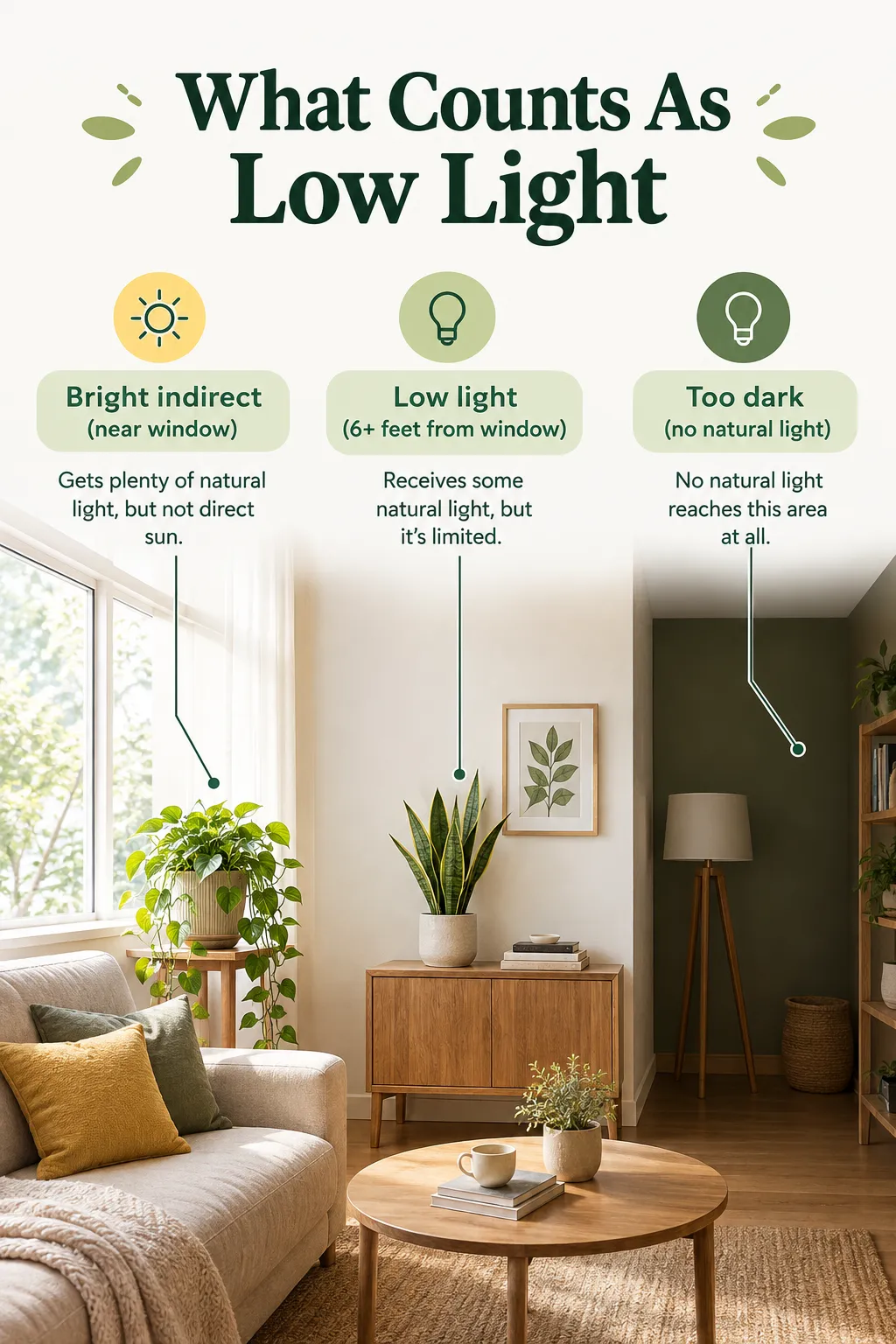
Here’s a rough gauge you can use without any equipment:
- Bright indirect light: you can read comfortably without a lamp, a few feet from a window.
- Low light: you need a lamp to read, but it’s not pitch black.
- Too dark: no houseplant, no matter how tough, will survive here long term.
Choose a true low light plant if your room sits more than 6 feet from any window. Choose a medium light plant if you’re within a few feet of a north or east window.
How Many Hours of Light Do Low Light Plants Really Need
Most low light houseplants need at least 4 to 6 hours of indirect brightness daily to stay alive, though they won’t actively grow much on the low end of that range. Florida’s gardening solutions guide notes that foliage plants generally need less total light than flowering plants, which is part of why flowering plants rarely thrive in truly dim rooms.
Think of it like a dimmer switch, not an on-off light. A snake plant surviving in low light isn’t thriving, it’s holding steady. Give it a bit more light and growth speeds up noticeably.
Common mistake: people assume “low light tolerant” means “no light needed.” That’s not accurate, and it’s the number one reason low light plants slowly decline in windowless closets or interior hallways.
Difference Between Low Light and Indirect Sunlight
Low light describes intensity, while indirect sunlight describes direction, and the two overlap but aren’t identical. A spot right next to a sheer curtain gets plenty of indirect sunlight, often bright indirect, while a corner across the room from that same window is genuinely low light.
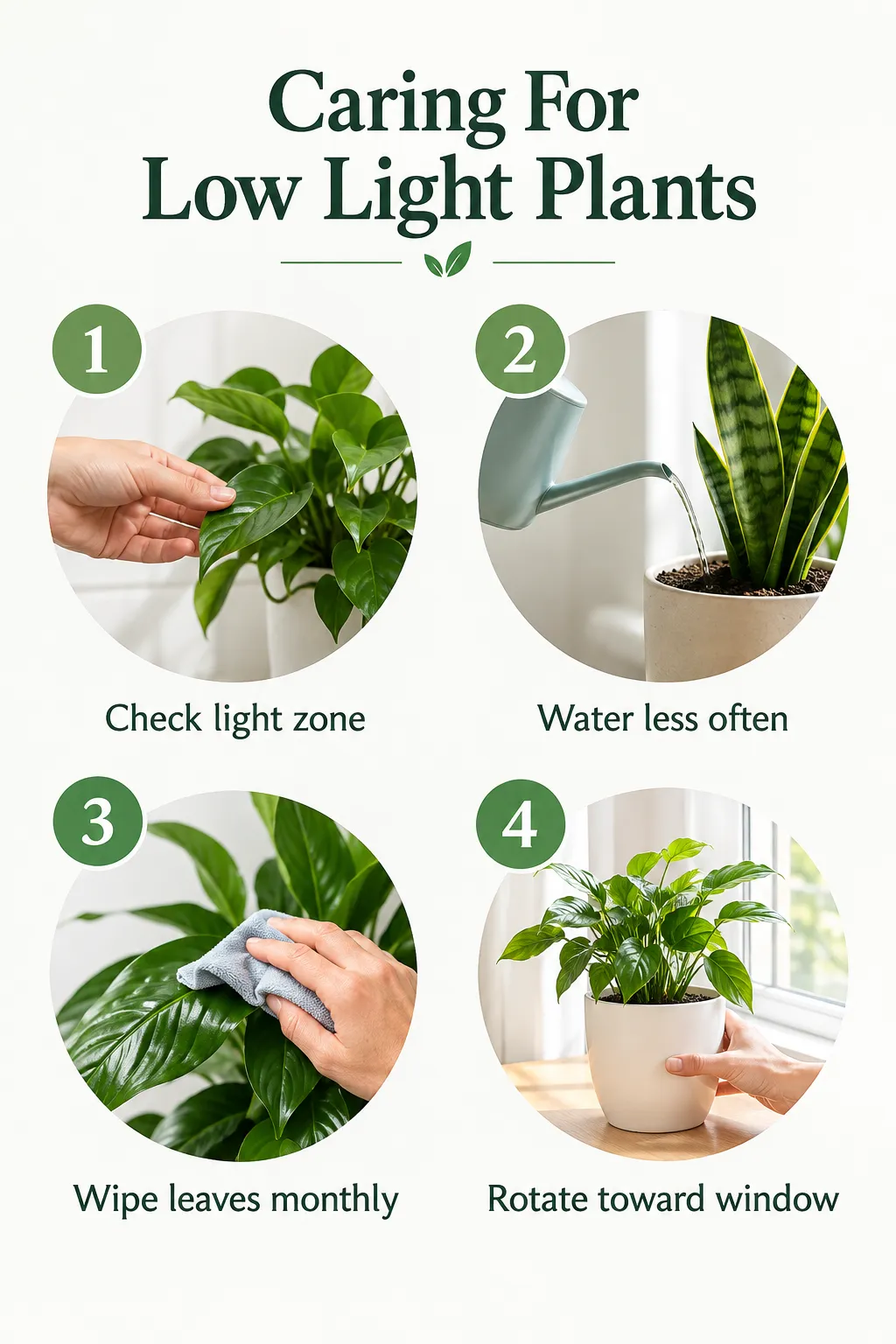
Direct sun means rays hit the leaves straight on, usually through an unobstructed south or west window. Indirect sun means light bounces off walls or passes through a curtain first. Low light plants can usually handle gentle indirect sun, but direct afternoon sun will scorch their leaves fast.
Choose indirect sunlight placement if your plant has thin, delicate leaves. Choose a deeper low light spot if your plant, like a cast iron plant or ZZ plant, has thick, waxy leaves built for shade.
Best Houseplants That Survive Neglect and Low Light
The toughest low light houseplants share two traits: thick leaves that store water, and slow growth that needs fewer nutrients. These survive missed waterings and dim corners better than almost any other plant category, which is confirmed across Elle’s 2026 low light roundup and Elle Decor’s companion list.
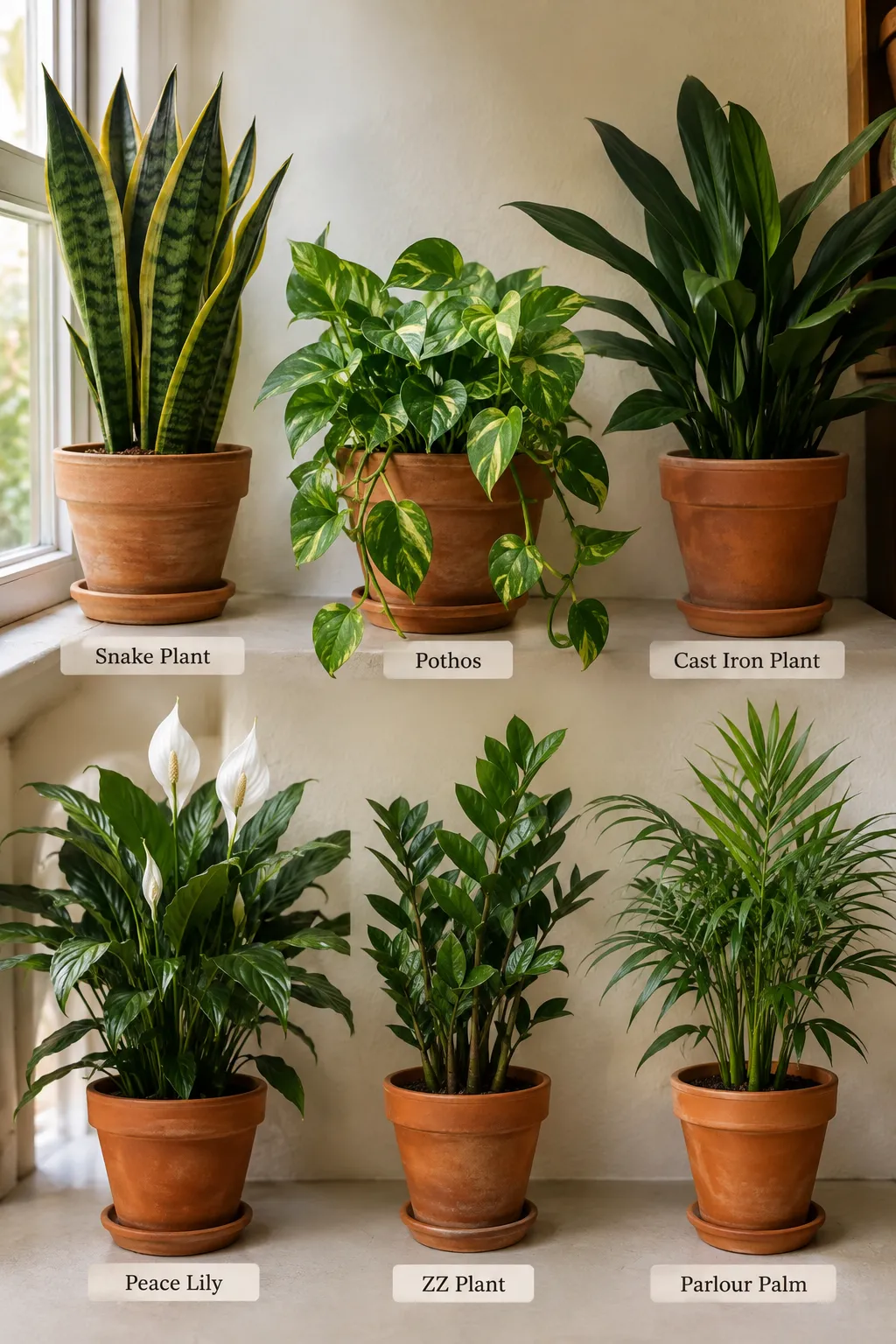
Here are the standouts gardeners keep coming back to:
| Plant | Light need | Neglect tolerance |
|---|---|---|
| Sansevieria trifasciata (snake plant) | Very low | Excellent, weeks between watering |
| Epipremnum aureum (golden pothos) | Low to medium | Very good |
| Aspidistra elatior (cast iron plant) | Very low | Outstanding, a true Victorian survivor |
| Zamioculcas zamiifolia (ZZ plant) | Very low | Outstanding |
| Aglaonema ‘Silver Queen’ | Low | Good |
| Peperomia obtusifolia | Low to medium | Good |
| Syngonium podophyllum | Low to medium | Good |
The cast iron plant, Aspidistra elatior, earned its nickname in Victorian parlors because gas lighting and soot-filled air couldn’t kill it. It remains one of the most stubbornly tough houseplants you can grow today, award-worthy in its own quiet way even without flashy leaves.
Golden pothos, Epipremnum aureum, is probably the single most recommended starting plant for beginners. It roots in water, shrugs off low light, and forgives forgotten watering cans better than almost anything else on a garden shop shelf.
Can Houseplants Grow in Rooms With No Windows
Most houseplants cannot survive indefinitely in a room with zero natural light, no matter how tough the species. Even the hardiest low light plants need some light source, whether that’s a skylight, borrowed light from an adjacent room, or an artificial grow light.
If your room genuinely has no windows, a basic LED grow light solves the problem for under the cost of replacing a dead plant every few months. Run it 8 to 10 hours a day on a simple timer and treat it as the plant’s substitute sun.
Edge case: a hallway with no window but a glass door nearby may get just enough borrowed brightness to count as low light rather than true darkness. Always check with a phone light meter app before assuming the worst.
Do Low Light Plants Need Less Water Than Other Plants
Yes, low light plants generally need less frequent watering because they use energy, and therefore moisture, more slowly in dim conditions. A snake plant in a bright room might need water every 10 days, while the same plant in low light may only need it every 3 to 4 weeks.
This is also exactly why overwatering is the top killer of low light houseplants. Less light means slower uptake, so soggy soil sits wet for longer and roots rot before the plant ever gets a chance to show thirst.
Decision rule: water low light plants only when the top 2 inches of soil feel completely dry. If you’re unsure, wait another few days.
Signs Your Low Light Plant Isn’t Getting Enough Light
Pale, washed-out leaves, leggy stretched stems, and leaves dropping from the bottom up are the clearest signs a low light plant is still getting too little light. Variegated plants will often lose their white or yellow patterning and revert to plain green, since the plant conserves energy by skipping pigment production.
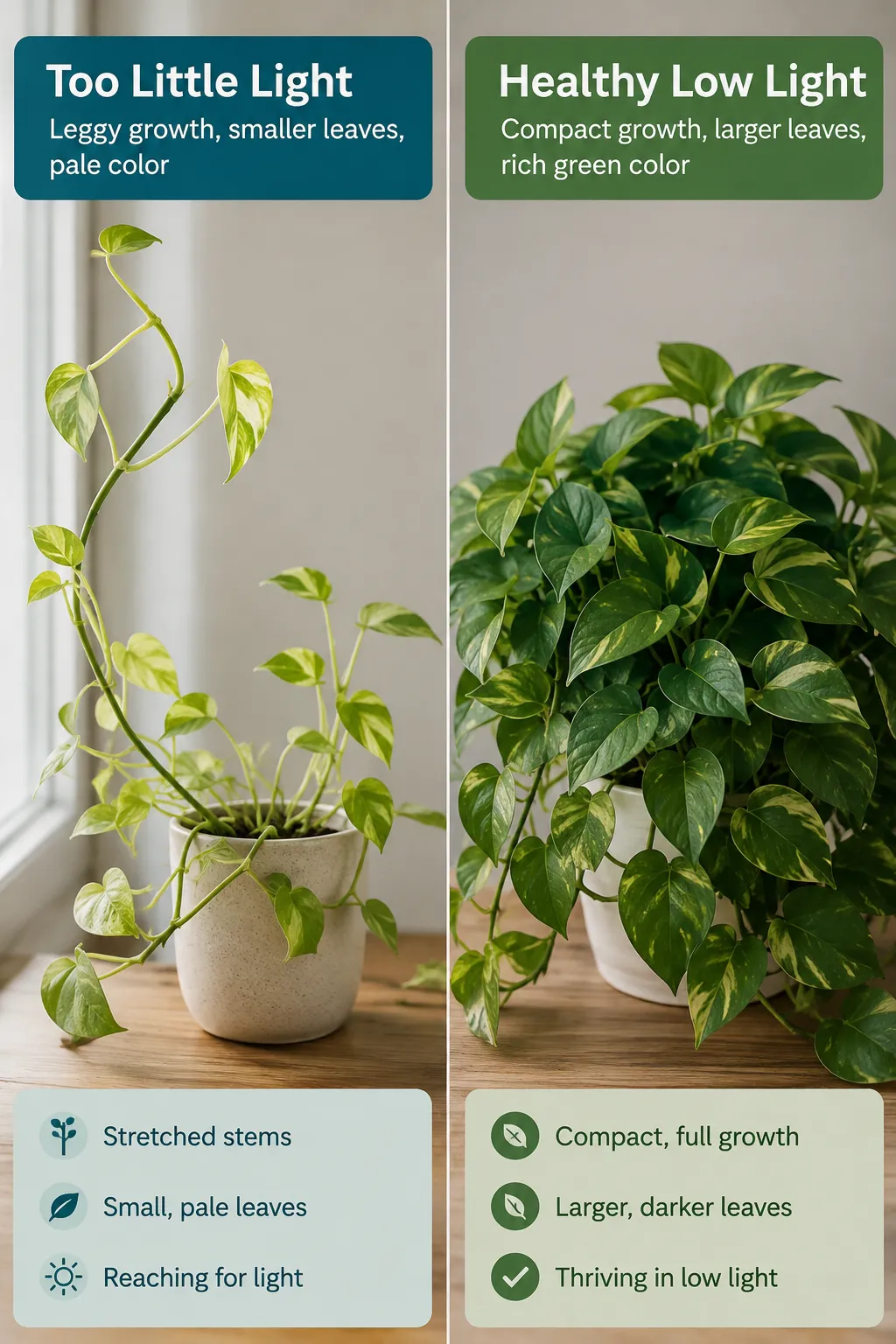
Other warning signs include:
- New leaves coming in smaller than older ones
- Noticeably slow or stalled growth over several months
- Stems leaning hard toward any available light source
If you see these signs, move the plant a few feet closer to a window or add a grow light before assuming it’s dying from something else.
Common Mistakes People Make With Low Light Houseplants
The biggest mistake is treating “low light tolerant” as “no care needed,” which leads to overwatering, dust buildup on leaves, and total neglect of basic plant care. Mississippi State Extension’s houseplant guide points out that even shade-tolerant species still need appropriate soil, drainage, and occasional feeding to really thrive.
Other frequent errors:
- Skipping leaf cleaning, which blocks what little light the plant does get
- Using a pot with no drainage, which compounds overwatering risk
- Assuming variegated versions behave exactly like their plain green parent
- Placing flowering plants, like orchids, in corners too dim to ever trigger blooms
Should I Buy a Grow Light or Stick With Natural Light
Stick with natural light if your room gets at least a few hours of indirect brightness daily; add a grow light only if the space is genuinely windowless or heavily shaded year-round. A basic full-spectrum LED grow light runs a handful of hours daily and costs far less long term than constantly replacing dead plants.
Grow lights work especially well for starting seedlings, reviving a struggling plant, or supplementing a dim winter season when natural daylight hours shrink. Natural light, even low light, is always the simpler and cheaper option when it’s available.
Can Pothos and Snake Plant Actually Grow in Dark Rooms
Pothos and snake plant tolerate low light remarkably well, but “dark room” and “low light” aren’t the same thing, and neither plant will survive true darkness indefinitely. Both will survive dim offices, interior bathrooms, and shaded apartment corners for months or years, which is why they dominate nearly every best low light houseplants list, including House Beautiful’s guide and Town & Country’s roundup.
Quick example: a pothos kept in a windowless bathroom with just an overhead bulb on 8 hours a day can genuinely thrive for years, as long as it’s watered sparingly.
Low Light Plants Safe for Cats and Dogs
Several great low light houseplants are completely pet-safe, which matters since pothos, snake plant, and philodendron are all mildly toxic if chewed. Safer picks for homes with cats and dogs include parlour palm, Boston fern, and peperomia, all of which handle low light reasonably well.
If you already own a toxic variety like Epipremnum aureum, just keep it hanging or on a high shelf out of paw’s reach.
What Happens If You Give Low Light Plants Too Much Sun
Direct, intense sun scorches the leaves of true low light species, causing brown, crispy patches and faded color within days. Plants like Aspidistra elatior and Zamioculcas zamiifolia evolved under forest canopies, not open sky, so their leaf tissue simply isn’t built to handle direct afternoon rays.
If you notice sudden bleached or brown patches after moving a plant closer to a window, move it back immediately and trim the damaged leaves.
Why Is My Low Light Plant Dying If I Barely Water It
A low light plant dying despite minimal watering is almost always still about water, just the wrong kind of problem: poor drainage, compacted soil, or root rot from a single overly generous watering weeks earlier. Low light plus any standing water is a nearly guaranteed path to root rot, even if total water volume seems low.
Check the roots. Mushy, brown, or foul-smelling roots confirm rot. Firm white roots mean the issue is lighting or nutrition instead.
Best Low Light Plants for Offices and Bathrooms
ZZ plant and snake plant are the best picks for low light offices because they tolerate fluorescent lighting and irregular watering schedules from busy employees. For bathrooms, Boston fern and peace lily appreciate the extra humidity on top of low light, which mimics their native understory habitat.
Martha Stewart’s low light houseplant list also highlights philodendron and pothos as reliable desk plants that tolerate neglect over long weekends and holidays.
Where to Browse and Buy Low Light Houseplants
Most plant shop websites, including the RHS plant finder, let you sort results by featured, relevant, selling, alphabetically a-z, alphabetically z-a, price low to high, price high to low, or date old to new. Using the toggle menu to filter by “low light indoor plants” narrows a huge plant list down to realistic options fast.
RHS members go free to many flower show events throughout the year, and shows often feature houseplant displays, award of garden merit winners, and gift-ready starting plants for beginners. If you’re shopping for a gift, look for award of garden merit labels, since that RHS-backed distinction signals a plant that’s reliably easy to grow across UK conditions.
A few practical browsing tips:
- Use the shop’s filter menu to isolate “indoor” and “low light” tags together
- Check for an award of garden merit badge as a trust signal
- Sort by date to see newly stocked plants before a seasonal sale
- Compare price low to high if you’re starting a budget collection
For more on site policies when shopping plants online, see our affiliate disclosure page and terms of use.
FAQ
What houseplant needs the least amount of light?
The cast iron plant, Aspidistra elatior, and the ZZ plant, Zamioculcas zamiifolia, need the least light of any common houseplant. Both survive in genuinely dim rooms with just a few hours of indirect brightness daily and can go weeks without watering.
Which indoor plants thrive in low light?
Snake plant, pothos, ZZ plant, cast iron plant, and peace lily all genuinely thrive, not just survive, in low light rooms. These five appear on nearly every expert low light houseplant list and tolerate irregular care schedules well.
What house plant will grow in a dark corner?
A dark corner, as long as it isn’t pitch black, works well for cast iron plant, snake plant, or ZZ plant. These three tolerate the dimmest realistic indoor spots better than almost any other common houseplant available at garden shops.
What are the best indoor plants for low light areas?
The best indoor plants for low light areas are snake plant, pothos, ZZ plant, cast iron plant, peperomia, and peace lily. Each tolerates indirect brightness, infrequent watering, and the kind of neglect that kills more delicate flowering plants quickly.
Conclusion
Houseplants for low light aren’t magic, they’re just efficient. Pick a true low light species like snake plant, pothos, or cast iron plant, give it a genuinely indirect bright spot rather than total darkness, and water it only when the soil actually dries out.
Start with one plant in your dimmest room this week. Watch how it responds over a month before buying more. For general plant care questions or feedback on your setup, feel free to reach out through our contact page, and check our about page to learn more about this site’s approach to gardening advice.

14 Comments on “Houseplants for Low Light That Survive Neglect: What “Low Light” Really Means in Your Room”