Last updated: November 9, 2026
Quick Answer
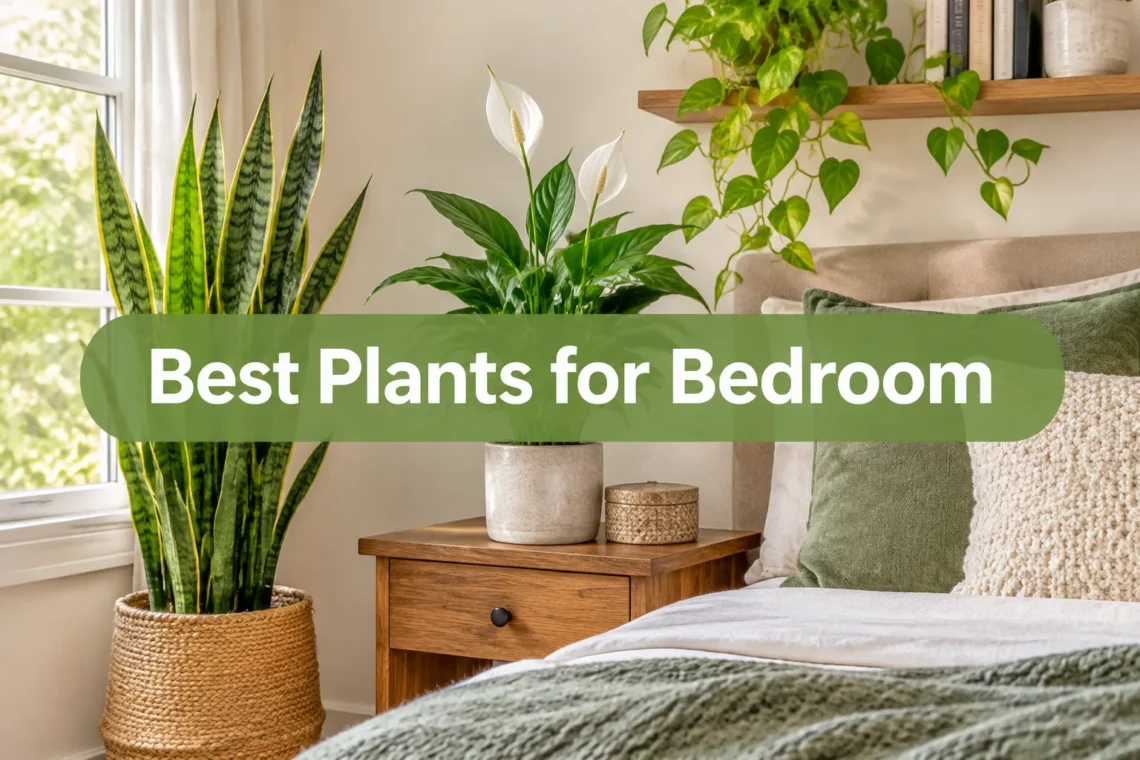
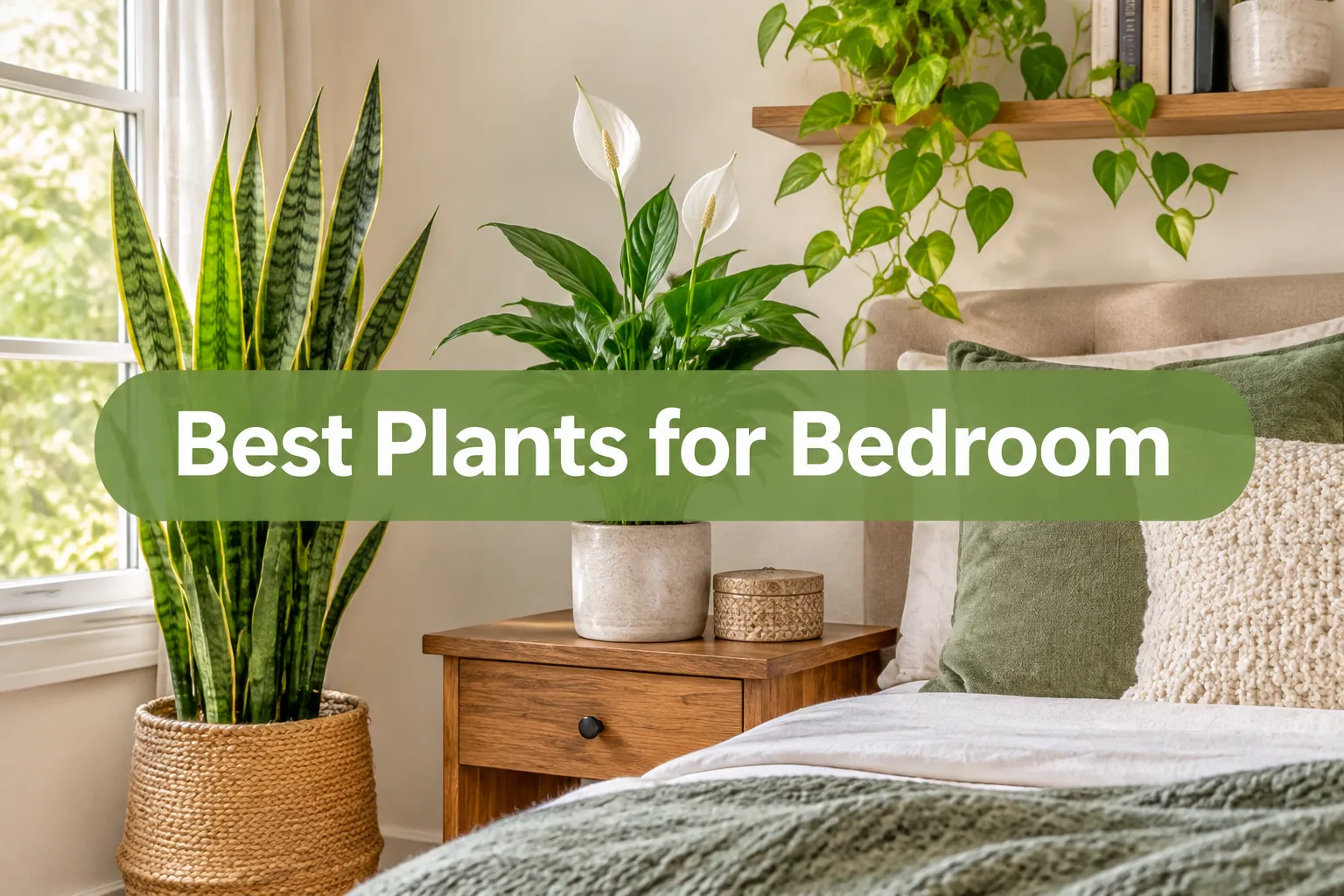
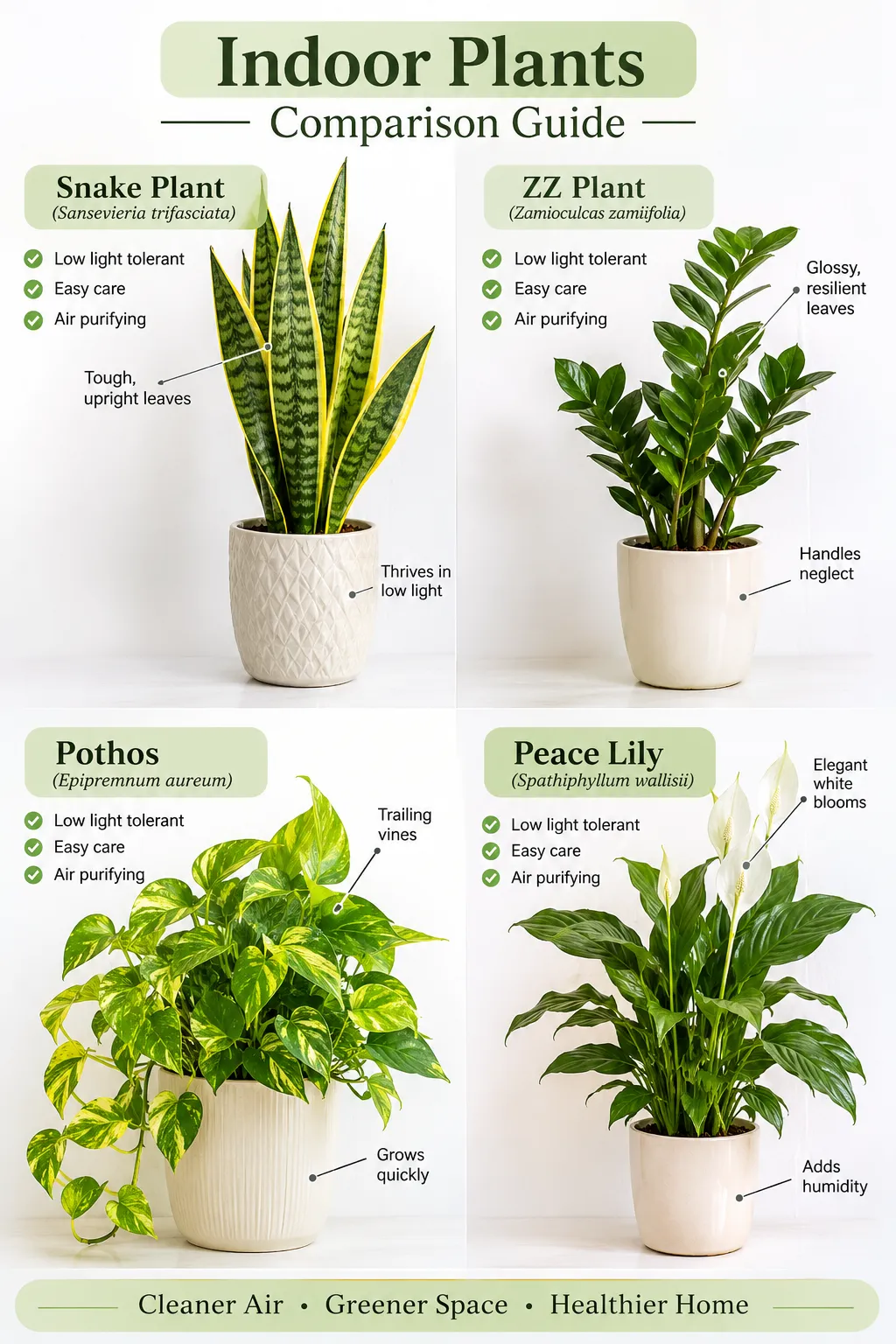
The best plants for bedroom spaces are low-light, forgiving species like snake plant, ZZ plant, pothos, and peace lily. These plants tolerate dim corners, irregular watering, and air conditioning, while adding green style and helping purify indoor air. None of them actually boost oxygen enough to change your sleep chemistry, but the calming effect of greenery and cleaner air can genuinely help you rest.
Key Takeaways
- Snake plant (Sanseviera) is the most recommended bedroom plant for 2026 because it survives low light, drought, and neglect.
- Houseplant sleep benefits are mostly psychological and tied to air quality, not nighttime oxygen production.
- Spider plant is one of the few bedroom plants with NASA research behind its air-purifying reputation.
- Chinese evergreen and cast iron plant are the strongest choices for truly dark bedrooms with no direct sun.
- Peace lily purifies air well but is toxic to pets, so check your household before buying.
- A single large plant or two to three medium plants is plenty for most bedrooms.
- Always match the plant to your actual light levels rather than chasing an “oxygen hack.”
Snake plants, Zamioculcas (ZZ plant), pothos, succulents, and peace lilies keep showing up on every serious bedroom plant list for 2026, and for good reason. They forgive forgetful waterers, survive weak light, and still look sharp on a nightstand or in a floor pot by the window. I’ve killed enough plants to know which ones actually earn a spot in a bedroom, so this guide sticks to what works, not just what photographs well.
If you want the best plants for bedroom corners that get almost no sun, you’re in the right place. We’ll also cover mistakes, pet safety, and what to do if your bedroom plant keeps dying.
What Makes a Plant Good for a Bedroom
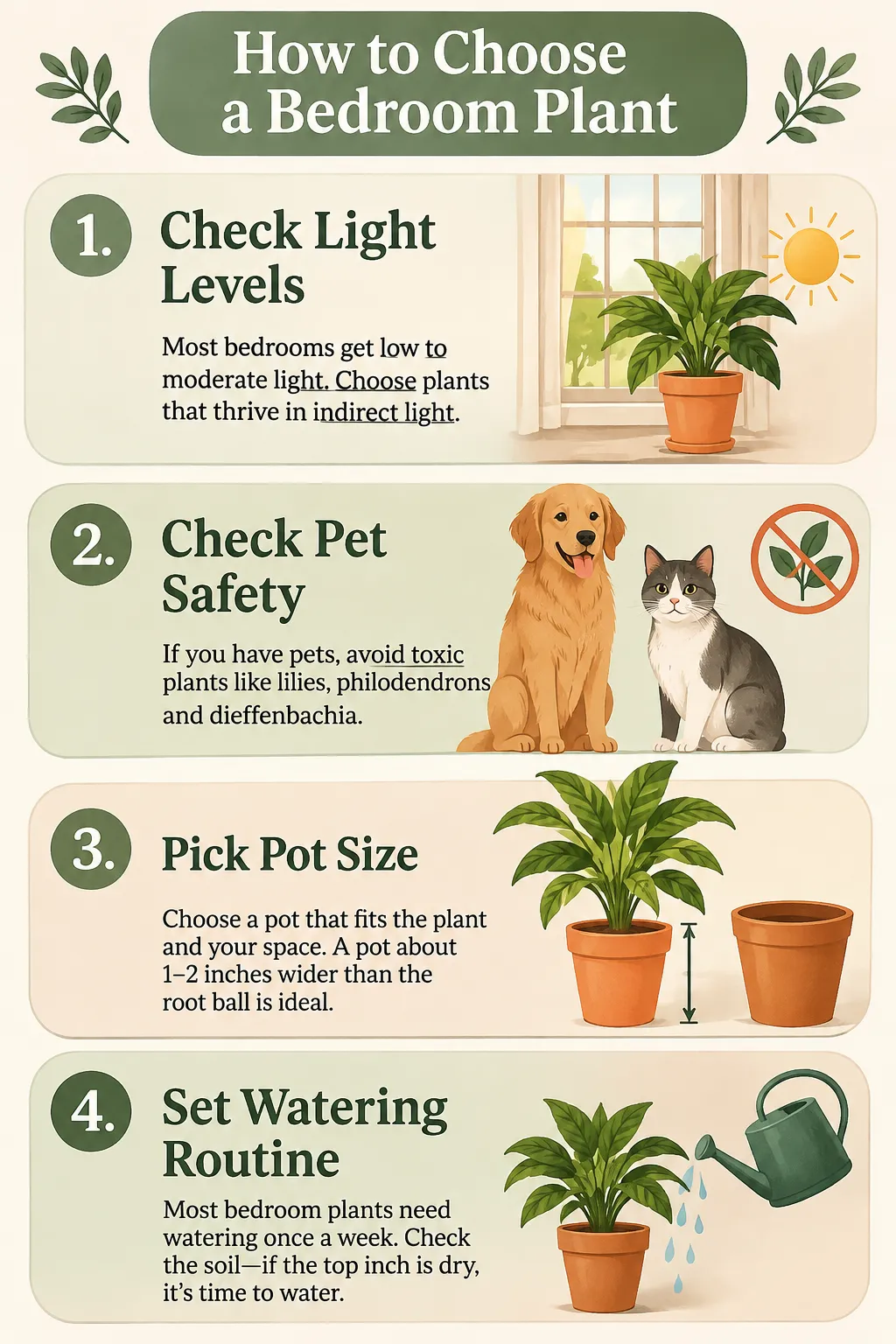
A good bedroom plant tolerates low light, needs minimal care, and won’t aggravate allergies or pets. It should also fit the room’s scale, whether that’s a small pot on a shelf or one large plant in a corner.
Bedrooms rarely get the bright, direct light a sunroom or kitchen window offers. So the plants that thrive there need to handle indirect or filtered light without stretching, yellowing, or dropping leaves. Beyond light, a few other traits matter:
- Low water needs. Many of us forget to water bedroom plants since we don’t walk past them daily.
- Compact or controllable size. A large plant like a Monstera deliciosa can work if the room has floor space, but a cramped bedroom needs something smaller.
- Non-toxic or at least low-risk if pets sleep in the room.
- Minimal fragrance, unless you specifically want something like lavender for its calming scent.
According to Mattress Clarity’s bedroom plant roundup, the plants gardeners return to again and again share these same traits: tolerance, low maintenance, and a calm visual presence. If you’re starting from zero, our guide to houseplants for beginners who always kill their plants covers the basics before you commit to a bedroom collection.
Do Plants Actually Help You Sleep Better
Plants help you sleep better mostly through psychological comfort and cleaner indoor air, not through extra oxygen while you sleep. Most houseplants actually consume oxygen at night, just like humans do, through a reversed photosynthesis process called respiration.
The idea that plants “produce oxygen night” long after dark is mostly a myth. During the day, photosynthesis lets plants release oxygen as a byproduct. At night, without light, most plants switch to using stored energy and release a small amount of carbon dioxide instead, similar to how we breathe. A few succulents, like aloe vera, use a different metabolic cycle (CAM photosynthesis) that lets them release oxygen at night in tiny amounts, which is why aloe vera gets mentioned often for bedrooms.
Women’s Health’s reporting on houseplants and sleep confirms the real benefit is reduced stress and a sense of calm from greenery, plus modest air-quality improvement, rather than a direct sleep-hormone boost. Southern Living’s room-by-room houseplant guide echoes this, noting bedrooms are a prime spot for compact, purifying plants even without the oxygen myth holding up.
So should you still keep plants in your bedroom? Yes. The calming, green environment and modest air-purifying effect are real and worth it, even if the “extra oxygen at night” story is overstated.
Best Low-Light Plants That Don’t Need Much Care
The easiest low-light bedroom plants are snake plant, ZZ plant, pothos, and cast iron plant. All four survive weeks of neglect, tolerate dim corners, and rarely need repotting more than once every couple of years.
Here’s a quick rundown of the standout low-care options:
| Plant | Light Need | Water Frequency | Notable Trait |
|---|---|---|---|
| Snake plant (Sanseviera) | Very low to bright indirect | Every 2-3 weeks | Tolerates total neglect |
| ZZ plant (Zamioculcas) | Low to medium indirect | Every 2-3 weeks | Glossy, waxy leaves |
| Pothos (Epipremnum) | Low to medium indirect | Weekly, let dry | Trailing vine, very forgiving |
| Cast iron plant | Very low light | Every 2 weeks | Nearly indestructible |
| Chinese evergreen | Low to medium indirect | Weekly | Patterned leaves, handles AC |
Snake plant is the single most commonly recommended bedroom plant across 2026 roundups, praised for tolerating very low light, drought, and irregular watering, while fitting neatly into corners or beside the bed, according to Marks & Spencer’s guide to best plants for every room and Plant Vale’s bedroom houseplant list. Choose snake plant if you travel often or tend to forget watering schedules entirely.
ZZ plant and pothos round out the “forgiving” category. Both cope well with dim light and erratic watering, which is why they’re named consistently across low-light guides. If you want more low-light options beyond the bedroom, check our full guide to houseplants for low light that survive neglect.
Are Bedroom Plants Safe for Cats and Dogs
Some common bedroom plants are toxic to pets, so you need to check each species before bringing it home. Spider plant, parlor palm, prayer plant, baby rubber plant, and cast iron plant are generally pet-safe, while peace lily, pothos, philodendron, ZZ plant, aloe vera, and English ivy are considered toxic to cats and dogs if chewed.
This doesn’t mean you have to skip pothos or ZZ plant entirely if you have pets. Just place them up high, in a hanging pot or tall shelf, out of paw’s reach. Plant Vale’s bedroom plant safety notes and Indoor Plant Care’s bedroom category both flag this trade-off clearly: style and purification benefits versus real toxicity risk.
A common mistake is assuming “natural” automatically means “safe.” It doesn’t. Always look up a plant’s ASPCA toxicity status before setting it on a low nightstand where a curious cat can reach it.
How Many Plants Should I Have in My Bedroom
Most bedrooms do well with one large plant or two to three medium plants. More than that can crowd a small room, trap dust, and make watering harder to keep track of.
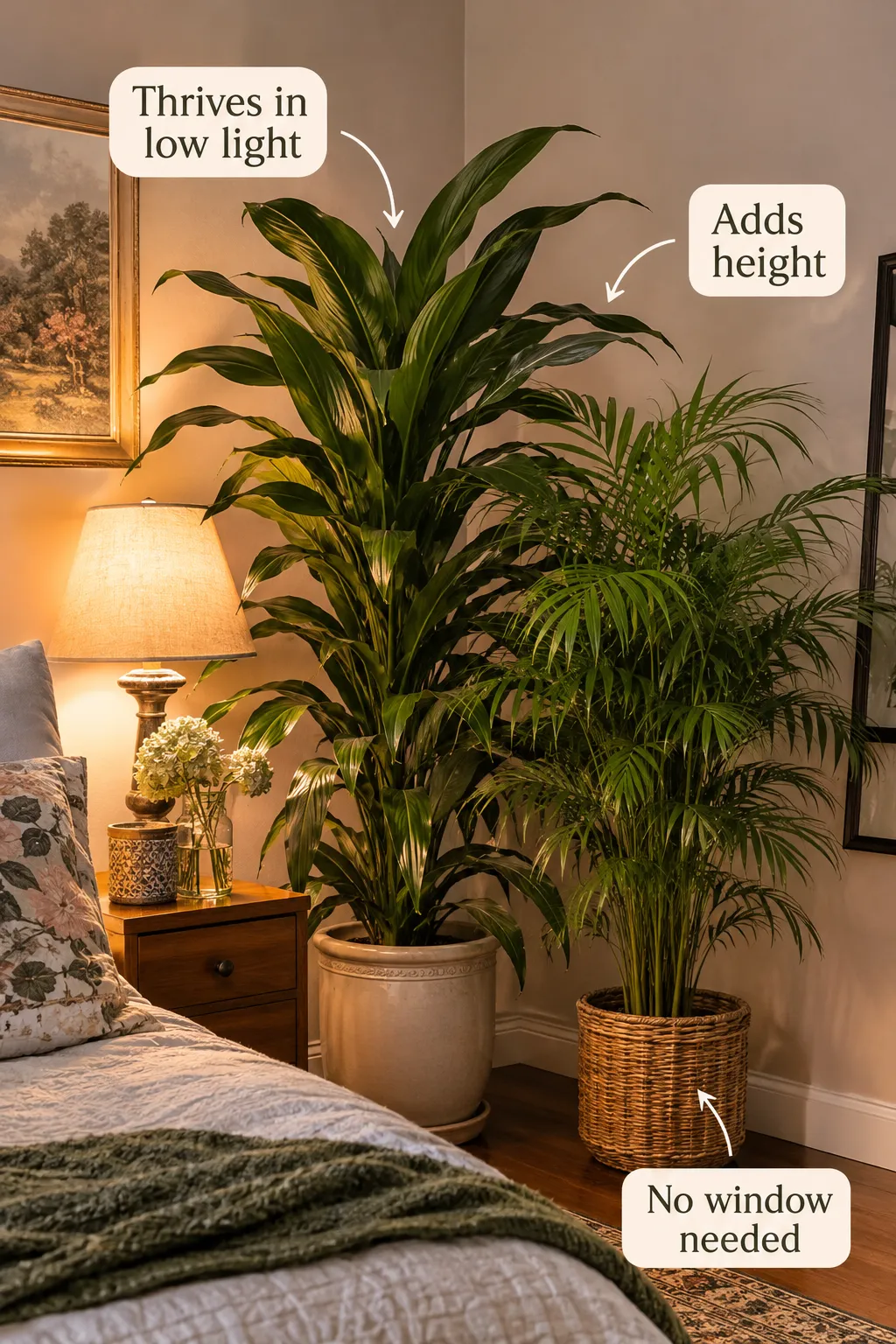
A single large plant, like a parlor palm or Monstera, placed in an empty corner, often does more for a room’s feel than five small pots scattered around. If you’re drawn to filling every surface, pick one anchor plant and one or two smaller accents, such as a succulent on a dresser and a trailing pothos on a shelf. For ideas on using awkward floor space, see our guide on turning any corner into a plant haven.
Why Is My Bedroom Plant Dying
A bedroom plant usually dies from too little light, overwatering, or cold drafts near air conditioning vents. Bedrooms often have less natural light and more temperature swings than living rooms, which stresses plants that aren’t suited to the space.
Check these common culprits first:
- Light starvation. Yellowing, leggy growth usually means the plant needs a spot closer to a window.
- Overwatering. Soggy soil and mushy stems are the top killer of snake plants and succulents.
- AC drafts. Cold air blowing directly on leaves can cause brown edges and leaf drop.
- Low humidity. Air conditioning dries out the air, which stresses tropical plants like pothos.
Do bedroom plants work with air conditioning running? Yes, but you may need to water slightly more often since AC pulls moisture from the air. Snake plant, ZZ plant, and succulents tolerate dry AC air well, while ferns and calathea struggle in the same conditions. If your leaves are turning yellow, our breakdown of indoor plants with yellow leaves and how to fix them walks through causes by plant type.
Can I Keep Plants in a Bedroom With No Windows
Yes, but your options narrow to a handful of extremely low-light tolerant species, and you may need a grow light. Snake plant, ZZ plant, and cast iron plant are the three most likely to survive in a windowless bedroom long-term.
Chinese evergreen and cast iron plant are two of the strongest low-light recommendations for genuinely dark bedrooms, repeatedly described as “super purifiers” ideal for rooms with limited natural sunlight, according to Gardenia’s complete guide to indoor plants and Southern Living’s houseplant guide. Even these tough plants need some light, even artificial fluorescent or LED light, for at least a few hours a day. True pitch-dark rooms with no light source at all won’t sustain any living plant indefinitely.
Best Plants for Small Bedrooms
Small bedrooms do best with compact pots, trailing vines, or a single vertical plant rather than several wide, bushy ones. Pothos in a hanging pot, a small snake plant, or a slim ZZ plant in a narrow pot all save floor space while still adding green presence.
Succulents are another smart pick for tight quarters since they fit on a windowsill or small shelf pot without needing floor space at all. If you’re into pairing succulents with other textures, our DIY succulent planter ideas guide shows easy weekend projects. For a calmer, minimal look that suits small rooms, our Japandi-style indoor plants guide is worth a look too.
Where to Buy Bedroom Plants Online and How Much Do They Cost
You can buy bedroom plants through big-box retailers, dedicated plant shops, and marketplaces like Etsy or local nurseries, with small starter pots generally running in the affordable range and larger specimen plants costing more. Prices vary a lot by size, pot, and rarity, so it pays to shop around local nurseries first before ordering online, since shipping stress can shock a plant.
Look for sellers with clear return policies for plants that arrive damaged. Many garden centers near you, searchable through local business directory listings, also run seasonal plant gifts sections around the holidays, which is a good time to shop plant pots and starter plants together as a set. If you’re buying as a gift, our list of Christmas plant gifts under $30 covers easy-care picks that work well for bedroom gifts too.
Plants I Should Avoid in My Bedroom
Avoid heavily fragrant plants if you’re sensitive to scent, and avoid plants toxic to any pets or small children in the household. Lavender and jasmine are popular for their calming scent, but they need bright light and a sunny window, so they often struggle in a typical dim bedroom despite being recommended for relaxation.
Also skip plants that demand high humidity, like ferns, unless your bedroom naturally stays humid. And steer clear of large thorny or spiky plants, such as some cacti varieties, near a bed where you might bump into them at night.
Difference Between Snake Plants vs Pothos for Bedrooms
Snake plant handles neglect and darkness better than pothos, while pothos grows faster and trails nicely from shelves or hanging pots. Snake plant is the better pick if you travel often or forget to water; pothos suits people who enjoy more active, visible growth and don’t mind a weekly watering check.
Both are forgiving low-light vines and foliage plants for bedrooms, coping well with dim light and erratic schedules, according to Mattress Clarity’s bedroom plant breakdown. Choose snake plant for structure and architecture in a corner; choose pothos if you want cascading green from a tall shelf or hanging basket.
Which Large Plant Is Suitable for the Bedroom
A large bedroom plant should tolerate medium or low light since few bedrooms get all-day sun. Parlor palm and areca palm are promoted in 2026 as stylish, taller bedroom plants that work in moderate light rooms, giving height and a soft, sanctuary-like feel according to Plant Caria’s bedroom plant guide and House Beautiful’s bedroom plant list.
A large Monstera deliciosa can also work well if the bedroom gets bright indirect light through a decent-sized window. If your bedroom is darker, skip Monstera and go with a cast iron plant instead, since it handles a large footprint without needing much light at all. For statement-size Monstera care specifically, see our large Monstera care guide.
What Helps Keep Mosquitoes Out of the Bedroom
Citronella plants, lemongrass, and marigolds are commonly cited for helping deter mosquitoes, though the effect is modest compared to screens or repellents. These plants aren’t typically grown as bedroom houseplants since most need bright outdoor light, but a small citronella pot near an open window can offer some mild deterrent.
For reliable mosquito control indoors, a window screen and fan airflow will do far more than any single plant.
Which Plants Purify the Air in the Bedroom
Peace lily, spider plant, snake plant, and Chinese evergreen are the most consistently cited air-purifying bedroom plants. Peace lily remains a top air-purifying bedroom plant, but 2026 guidance stresses pet safety and humidity effects before placing one in a shared household.
Spider plant now ranks among the top evidence-backed bedroom plants because a NASA study found it particularly effective at removing volatile organic compounds and other indoor pollutants, and it thrives in indirect or medium light, per Women’s Health’s coverage of houseplants and sleep. For a deeper dive into which plants genuinely clean indoor air versus which ones are overhyped, read our guide to indoor plants for air purification.
Can I Keep Plants in a Bedroom If I Travel a Lot
Yes, choose drought-tolerant species like snake plant, ZZ plant, or succulents if you’re often away. These three plants can go two to three weeks, sometimes longer, without water and still look fine when you get home.
Set up a simple watering reminder before a trip, or ask a neighbor to check every two weeks if you’ll be gone longer than a month. Avoid peace lily and ferns if travel is frequent, since both wilt quickly without regular water.
Tips for Choosing the Right Bedroom Plant
Match the plant to your bedroom’s actual light level, not to what looks good in photos. Many of the most up-to-date bedroom plant recommendations from late 2026 advise matching plant choice to real light conditions and your own routine, rather than chasing sleep “hacks” or oxygen claims, according to Gardenia’s indoor plant guide.
Quick decision rules:
- Choose snake plant or ZZ plant if your bedroom window faces north or gets minimal light.
- Choose pothos or philodendron if you want trailing green and water weekly.
- Choose succulents if you have a bright windowsill and tend to underwater.
- Choose peace lily only if you have no pets and want flowers plus air purification.
- Avoid fragrant plants like lavender if the room has little direct sun.
FAQ
What kind of plants are good for a bedroom?
Low-light, low-maintenance plants like snake plant, ZZ plant, pothos, and peace lily are good for bedrooms. They tolerate dim corners and irregular watering, and they add a calming green presence without demanding much daily care or bright direct sun.
What is the best plant for oxygen in the bedroom?
Aloe vera is often cited because it uses CAM photosynthesis, releasing small amounts of oxygen at night instead of daytime. However, the overall effect is minor, and most sleep benefits from any bedroom plant come from cleaner air and psychological calm, not measurable oxygen gains.
Should you sleep with plants in your bedroom?
Yes, sleeping with plants in your bedroom is safe for most people and can support a calmer environment and modestly cleaner air. Just check pet toxicity, avoid heavily fragrant species if you’re sensitive, and don’t overwater, since soggy soil can attract mold or pests.
Which plant purifies air the most?
Spider plant is frequently cited as one of the strongest air purifiers thanks to NASA research on volatile organic compound removal. Peace lily and Chinese evergreen also rank highly, though peace lily requires a pet-safety check before placing it in a shared bedroom.
Conclusion
The best plants for bedroom spaces aren’t the trendiest ones on social media, they’re the ones that match your actual light, your pets, and your habits. Snake plant, ZZ plant, pothos, and peace lily cover nearly every bedroom scenario, from windowless rooms to bright corners.
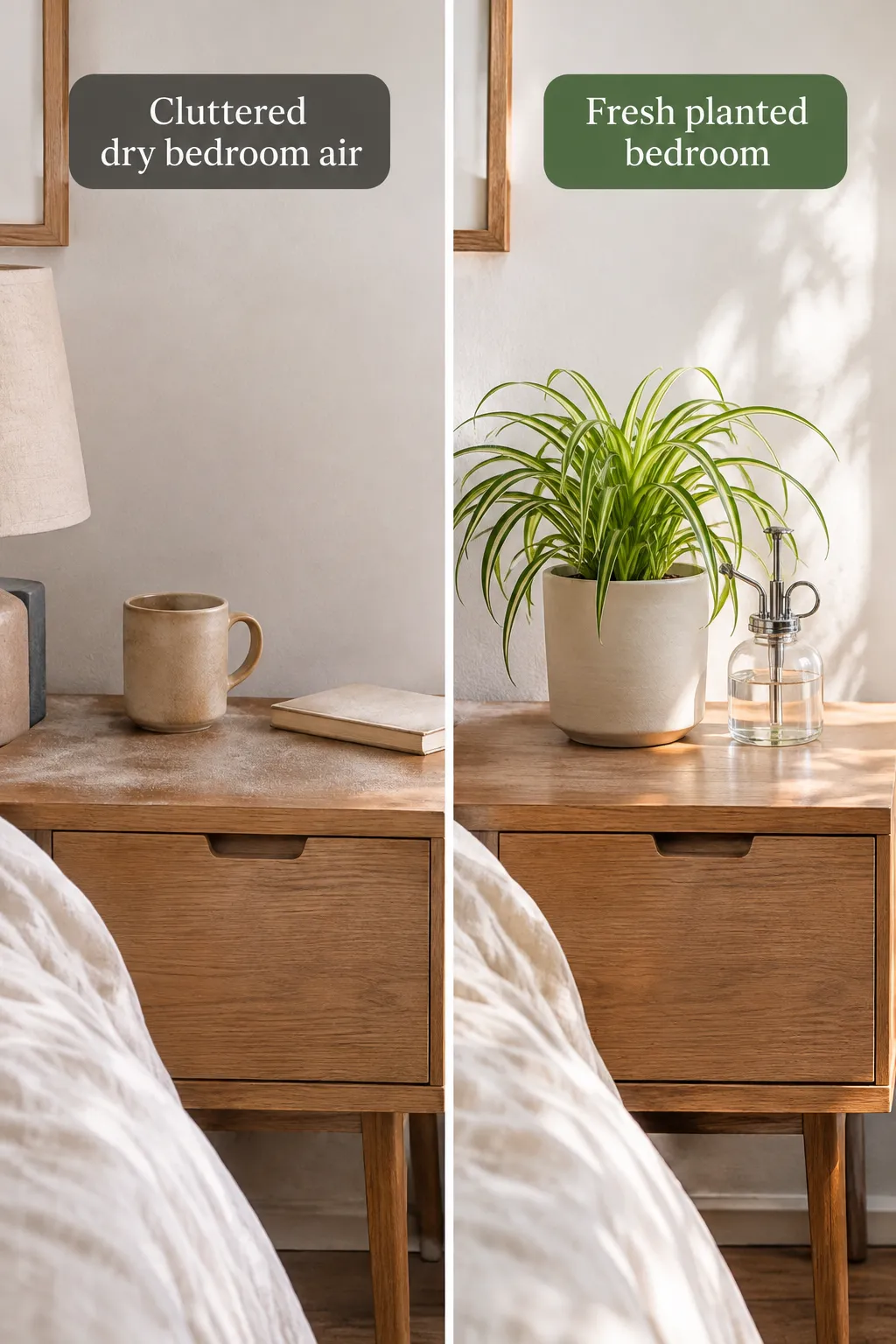
Start with one large plant or two to three smaller pots, check pet toxicity before buying, and water based on the plant’s real needs rather than a fixed schedule. If your current plant looks unhappy, walk through the light, water, and draft checklist above before giving up on it. A well-chosen plant, paired with a cleaner nightstand and a calmer room, can genuinely make your bedroom feel more like a sanctuary, even if it’s not boosting your oxygen while you sleep.