

Last updated: November 4, 2026
Quick Answer
Indoor plants yellow leaves usually come from overwatering, underwatering, low light, nutrient deficiency, or cold drafts – rarely a single “disease.” Check the oldest leaves first, feel the soil, and look at the pattern (whole leaf vs. veins, tips vs. base) before you fix anything. Most plants recover within 2 to 4 weeks once the real cause is corrected.
Key Takeaways
- Overwatering is the most common cause of indoor plants yellow leaves, often paired with soft, limp foliage and soggy mix.
- Underwatered plants yellow from the tips or edges, with soil that’s hard and pulling away from the pot.
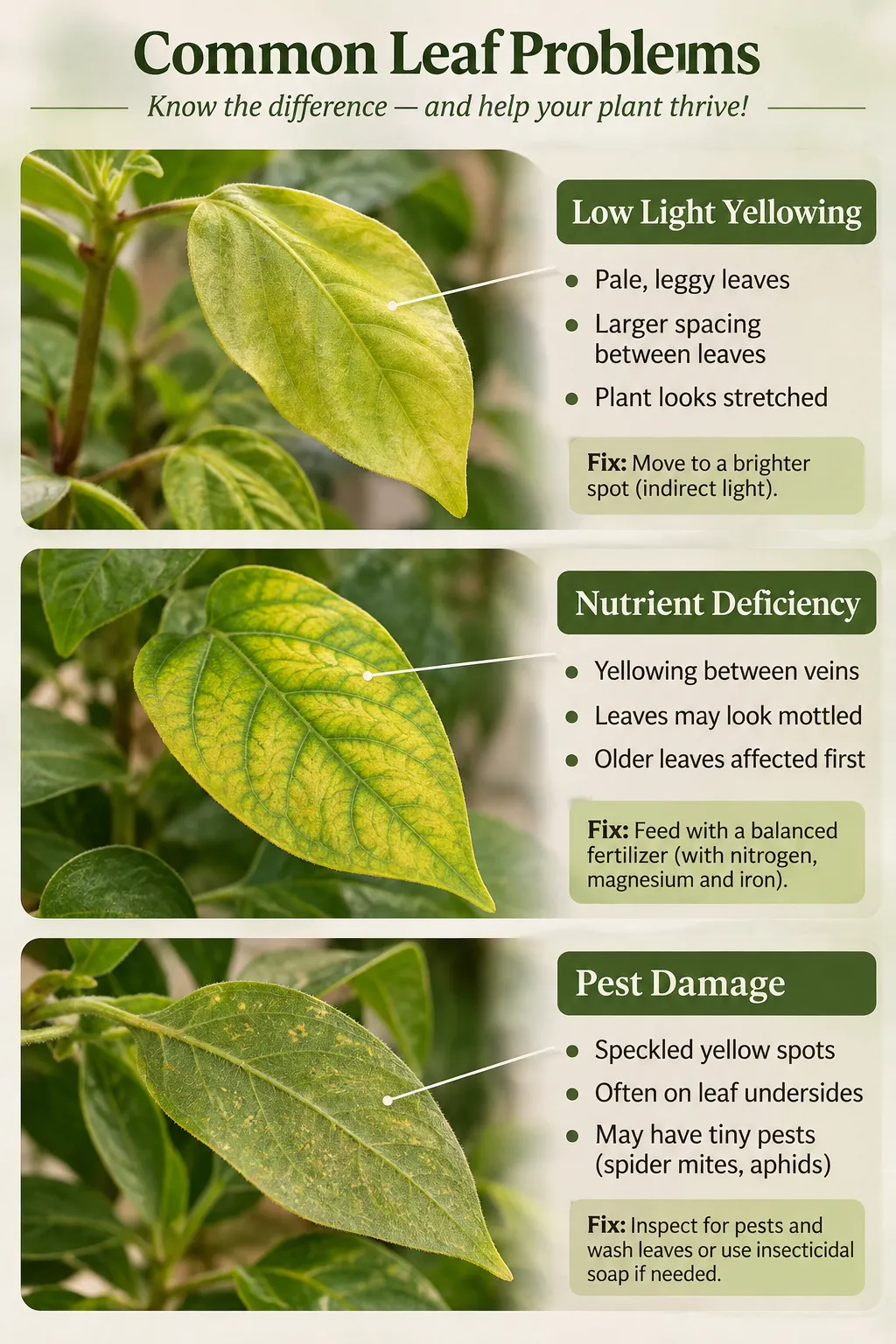
- Yellowing of leaves is due to deficiency of light, nitrogen, iron, or magnesium in many cases.
- A yellow leaf that’s already fully yellow or brown will not turn green again – remove it.
- Oldest leaves turning yellow first is often normal aging, not a crisis.
- Fiddle leaf fig, monstera, pothos, peperomia, and ficus tineke each have slightly different yellowing triggers.
- Fixing yellow leaves on houseplants usually takes 2 to 4 weeks once watering and light are corrected.
- Pests like spider mites can cause speckled yellowing that looks like a nutrient problem but isn’t.
Why are my indoor plant leaves turning yellow?
Leaves turning yellow indoors almost always trace back to water, light, or nutrients – not a mystery disease. The plant is reacting to stress in its environment, and yellow is simply the color left behind once green chlorophyll breaks down.
Across several 2026 diagnostic guides, the usual suspects are overwatering, underwatering, low light, nutrient deficiency, mineral buildup from tap water, cold or dry air, and pests, rather than one single cause for every plant – you have to read the pattern to know which one applies to your plant leaves turning yellow situation.
A few quick questions to ask yourself:
- Is it the oldest leaves at the bottom, or new growth up top?
- Is the whole leaf yellow, or just the veins, tips, or edges?
- Does the soil feel wet, bone dry, or somewhere in between?
Answering these narrows the cause fast, before you reach for fertilizer or a watering can.
What causes yellow leaves on houseplants, exactly?
The core causes are watering mistakes, poor light, nutrient gaps, temperature stress, and pests – and most plants show more than one symptom at once. A July 2026 breakdown identified overwatering, low light, dry winter air, rootbound plants, nutrient deficiency, and temperature swings as the seven major drivers of yellow leaves and their fixes.
Here’s a short cause-and-fix table to keep handy:
| Cause | What you’ll see | Quick fix |
|---|---|---|
| Overwatering | Soft yellow leaves, soggy mix | Let soil dry, check drainage |
| Underwatering | Dry, crispy yellow edges | Soak root ball, water sooner |
| Low light | Pale yellow, leggy stems | Move closer to a window |
| Nutrient gap | Yellow between green veins | Feed during growing season |
| Cold drafts | Sudden yellow drop near winter | Move plant away from vents |
Common mistake: people see yellow and immediately add water or fertilizer. That often makes overwatering or salt buildup worse instead of better.
Is it normal for indoor plants to get yellow leaves?
Yes – a single oldest leaf turning yellow every few weeks is completely normal aging, not a problem. Plants shed older leaves as they age, especially the lowest ones closest to the pot.
The concern is when yellowing spreads fast, hits new growth, or appears on several leaves at once. That pattern points to an actual watering, light, or nutrient issue rather than natural leaf turnover. If your fiddle leaf fig or ficus tineke rubber tree drops one lowest leaf a month, that’s fine. If five leaves go yellow in a week, something changed – check watering first.
How do I fix yellow leaves on my pothos?
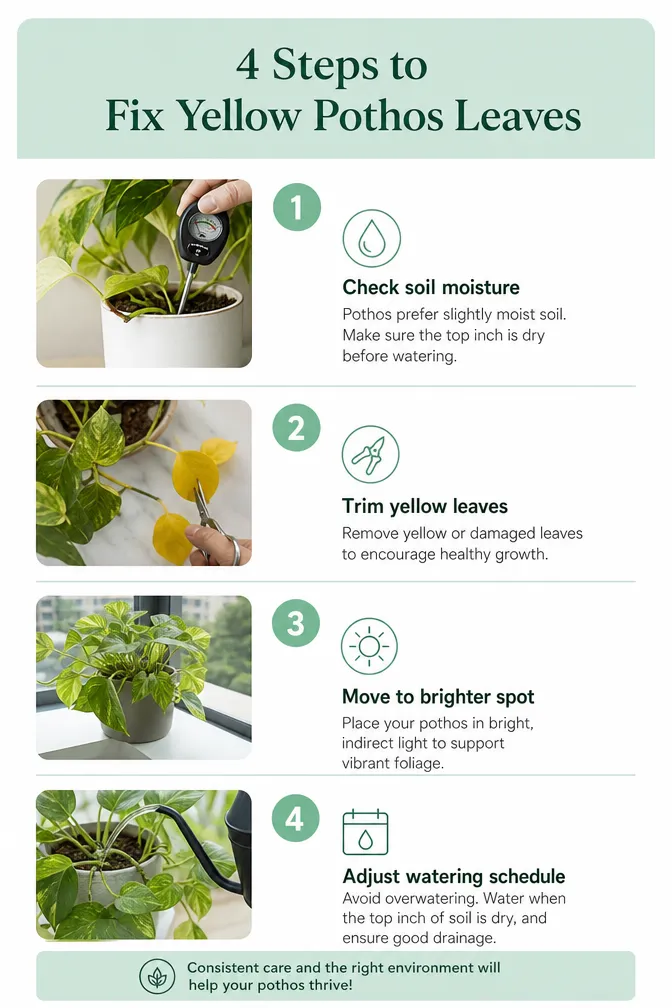
Fix yellow pothos leaves by trimming the yellow ones, letting the top 3cm of soil dry before watering again, and moving the plant closer to a light source. Pothos vines often hold onto old inner leaves that naturally yellow as the vine grows longer, so some yellowing is just aging.
Steps that work well:
- Snip yellow leaves at the stem to redirect energy.
- Check if soil is constantly wet – that’s the top cause.
- Water only after the top layer of mix feels dry.
- Move the pot a few feet closer to a window or under a grow light if vines look sparse and pale.
For a deeper dive specific to this plant, see this pothos winter care checklist for fixing yellow leaves fast.
Can yellow leaves turn green again?
No. Once a leaf has fully turned yellow, the chlorophyll breakdown is permanent and it will not turn green again. The best move is to trim it off cleanly so the plant can focus energy on healthy leaves instead.
This is one of the most misunderstood parts of houseplant care – people wait, hoping a yellow leaf will “bounce back.” It won’t. But catching the cause early stops the next leaf from yellowing too, which is really the win here.
Yellow leaves from overwatering vs underwatering: how to tell
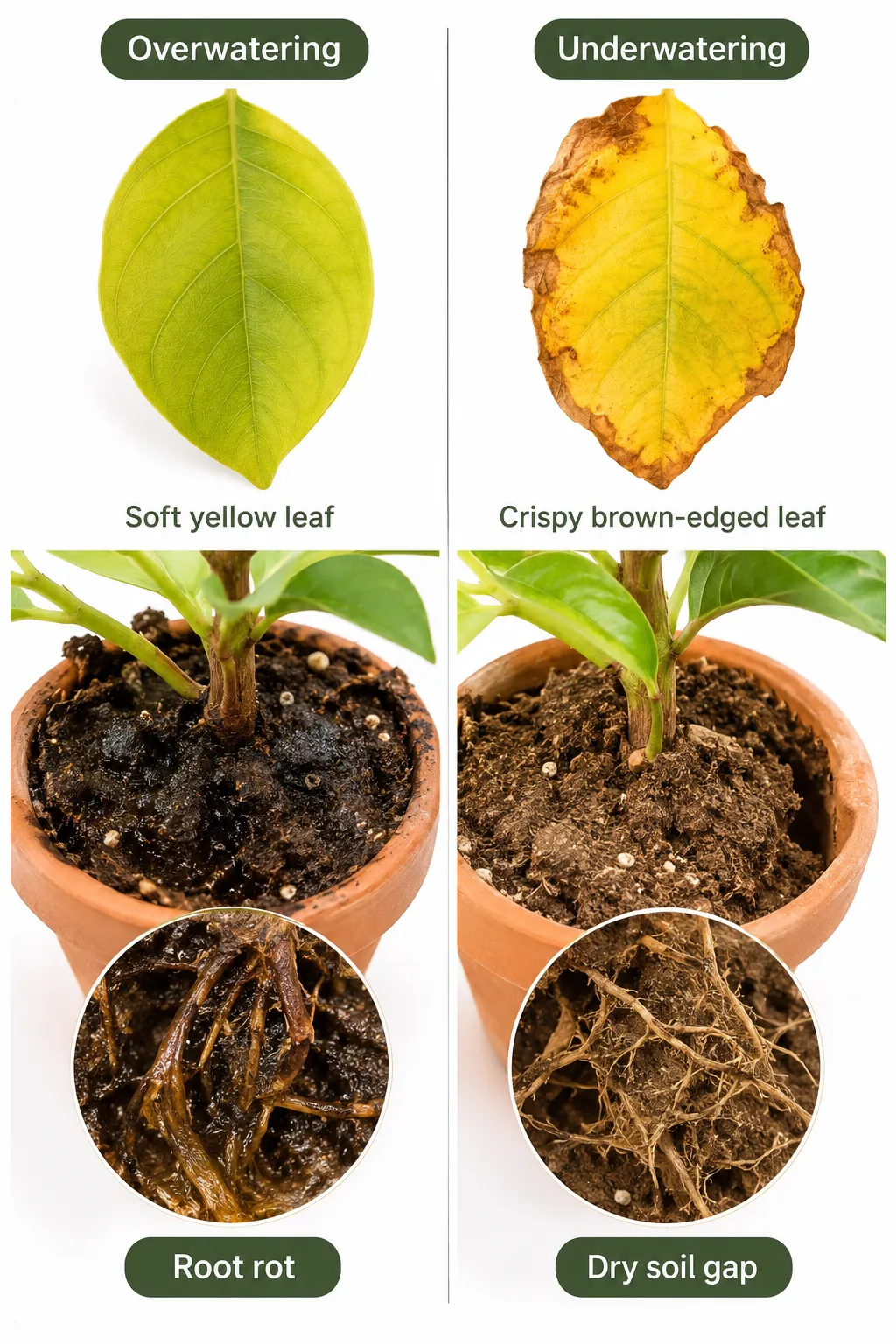
Overwatered leaves turn soft and yellow with soggy, heavy soil, while underwatered leaves yellow and crisp from the tips with hard, dry soil pulling away from the pot edge. Feeling the soil and the leaf texture together tells you which one you’re dealing with.
Overwatering is consistently named the single most common indoor cause of yellow leaves, often showing up with limp foliage and a musty smell from root rot and soggy potting mix. Fix it by checking for drainage holes, emptying the saucer, and letting the mix dry out significantly before the next watering. If roots are brown and mushy, trim them and repot into fresh, well-draining mix.
Underwatering shows a different signature: leaves yellow and go crispy at the tips or edges, and the soil feels hard, almost pulling away from the pot after prolonged drought stress. The fix is a slow soak – bottom-water for 20 to 30 minutes so the dry mix rehydrates evenly, rather than a quick splash on top that just runs straight through.
What nutrient deficiency causes yellow leaves?
Yellowing of leaves is due to deficiency of nitrogen, iron, or magnesium in most indoor nutrient cases. Nitrogen deficiency fades older leaves evenly, while iron or magnesium deficiency shows as yellow patches between still-green veins.
A September 2026 symptom table compiling Royal Horticultural Society and university extension data found that evenly yellow lower leaves usually mean chronic water or light stress, while veined yellowing points to iron or magnesium gaps, especially in acid-loving plants like peperomia. Feed with a balanced liquid fertilizer during spring and summer growth months, not in winter when growth slows.
How often should I water to prevent yellow leaves?
There’s no fixed schedule – check the soil every few days and water only when the top 3cm feels dry rather than watering on autopilot. Fixed watering calendars are actually one of the biggest triggers for indoor plants yellow leaves.
In summer, most indoor plants dry out faster and may need water weekly. In winter, growth slows and the same plant might go two to three weeks between waterings. Sticking a finger into the mix beats guessing every time.
Does low light cause yellow leaves in all plants?
No, not equally – shade-tolerant plants like pothos and peace lily tolerate dim corners fine, but light-hungry plants like fiddle leaf fig and rubber tree yellow fast without bright indirect light. Low light can mimic a nutrient deficiency, making leaves pale yellow and growth leggy even when feeding is adequate.
On the flip side, too much direct sun can bleach leaves to a yellow-white with crispy brown edges, especially on plants that evolved under a forest canopy. Experts recommend moving sensitive foliage plants into bright indirect light or filtering harsh sun with a sheer curtain. If you’re working with a dim apartment, this guide to low-light houseplants that survive neglect is worth a look before you blame nutrients.
Best way to remove yellow leaves from plants
Snip yellow leaves at the base of the stem with clean scissors or pruning snips rather than pulling them off by hand. Pulling can tear healthy stem tissue and create an entry point for rot.
Remove yellow leaves once they’re more than half yellow – there’s no benefit to keeping them, and they drain a small amount of energy the plant could use on new, green growth. After trimming, wipe your tool with rubbing alcohol before moving to another plant, since some yellowing is pest-related and tools can spread it.
Common mistakes that make plant leaves yellow
The biggest mistake is reacting to yellow leaves with more water or more fertilizer, which usually worsens overwatering or salt buildup instead of fixing the real cause. A close second is ignoring the pot – no drainage hole means water sits at the roots no matter how carefully you water.
Other frequent mistakes:
- Watering on a fixed weekly schedule regardless of soil condition.
- Leaving plants in a saucer full of standing water.
- Placing cold-sensitive plants right against a drafty winter window.
- Overfeeding in winter when the plant isn’t actively growing.
How long does it take to fix yellowing leaves?
Most indoor plants show improvement within 2 to 4 weeks once the actual cause – watering, light, or feeding – is corrected. New growth should come in green and healthy; existing yellow leaves won’t reverse, but they’ll stop multiplying.
If you see no change after a month, recheck the roots. Rootbound plants or advanced root rot sometimes need repotting before any new growth looks right.
Yellow leaves on succulents: what should I do?
Yellow, mushy succulent leaves almost always mean overwatering, since succulents store water and rot quickly in soggy mix. Let the soil dry completely between waterings and switch to a fast-draining cactus mix if you haven’t already.
Unlike tropical foliage plants, succulents rarely yellow from underwatering – they shrivel and wrinkle instead. If you see yellow and soft texture together on a succulent, cut back on watering immediately and check the roots for rot.
Is my plant dying if it has yellow leaves?
Not usually – a few yellow leaves is a normal stress signal, not a death sentence. A plant is only in serious danger when yellowing spreads rapidly through new growth, stems go soft, or roots are visibly black and mushy when checked.
When the plant can’t be saved, you’ll typically see collapsed stems, a rotten smell from the pot, and no healthy roots left after trimming. At that point, taking a cutting from any remaining healthy stem is often more productive than trying to revive the whole plant.
Fiddle leaf fig, monstera, peperomia, and ficus tineke: plant-specific notes
Different popular houseplants yellow for slightly different reasons, so a one-size-fits-all fix doesn’t always work. Here’s a quick rundown of common picks.
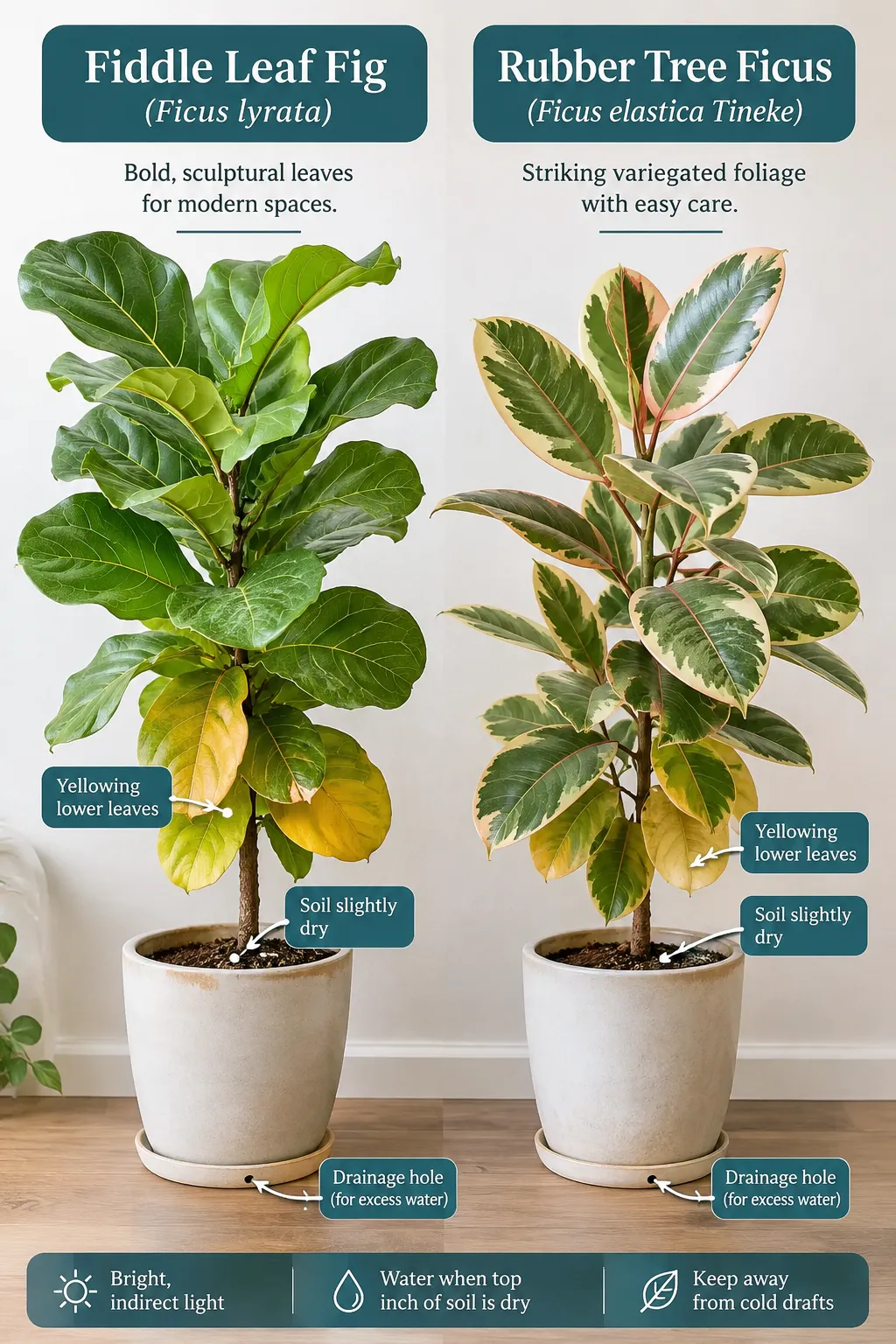
Fiddle leaf fig: Sensitive to both overwatering and sudden light changes. Yellow lowest leaves often mean the plant was moved or watered inconsistently. Keep watering steady and light bright but indirect.
Monstera deliciosa: Yellowing is most often linked to wet soil, low light, or erratic watering swings, sometimes with hidden pests on new growth. Keep monstera in bright indirect light, let the top portion of soil dry between waterings, and remove old yellow leaves that naturally age out on mature plants.
Raindrop peperomia: Compact and prone to overwatering since its thick leaves already store moisture. Yellow, translucent-looking leaves usually mean too much water, not too little.
Ficus tineke rubber tree: Similar to fiddle leaf fig – dislikes wet feet and sudden cold drafts. Yellow leaves near the base are often normal aging as the plant matures and sizes available in nursery pots get root-bound over time.
Anyone shopping for a resilient starter plant, including sizes available for small apartments, should check out this beginner houseplant guide for people who always kill their plants. For plants that double as a good plant for gift giving, this list of easy-care Christmas plant gifts under $30 covers low-maintenance options that resist yellowing from neglect.
When did you last feed it?
If you can’t remember the last feeding, that’s often part of the problem, especially during spring and summer active growth. Indoor plants pull nutrients from potting mix fast, and without regular feeding, older leaves yellow evenly as nitrogen gets redirected to new growth.
Feed monthly in spring and summer with a balanced liquid fertilizer at half the label strength, and skip feeding entirely in winter when most houseplants rest.
How to stop it happening again
Once you’ve fixed the current round of yellow leaves, build a simple routine: check soil moisture weekly, rotate the plant toward light every couple weeks, and feed during the growing season only. This habit loop prevents most future yellow leaf issues before they start.
Also worth checking: is the plant in the right pot size? A rootbound plant in too small a pot dries out fast and yellows repeatedly no matter how carefully you water. If you’re setting up a new plant corner, these tall planter ideas for empty indoor corners help match pot size to plant size properly.
Browse our full houseplants and indoor growing category for more plant-by-plant care routines.
Yellow leaves FAQs
How to fix yellow leaves on houseplants?
Check soil moisture first – if it’s soggy, let it dry and improve drainage; if it’s bone dry, soak it slowly. Move the plant to bright indirect light, trim off the yellow leaves, and feed only during active growing months. Most plants improve within 2 to 4 weeks.
Can plants recover from yellow leaves?
The plant itself can recover and grow healthy new leaves, but an already-yellow leaf won’t turn green again. Trim the yellow leaf off and fix the underlying cause – watering, light, or feeding – so future leaves grow in green.
Do yellow leaves mean overwatered?
Often yes, but not always. Overwatering is the most common cause, especially when leaves feel soft and soil stays wet. But yellow leaves can also come from underwatering, low light, nutrient deficiency, or pests, so check soil texture before assuming it’s water.
Does epsom salt help yellow leaves?
Epsom salt can help if yellowing is specifically caused by magnesium deficiency, since it supplies magnesium sulfate. It won’t help yellowing from overwatering, low light, or pests, so confirm the cause first instead of applying it as a default fix.
Conclusion
Yellow leaves on indoor plants are a signal, not a disaster. Start by checking the soil, then the light, then feeding history – in that order – and you’ll usually land on the real cause within a few minutes. Trim off any fully yellow leaf, adjust your routine, and give the plant 2 to 4 weeks to show green, healthy growth again.
If this round of yellowing came from a watering mix-up, set a soil-check reminder instead of a fixed watering day. That one habit change prevents most repeat yellowing I’ve seen across fiddle leaf figs, monsteras, pothos, and peace lilies alike.



3 Comments on “Indoor Plants Yellow Leaves: Causes and Fixes for Each Common Plant”