

Last updated: October 26, 2026
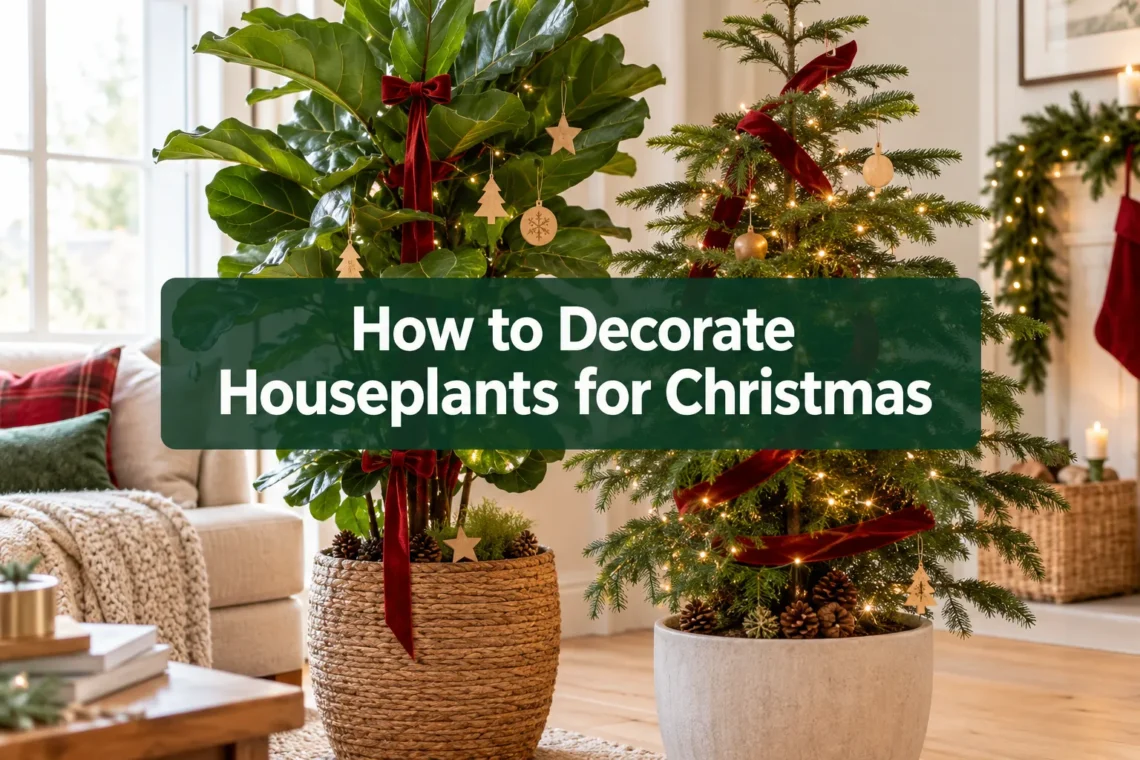
A full-size Christmas tree isn’t the only way to get festive. If you know how to decorate houseplants for Christmas, your pothos, ficus, and even your succulents can double as holiday decor without any extra floor space.
Quick Answer
The safest way to decorate houseplants for Christmas is to use lightweight, battery-powered LED lights, small ribbon bows, and mini ornaments clipped (not tied tightly) onto sturdy branches. Avoid heavy decor on soft-leaved or trailing plants, keep decorations on for no more than 4 to 6 weeks, and always check that plants still get enough light and airflow once decorated.
Key Takeaways
- Light, minimal decor protects plant health better than heavy ornaments.
- Woody, tree-like houseplants (ficus, Norfolk pine, rosemary topiary) handle string lights best.
- Wrap pots in ribbon or fabric for a quick “mini Christmas tree” look.
- Group several plants together in matching containers for big visual impact with little effort.
- Red and white poinsettias, cyclamen, and Christmas cactus blooms work as natural decorations.
- Succulents and air plants fit nicely into wreaths and hanging displays.
- Remove heavy or tight decorations before the New Year to prevent stress.
- Battery LED lights are safer than hot incandescent strands for live foliage.
What Decorations Are Safe to Put on Houseplants?
Soft, lightweight items are the safest choice for decorating live houseplants. Think mini LED lights, paper ornaments, thin ribbon, and small felt shapes that won’t bend or snap stems.

Heavier glass ornaments, tinsel with wire cores, and anything that pinches a stem can cause damage over several weeks. According to House Digest’s expert gardener advice, the safest approach is to prioritize plant health first and treat decorations as a light accent, not a full costume.
A good rule: if you wouldn’t want the item resting on your own skin for a month, don’t rest it on a leaf.
Choose this if: you have thin-leaved tropicals like pothos, philodendron, or peace lily. Stick to ribbon and tiny clip-on lights only.
Can You Hang Ornaments on Indoor Plants?
Yes, but only on branches strong enough to support the weight without bending. Small, lightweight ornaments work fine on woody plants like ficus trees, Norfolk Island pines, and rosemary topiaries.
Avoid hanging ornaments on:
- Thin-stemmed trailing plants like string of pearls
- Soft-leaved plants like calathea or prayer plants
- Anything already stressed, wilting, or recovering from repotting
A simple trick I use on my own ficus every December: I tie ornaments with a loose loop of fishing line instead of wire. It holds the ornament in place but never cuts into the bark.
Best Houseplants to Decorate for Christmas
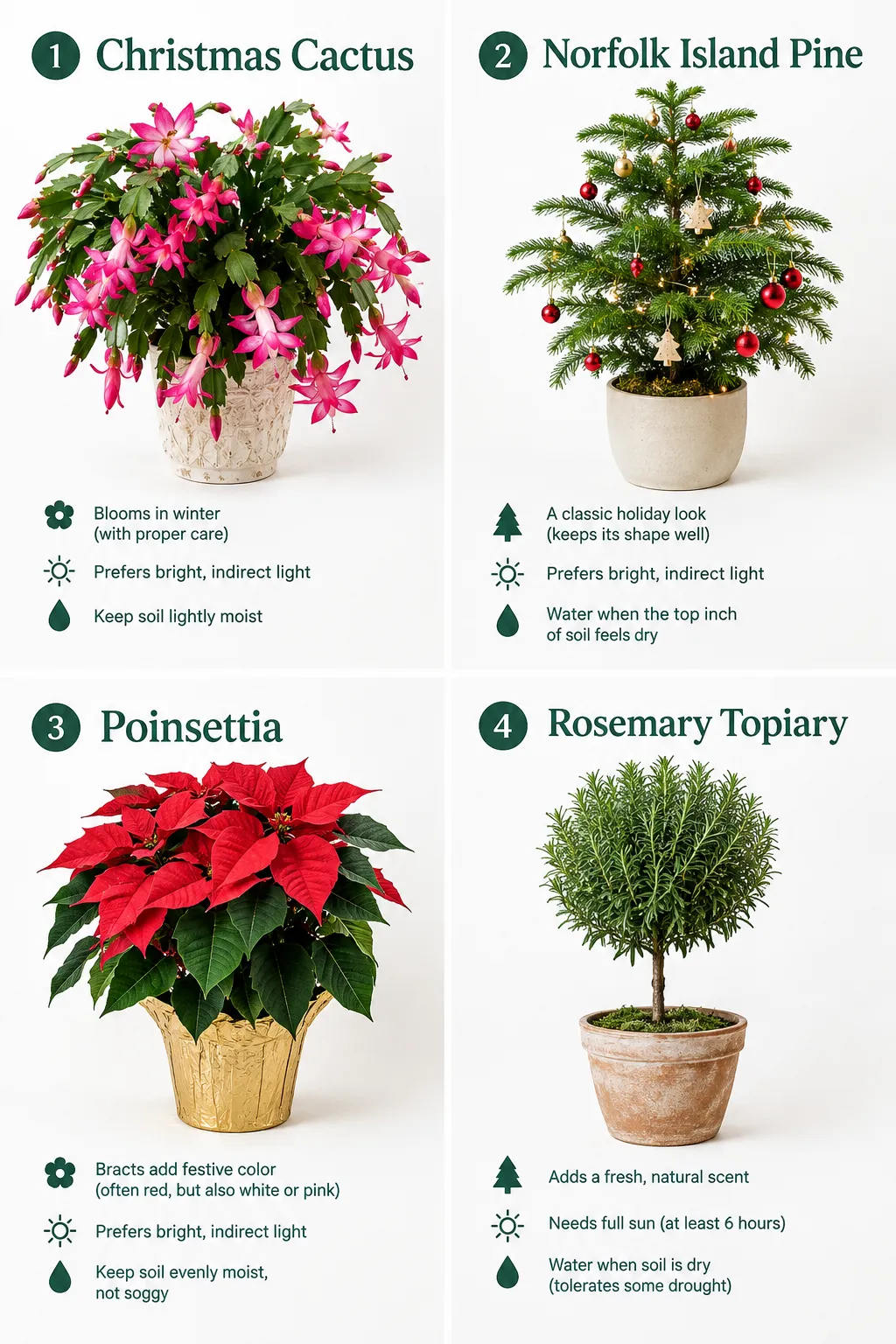
Woody and upright houseplants make the best candidates because their stems can bear light decor without snapping. Home Depot’s guide to festive holiday houseplants highlights several varieties that naturally suit the season.
Top picks include:
- Norfolk Island Pine – looks like a mini Christmas tree already
- Christmas Cactus – blooms in winter with pink or red flowers
- Poinsettia – classic red and green holiday color
- Rosemary Topiary – smells like the holidays, trims into a tree shape
- Cyclamen – compact blooms in festive reds and whites
If you’re unsure which houseplants fit your space and light levels before adding holiday decor, this guide to houseplants for beginners is a solid starting point.
Will Decorations Hurt My Houseplants?
Decorations can hurt houseplants if they block light, trap heat, or physically damage stems and leaves. Most damage comes from decorations left on too long, not from the act of decorating itself.
Common signs of stress include yellowing leaves, drooping stems, or leaf drop where ornaments rubbed against foliage. Gardener’s World recommends checking your plant weekly during the holidays to catch problems early.
Common mistake: wrapping string lights so tightly around a trunk that they constrict growth as the stem thickens. Always leave slack.
How Long Can You Leave Decorations on Plants?
Four to six weeks is the safe upper limit for most light decorations on houseplants. Anything longer increases the risk of light blockage, pest hiding spots, and stem damage.
If you put decorations up right after Thanksgiving and take them down in early January, your plants should be fine. Check soil moisture and light exposure at least once a week while decorated.
What’s Toxic to Plants and Safe for Pets During the Holidays?
Tinsel, fake snow spray, and some artificial berries can be toxic if pets chew them, and metallic decorations can leach onto soil over time. Stick to fabric ribbon, wood ornaments, and pet-safe LED lights to protect both your animals and your plants.
Poinsettias themselves are mildly toxic to cats and dogs if eaten, according to general houseplant safety guidance, so keep them on high shelves in pet households. Homes & Gardens’ plant decorating guide suggests choosing natural materials over synthetic decor whenever pets or curious toddlers are in the home.
Difference Between Decorating Real Plants vs Fake Plants
Fake plants can hold heavier decorations like glass ornaments, glitter, and wired tinsel without any risk of damage. Real houseplants need lighter materials and more careful placement because they’re still living and growing.
| Factor | Real Houseplants | Fake Plants |
|---|---|---|
| Weight limit | Light items only | Any weight |
| Light blockage | Can stunt growth | No effect |
| Maintenance | Weekly checks needed | None |
| Scent | Natural, fresh | None |
| Longevity | Grows year-round | Decorative only |
Choose real plants if you want fresh greenery and don’t mind occasional upkeep. Choose fake plants if you want bold, heavy decor with zero plant-care responsibility.
Where to Buy Small Plant Christmas Decorations
Craft stores, garden centers, and online marketplaces all carry miniature ornaments sized for houseplants. Look for “mini” or “miniature tree ornaments” in the search bar, since standard tree ornaments are often too heavy.
Good sources include:
- Local garden centers (often stock mini ornaments during the holidays)
- Craft stores for felt balls, small bows, and paper stars
- Online marketplaces for battery LED micro-lights
How to Decorate Trailing or Hanging Plants for Christmas
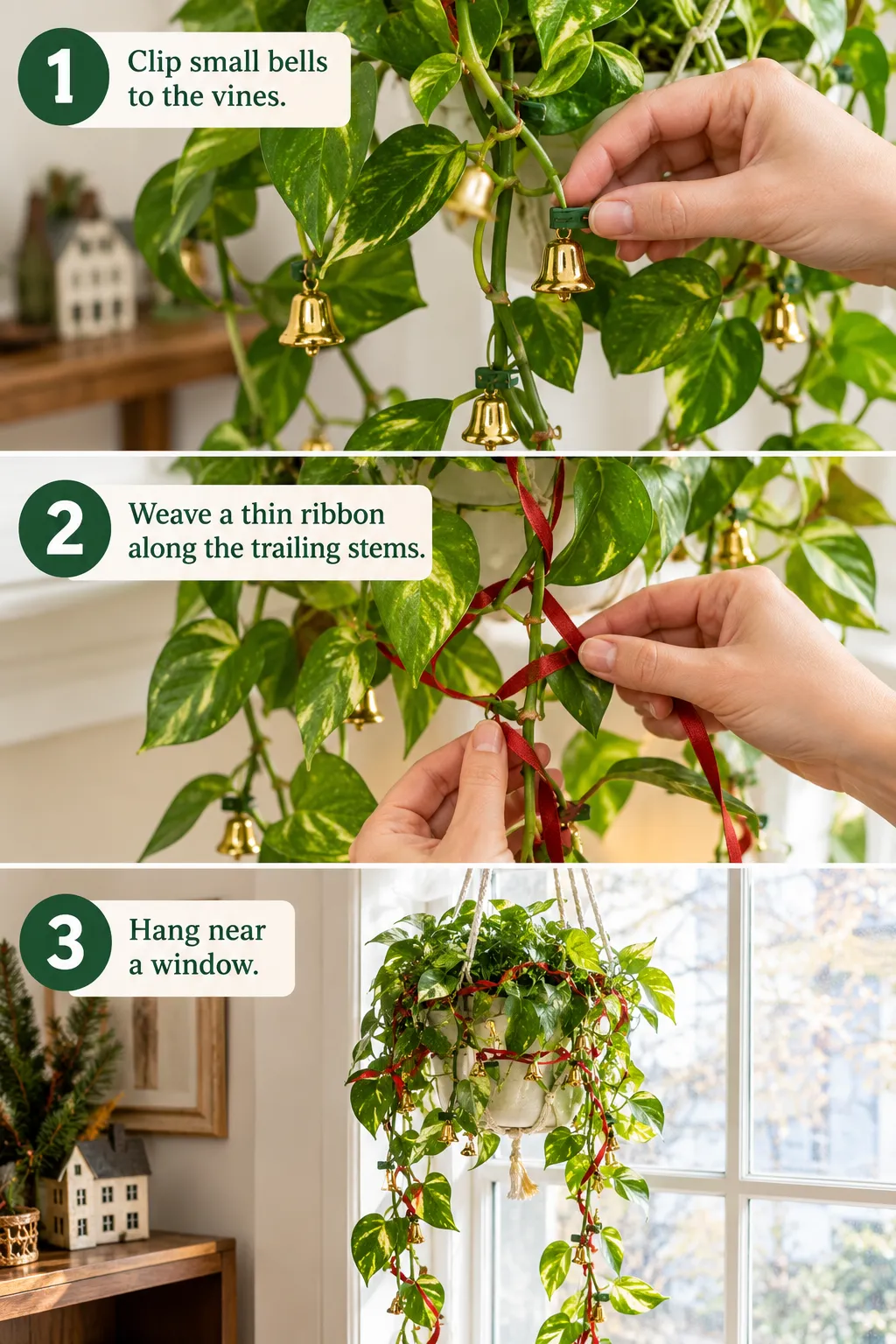
Trailing plants like pothos, string of pearls, and ivy look best with thin ribbon woven along the vines rather than clipped-on ornaments. The goal is to accent the natural drape, not weigh it down.
Try this simple approach:
- Choose a thin velvet or satin ribbon in red, gold, or white
- Loosely weave it between vines, leaving slack every few inches
- Add one or two tiny bells or bows near the pot, not along the entire length
- Hang near a window so light still reaches the leaves
If you’re decorating a hanging plant in a corner, pairing it with a tall planter in an empty corner adds extra height and holiday presence.
Can You Use Garland and Lights on Live Houseplants?
Yes, battery-powered LED lights and lightweight garland work well on sturdy houseplants, but avoid hot incandescent strands that generate heat near leaves. Home & Gardens notes that LED lights stay cool enough to leave on for hours without stressing foliage.

Garland should be thin and draped loosely rather than wrapped tightly. Heavy fabric or wired garland can snap delicate stems over time.
Edge case: if your plant is already near a heat vent or fireplace, skip lights entirely. The combined heat can dry out leaves fast.
Common Mistakes When Decorating Houseplants
The most common mistake is treating a houseplant like a plastic tree and loading it with full-size ornaments. This blocks light, bends stems, and stresses the plant within days.
Other frequent mistakes:
- Forgetting to water because the plant is “decorated” and out of the usual routine
- Using wire ornament hooks that pierce bark or stems
- Placing decorated plants too far from light sources for weeks at a time
- Leaving decorations on well past January, into active spring growth
How to Decorate Succulents for the Holidays
Succulents work best with tiny accents placed in the soil rather than hung on the plant itself. Mini wooden stars, small picks, or a thin ribbon tied around the pot add holiday flair without touching the fragile leaves.
The University of Georgia Extension’s winter plant guide points out that succulents and cacti suit minimalist holiday styling because their shapes already look sculptural and festive on their own.
For DIY succulent arrangements that double as holiday centerpieces, check out these DIY succulent planter ideas.
Plant Decoration Ideas for Small Apartment Living
Grouping a few plants in matching decorative containers creates a big visual impact without needing extra floor space. This “plant tablescape” approach works especially well on a windowsill, console table, or kitchen counter.
Apartment-friendly ideas:
- Cluster 3 to 5 small plants in red or gold pots on one shelf
- Add a mini wreath made from air plants and dried greenery
- Use seasonal scent with rosemary or eucalyptus sprigs tucked between pots
- Swap in holiday-colored foliage, like red-leaved poinsettias, instead of adding ornaments at all
If you’re working with limited natural light, pair this with low-light houseplant choices that still hold up well through the darker winter months.
Do You Need to Remove Decorations After Christmas or Leave Them On?
Most decorations should come off within a few weeks after Christmas, ideally by mid-January. Leaving lights, ribbon, or ornaments on for months can trap moisture against leaves and block new growth as spring approaches.
Natural holiday plants like poinsettias and Christmas cactus can simply be kept as regular houseplants once the decor comes off. For more plant care guidance year-round, browse Gardenner’s houseplants and indoor growing section.
12 Simple Ideas at a Glance
Here’s a quick checklist to decide how to decorate houseplants for Christmas based on what you already own:
- Wrap pots in ribbon for an instant “mini tree” look
- Add battery LED micro-lights to woody stems
- Clip small wooden ornaments onto sturdy branches
- Weave thin ribbon through trailing vines
- Group several plants in matching festive containers
- Let poinsettias and cyclamen serve as natural color accents
- Build a centerpiece using small potted plants and candles
- Tuck rosemary or eucalyptus sprigs between pots for scent
- Use succulents and air plants in mini wreaths
- Pick low-maintenance holiday plants for long-lasting display
- Match pot colors to your interior style, classic red or modern white
- Check plants weekly and remove decor after 4 to 6 weeks
FAQ
Do I need special lights for houseplants?
Battery-powered LED micro-lights are the safest choice because they stay cool and won’t scorch leaves over long display periods.
Can poinsettias stay decorated as a centerpiece all season?
Yes, poinsettias are naturally festive and need no extra decoration beyond their red bracts, making them ideal for a simple tablescape.
Is it okay to use real candles near decorated plants?
No, open flames near dry foliage or ribbon pose a fire risk. Use flameless LED candles instead.
What’s the easiest houseplant to decorate for a beginner?
A Norfolk Island Pine is the easiest because its shape already resembles a Christmas tree and its branches support light ornaments well.
Can I decorate a plant that’s actively flowering?
Yes, but avoid placing decorations directly on blooms, since the extra weight can cause flowers to drop early.
Should I still water a decorated plant on the same schedule?
Yes, decorations don’t change a plant’s water needs, so stick to its normal watering routine.
Are glitter and spray snow safe to use directly on leaves?
No, these products can clog leaf pores and interfere with photosynthesis, so apply them only to non-living decor nearby.
What should I do if my decorated plant starts dropping leaves?
Remove the decorations immediately, check soil moisture and light levels, and give the plant a week to recover before trying again with lighter materials.
Conclusion
Learning how to decorate houseplants for Christmas really comes down to one idea: keep it light, keep it short-term, and let the plant’s own shape do most of the work. A few ribbons, some mini LED lights, and a thoughtful grouping of pots can turn an ordinary windowsill into a festive display without risking your plants’ health.
Start with one or two plants this year, watch how they handle the decor, and adjust from there. Your ficus or Norfolk pine might just become the easiest “Christmas tree” you’ve ever had. For more ideas on keeping your indoor garden thriving through winter, explore Gardenner’s full houseplant collection.




2 Comments on “How to Decorate Houseplants for Christmas: 12 Simple Ideas”