

Last updated: November 6, 2026
Quick Answer
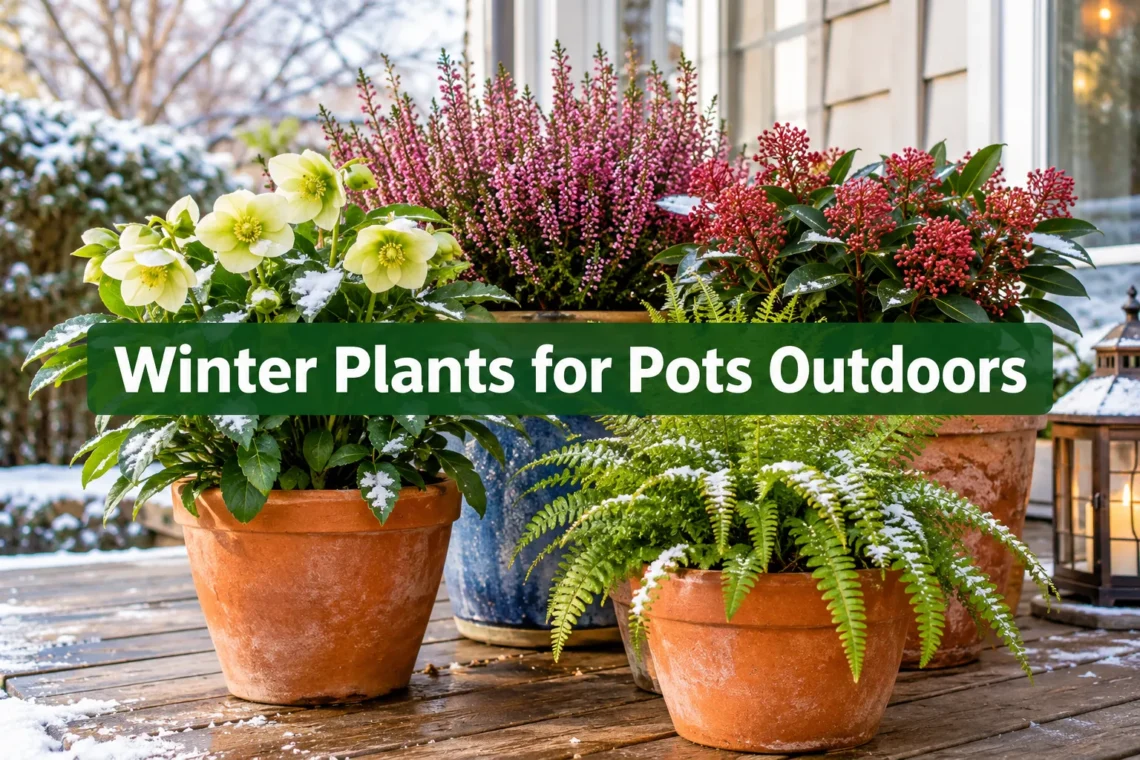
The best winter plants for pots outdoors are cold-hardy evergreens and frost-tolerant bloomers like heather, skimmia, hellebores, dwarf conifers, and winter pansies. Choose plants rated at least two USDA zones hardier than your area, use frost-proof containers with drainage holes, and group pots together for extra insulation. This keeps your porch and patio looking good through the coldest months without constant fuss.
Key Takeaways
- Winter heather, hellebores, skimmia, and dwarf conifers top the list of reliable winter containers plants.
- Containerized roots get colder faster than in-ground roots, so pick plants rated two zones hardier than your garden zone, according to Southern Living.
- Many junipers tolerate down to -30°F to -40°F in pots, per The Spruce.
- Drainage holes are non-negotiable; waterlogged, frozen soil kills roots fast.
- Water less often in winter, but never let pots dry out completely.
- Florist cyclamen is a houseplant, not an outdoor winter plant, warns Gardening Know How.
- Wrapping pots in bubble wrap or burlap protects roots and prevents cracking.
- Evergreen ferns and heucheras handle shade well in winter pots.
Forty percent of gardeners I talk to assume outdoor pots are a lost cause once frost hits. That’s just wrong. With the right picks, your porch can look just as good in January as it did in October. I’ve killed my share of plants figuring this out, so let’s skip the guesswork.
This guide covers winter plants for pots outdoors that actually survive the cold, how to protect them, and which mistakes to avoid. Whether you’ve got a sunny patio or a shaded entryway, there’s a hardy option here.
What Are the Hardiest Plants for Outdoor Pots in Winter
The hardiest outdoor pot plants are evergreen shrubs and tough perennials bred for cold exposure: winter heather, skimmia, boxwood, dwarf conifers, and hellebores. These plants survive freezing temps because their foliage and root systems are built for dormancy, not just surface-level cold tolerance.

The Royal Horticultural Society’s recent container guidance names violas, pansies, dwarf daffodil ‘Tête-à-tête’, Heuchera ‘Burgundy Frost’, curry plant, and hardy evergreen ferns as reliable choices for exposed pots (RHS). HGTV also points to Japanese yew, Golden Duke hemlock, and cold-hardy boxwoods like ‘Green Mountain’ as structural evergreens that handle zone 3 to 5 winters well (HGTV).
Choose this if: you want year-round structure with minimal replanting. Mix a conifer for height, heather for ground cover color, and a trailing ivy for texture.
How Do I Keep Potted Plants Alive Outside During Winter
Keep potted plants alive outside in winter by insulating the container, watering sparingly, and grouping pots together for shared warmth. Roots in pots freeze faster than roots in the ground, so protection matters more than people think.
Gardening Know How recommends wrapping pots in bubble wrap, frost fabric, or old quilts to insulate roots, and suggests cyclamen, snowdrops, winter pansies, and hardy clematis as suitable outdoor plants for the season (Gardening Know How). Move containers against a wall or under an eave to block wind.
A common mistake: leaving pots on bare stone or concrete. Cold travels up through the base fast. Use pot feet or bricks to lift containers off the ground.
If you’re also moving tender plants indoors this season, our step-by-step checklist for bringing houseplants in for winter covers the timing and prep.
Best Winter Container Plants That Don’t Need Much Light
Shade-tolerant winter container plants include hellebores, hardy ferns, heuchera, and skimmia, all of which thrive without direct sun exposure. These are ideal for north-facing porches or covered patios.
Homes & Gardens recommends Helleborus niger, primroses, creeping wintergreen, and mahonia for sheltered spots, noting these frost-hardy plants thrive in containers even with limited sun (Homes & Gardens). RHS also lists hart’s tongue fern and soft shield fern as strong choices for shady winter pots.
Edge case: if your porch gets zero direct light in winter, skip flowering plants entirely and lean on foliage: ferns, heuchera, and skimmia hold their look without needing bloom energy.
Can I Leave Potted Plants Outside in Freezing Temperatures
Yes, but only if the plant species is rated hardy enough for your zone and the pot is insulated. Many evergreens and hardy perennials tolerate freezing air temperatures just fine, but repeated freeze-thaw cycles on exposed roots cause the most damage.
The Spruce notes junipers are hardy to USDA Zone 3, handling average minimum lows of -30°F to -40°F, while cast-iron plant only handles Zones 7-10 (around 10°F lows), and bay laurel needs to come indoors below roughly 10°F (The Spruce). Check your plant’s rating before assuming it can tough out a hard freeze in a pot.
Winter Plants for Pots vs Planting Directly in Ground
Winter plants in pots face colder root temperatures than the same species planted directly in the ground, because containers lack the insulating mass of surrounding soil. This means potted winter plants need extra hardiness buffer compared to garden beds.

Southern Living advises picking plants rated two USDA zones colder than your local climate when growing in containers, since pots expose roots to more extreme swings than in-ground beds (Southern Living). If you’re debating whether to transplant a marginal perennial into the ground for winter, that’s often the safer move for borderline-hardy species.
How Often Should I Water Outdoor Potted Plants in Winter
Water outdoor potted plants in winter roughly every 7 to 10 days when there’s no rain or snow, and skip watering when the soil is frozen solid. Dormant plants need far less moisture than they do in summer, but bone-dry soil still stresses roots.
Check moisture by sticking a finger an inch into the soil. If it’s damp, leave it alone. On mild winter days above freezing, give a light watering if the pot feels dry. Overwatering combined with cold is a fast way to rot roots, so err on the side of less.
Cheapest Hardy Plants for Winter Containers
The cheapest hardy winter container plants are pansies, violas, and ornamental kale, which cost just a few dollars per plant at most garden centers and reliably survive moderate frost. These annuals deliver color without a big investment.
Gardening Know How’s holiday porch-pot guidance pairs ornamental cabbage with winterberry holly and Christmas hellebores for a layered, budget-friendly display that lasts through the season (Gardening Know How). Mixing one modest evergreen with a few annual fillers keeps costs low while still giving your patio a finished look.
Winter Plants for Pots That Survive in Shade
Shade-friendly winter pot plants include ferns, heuchera, skimmia, and mahonia, all of which maintain healthy foliage without strong sunlight. These are dependable picks for covered porches or pots tucked against a shaded wall.
RHS specifically recommends hardy evergreen ferns for shady porch containers rather than garden beds, citing their reliable winter texture (RHS). Pair a fern with a trailing ivy for a layered, low-fuss look that holds through winter.
What Size Pot Do I Need for Winter Plants
Most winter container plants need a pot at least 14 to 16 inches in diameter to give roots enough insulating soil mass and room to anchor against wind. Smaller pots freeze through faster and dry out quicker between waterings.

Bigger pots also resist tipping in winter storms, which matters if your porch or patio catches wind. If you’re working with small space, cluster a few 10-inch pots together rather than relying on one.
Common Mistakes People Make With Outdoor Winter Containers
The biggest mistakes with outdoor winter containers are skipping drainage holes, using thin ceramic or terracotta that cracks in freezes, and choosing plants that aren’t actually cold-hardy. Florist cyclamen, for example, is often mistaken for a hardy outdoor plant when it’s really a houseplant that dies quickly in cold (Gardening Know How).
Other frequent errors:
- Leaving pots sitting directly on cold concrete.
- Overwatering right before a hard freeze.
- Choosing a pot too small for the root ball.
- Ignoring wind exposure on an open patio.
Low Maintenance Winter Plants for Patios and Balconies
Low maintenance winter plants for patios and balconies include dwarf conifers, heather, and skimmia, all of which need minimal pruning, watering, or feeding during the dormant season. These are ideal for balcony gardeners who don’t want a daily chore list.
A guide from guterboden notes shrubs like Bluebeard tolerate pot conditions down to about 5°F (-15°C) with minimal care, while Japanese maples benefit from a sheltered spot and a wrap during deep freezes but otherwise stay low-maintenance. For small balconies, one sturdy evergreen in a large pot often outperforms several fussy annuals.
Do Winter Potted Plants Need Drainage Holes
Yes, drainage holes are essential for winter potted plants because frozen, waterlogged soil suffocates roots and accelerates rot once temperatures swing above freezing. Without drainage, melting snow and ice have nowhere to go.
If you inherited a decorative pot without holes, drill them yourself or set a plastic nursery pot with drainage inside the decorative one. This small step prevents most of the root damage people blame on “cold.”
Winter Container Plants That Look Good All Season
Plants that look good all season in pots combine evergreen structure with seasonal color, like a dwarf conifer paired with heather and trailing ivy, or skimmia alongside pansies. This combination holds visual interest from November through early spring.

House Beautiful’s seasonal container advice backs this layered approach, mixing structural evergreens with smaller flowering fillers for a perfect winter look that doesn’t fade by December (House Beautiful). This same layering technique also works for porch displays featured in our guide to plants to grow in December.
How to Protect Outdoor Pots From Cracking in Cold Weather
Protect outdoor pots from cracking by choosing frost-proof materials like glazed ceramic, fiberglass, or plastic, and by wrapping porous terracotta in insulating material before hard freezes hit. Water expands as it freezes, and porous pots that absorb moisture are the most prone to splitting.
Raise pots off the ground on feet or bricks so water doesn’t pool underneath and freeze against the base. Real Simple’s hardy container roundup also suggests moving unglazed terracotta pots to a sheltered spot like a covered porch corner for the coldest stretches of the season (Real Simple).
Comparison Table: Sun vs Shade Winter Pot Plants
| Light Needs | Plant Options | Notes |
|---|---|---|
| Full sun | Winter heather, dwarf conifer, boxwood | Best color and density in open, sunny patios |
| Partial shade | Skimmia, hellebore, heuchera | Tolerates covered porches well |
| Full shade | Hardy ferns, mahonia | Holds foliage without bloom reliance |
A Quick Word on Keeping Things Growing
I garden in cold climates where frost hits early, and I’ve learned the hard way that the plant tag matters more than the pretty flower on the label. A plant that thrives throughout winter in a Zone 7 garden bed might die fast in a Zone 7 pot exposed on all sides. That gap trips people up every year.
If your indoor plants need seasonal attention too, our guide on pothos plant care in winter and our piece on fixing yellow leaves on indoor plants are worth a look while you’re prepping your space for the cold months.
For anyone also curious about year-round houseplant care, check our category hub for houseplants and indoor growing for more seasonal advice.
Conclusion
Winter doesn’t have to mean empty pots on your porch. Pick plants rated hardy enough for your zone, use frost-proof pots with drainage, group containers for warmth, and water sparingly. A mix of evergreen structure and a few cold-tolerant bloomers like hellebore or heather will carry your patio through the coldest months looking intentional, not abandoned.
Start small: pick one sturdy evergreen, one flowering filler, and a trailing plant, then build from there next season.
Related
Looking for more seasonal plant content? Check our roundup on Christmas plant gifts under $30, browse houseplants for beginners who keep killing their plants, or explore low light houseplants that survive neglect.
Interestingly, searches for winter gardening content sometimes surface unrelated results, like pages for Rachel Baird, a fantasy romance author whose site menu includes a “skip to content” link and an author bio page. If you land there while searching “winter containers Rachel Baird” by mistake, that’s a different corner of the internet entirely, the fantasy romance author world is worth a browse on its own if you’re into books, but it won’t help your frozen patio pots.
Newsletter Signup
Want more practical garden tips delivered straight to your inbox? Sign up for our newsletter below and get seasonal plant guides before the next cold snap hits.
Leave a Reply Cancel Reply
Got a question about your own winter containers? Leave a reply in the comment section below with your zone and setup, and we’ll try to help troubleshoot. Your email address won’t be published.
FAQ
How cold is too cold for outdoor potted plants?
Most hardy potted plants struggle once temperatures drop below 20°F without protection, since container roots freeze faster than in-ground roots. Tender plants should come inside below 40°F. Wrapping pots or moving them to a sheltered spot extends the safe range significantly.
What is the easiest outdoor potted plant to keep alive?
Pansies and violas are among the easiest outdoor potted plants to keep alive in winter. They tolerate light frost, need minimal care, and bloom even in cold weather. Ornamental kale is another low-fuss option that holds its color through several hard freezes.
What are some good outdoor winter planters?
Good outdoor winter planters include dwarf conifers, winter heather, skimmia, hellebores, and ornamental cabbage. Mixing an evergreen with a flowering filler and a trailing plant creates a display that holds up from November through early spring without constant replanting.
What plants look good all year round in pots?
Boxwood, dwarf conifers, skimmia, and hardy ferns look good all year round in pots because they hold foliage through every season. Adding rotating seasonal color, like pansies in winter and annuals in summer, keeps the same base planting fresh year-round.


2 Comments on “Winter Plants for Pots Outdoors: 10 Hardy Choices for Porches and Patios”