

Last updated: October 25, 2026
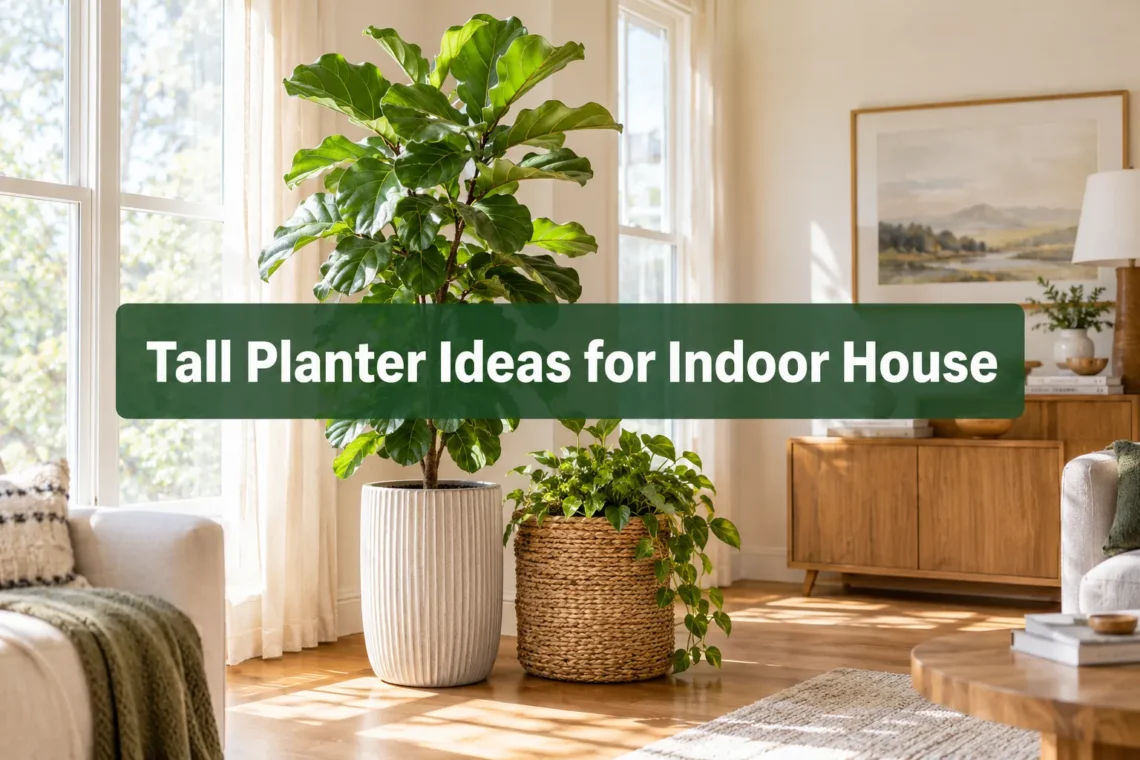
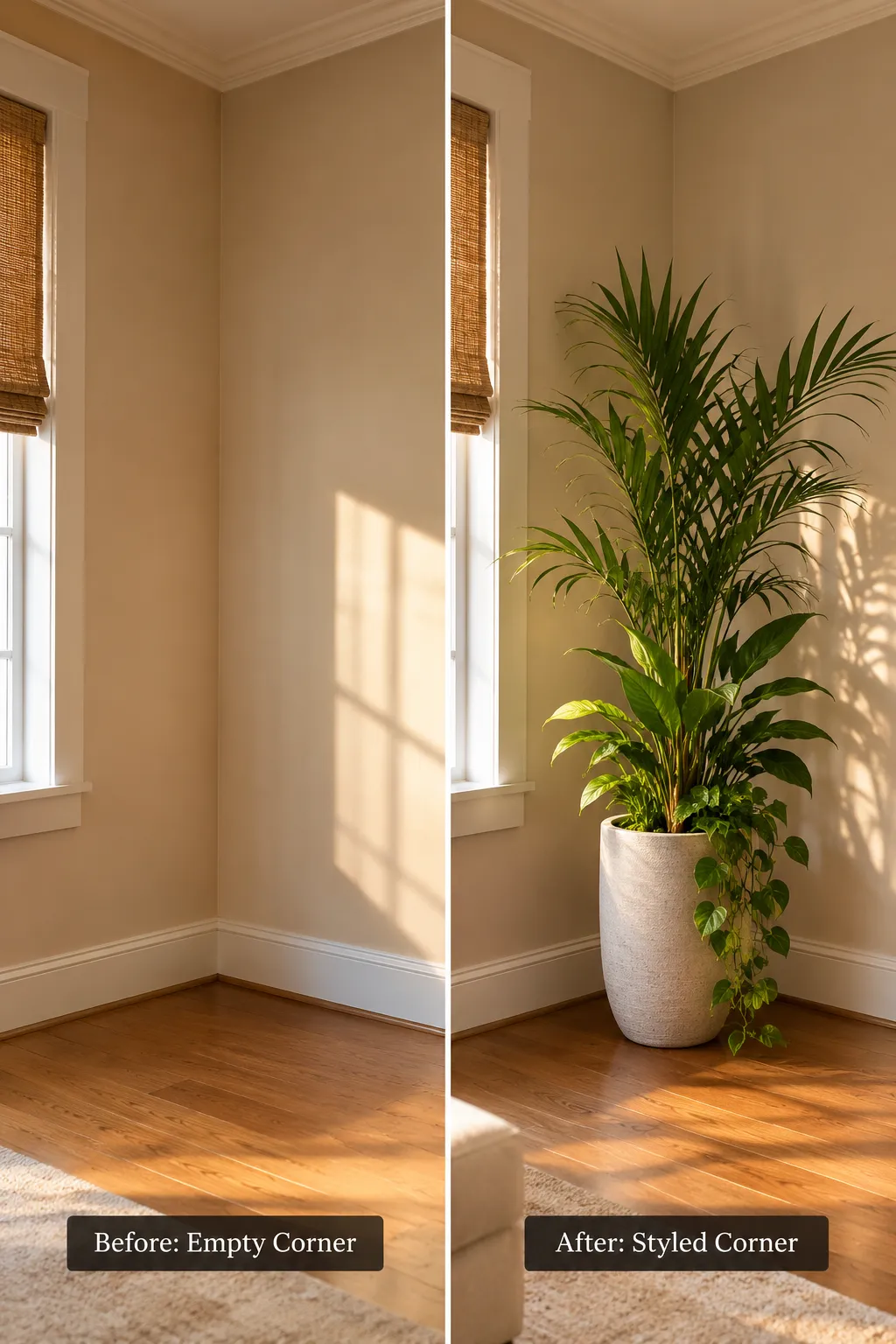
A corner takes up roughly 5 to 10 percent of most room layouts, and it’s usually the most ignored spot in the house. That dead zone next to your couch or behind your front door doesn’t have to stay empty. The right tall planter, paired with the right plant, turns wasted square footage into the best-looking part of the room.
I learned this the hard way after staring at a blank corner in my rental for two years before finally buying a planter. One plant, one pot, and suddenly the whole room felt finished. That’s the power of good Tall Planter Ideas for Indoor House Plants.
Quick Answer
Tall planters between 20 and 36 inches work best for filling empty corners, paired with upright plants like fiddle leaf figs, snake plants, or dracaenas. Choose a planter with a wide base for stability, drainage (or a cachepot liner), and a material that matches your room’s style. Budget $25 to $150 depending on size and material.
Key Takeaways
- Corner spaces look best with plants reaching 4 to 7 feet tall, paired with planters 20 to 36 inches in height.
- Thriller, filler, spiller layering works indoors too, just scaled up for tall planters.
- Ceramic, concrete, and woven rattan are the leading planter materials for 2026 styling.
- Self-watering tall planters cut watering frequency down to once every 2 to 3 weeks for some species.
- Wide-based or weighted planters prevent tipping, especially with top-heavy plants.
- Drainage holes matter more than most people think, even in tall decorative pots.
- Corner plant setups are part of the broader biophilic design trend shaping 2025 to 2026 interiors.
What plants work best for tall planters in corners
Upright, architectural plants work best because they fill vertical space without sprawling into walking paths. Think fiddle leaf figs, rubber plants, dracaenas, and snake plants.

These plants naturally grow tall and narrow, which suits the tight footprint of a corner. According to Kultivy’s guide on tall indoor plants, species with a single central stem or clustered upright leaves photograph and style better than bushy, wide plants in corner setups.
A good rule: if the plant’s natural shape is a column rather than a bush, it belongs in a corner.
How tall should my planter be for a corner space
Most corner planters work best between 20 and 36 inches tall, depending on ceiling height and the plant itself. A low planter under 15 inches tends to look lost in a corner with high ceilings.
- 8 to 9 foot ceilings: planter 20 to 28 inches, plant adds 3 to 4 feet on top
- 9 to 11 foot ceilings: planter 28 to 36 inches, plant adds 4 to 6 feet
- Vaulted or double-height rooms: consider two stacked plants or a tree-sized specimen in a 36-inch floor planter
Choose a taller planter if your corner sits near a staircase, entryway, or tall window where scale matters more.
What types of tall indoor planters are there
The main categories are ceramic cylinders, concrete towers, woven natural-fiber pots, metal floor planters, and self-watering towers. Each suits a different room style and maintenance level.
| Planter type | Best for | Maintenance |
|---|---|---|
| Ceramic cylinder | Modern, minimalist rooms | Medium, needs drainage tray |
| Concrete tower | Industrial, loft-style spaces | Low, heavy and stable |
| Woven rattan | Boho, warm interiors | Medium, needs liner pot |
| Self-watering tower | Busy households, travelers | Low, built-in reservoir |
| Metal floor planter | Contemporary, mid-century style | Medium, watch for rust |
According to The Backyard Style’s roundup of best indoor planters, vertical tower planters with stacked compartments are gaining ground for tight corners where floor space is limited but height is available.
Best tall plants for low light corners
If your corner doesn’t get much natural light, go with snake plants, ZZ plants, or cast iron plants. These three survive weeks of dim lighting without dropping leaves.

Corners near interior walls, away from windows, are the toughest spots in any room. I’ve had a ZZ plant in my darkest hallway corner for three years now, and it still looks better than plants I’ve babied in bright windows. For more low-light specific picks, this guide on houseplants for low light that survive neglect covers species beyond the basics.
Choose a cast iron plant if your corner gets almost zero daylight and you travel often. It tolerates both darkness and inconsistent watering.
How much do tall planters cost
Tall planters typically range from $25 for basic plastic or fiberglass options to $150 or more for large ceramic, concrete, or designer self-watering towers. Size and material drive most of the price difference.
- Budget tier: lightweight plastic or fiberglass, under $40
- Mid tier: glazed ceramic or woven rattan, $40 to $90
- Premium tier: concrete, handmade ceramic, or self-watering towers, $90 to $150+
A common mistake is buying a cheap, lightweight planter for a tall plant. The plant’s weight sits high, and a light pot tips over easily. Spend a little more for stability if your plant will exceed 4 feet.
Where can I buy tall indoor planters
Garden centers, home decor stores, and online retailers all carry tall planters, but selection and quality vary a lot. Specialty plant shops usually stock planters sized correctly for mature specimens.
- Local nurseries for in-person sizing and fit checks
- Home improvement stores for budget-friendly basics
- Online specialty retailers for self-watering and designer options
- Furniture stores for concrete and stoneware floor planters
Always measure your corner space before buying online. A planter that looks right in a photo can be too wide for a tight nook.
What makes a good tall planter for filling empty spaces
A good corner planter balances height, base width, and material weight so the whole setup feels intentional rather than accidental. It should match the room’s existing furniture tones too.
According to Erithic Echoes’ guide on styling tall indoor plants in living rooms, pairing a tall planter with a plant stand or bench creates layered height that reads as designed, not random.
“The right tall planter doesn’t just hold a plant, it shapes how a room feels.”
This layered height approach, mixing a tall floor planter with a shorter stand nearby, is one of the simplest ways to make a corner look pulled together.
How do I keep tall plants from tipping over
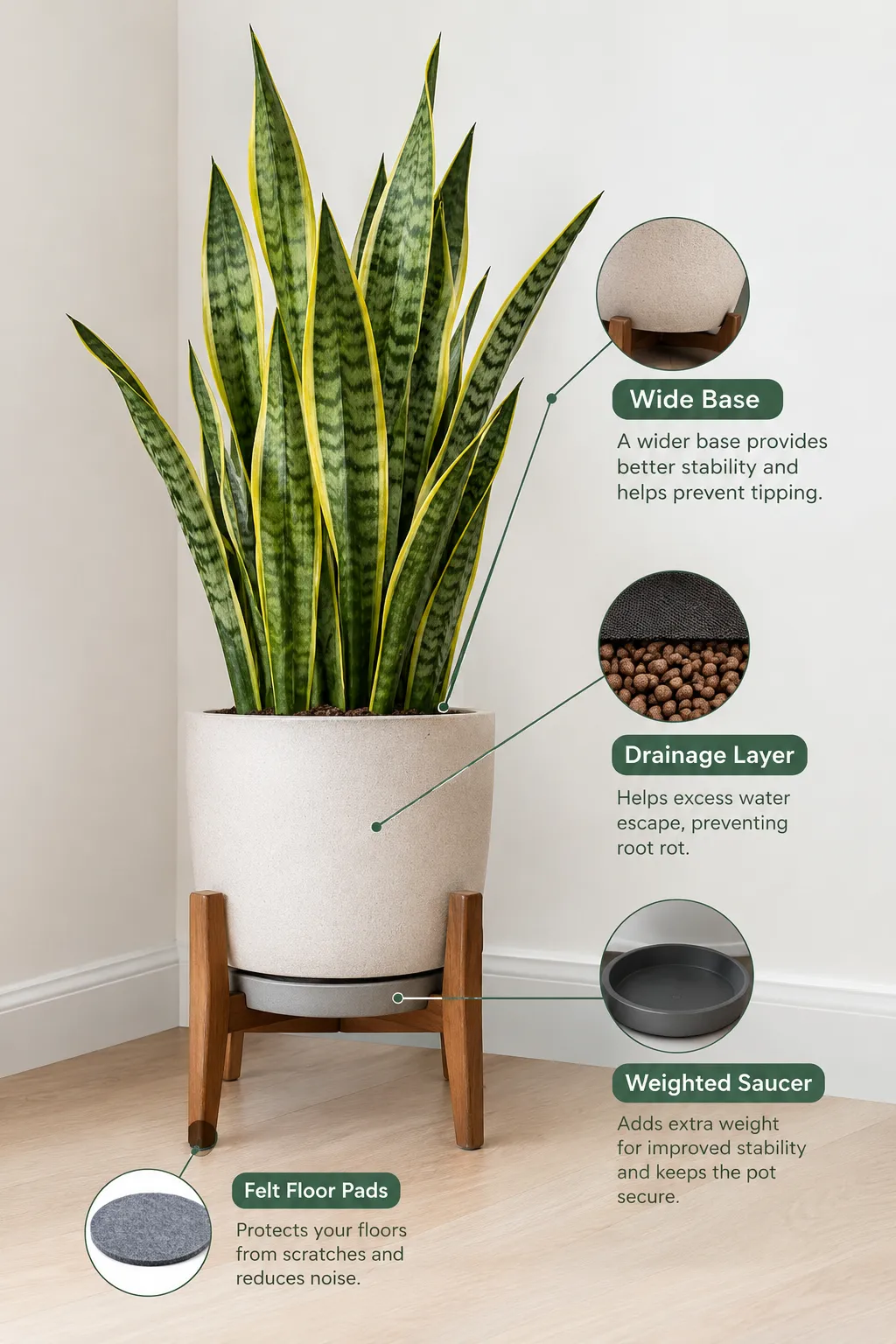
Use a wide-based planter, add weight at the bottom, and place felt pads under the planter to prevent sliding. Top-heavy plants in narrow pots are the most common tipping risk.
- Pick a planter with a base at least one-third the height of the whole setup
- Add a layer of gravel or sand at the bottom before potting soil
- Use a weighted saucer if the planter itself is lightweight
- Place the setup against a wall corner, not in an open walkway
Edge case: if you have pets or small kids, skip tall narrow planters entirely and choose squat, heavy-bottomed designs instead.
Do tall planters need drainage holes
Yes, drainage holes are important for most tall planters, even decorative ones, because trapped water at the bottom of a tall pot causes root rot faster than in shallow containers. Depth makes drainage problems worse, not better.
If your decorative planter has no hole, use it as a cachepot and keep the plant in a plastic nursery pot with drainage inside. Pull the inner pot out to water over a sink, then return it.
This two-pot method is the easiest fix and avoids drilling into ceramic or concrete, which can crack.
Which plants grow best in narrow tall planters
Snake plants, dracaenas, and ponytail palms do well in narrow tall planters because their root systems grow downward rather than wide. Plants with spreading root systems struggle in narrow pots.
- Snake plant: thrives in narrow, shallow-soil setups
- Dracaena marginata: tall and slim, matches narrow planter shapes naturally
- Ponytail palm: stores water in its base, forgiving of narrow root space
Avoid fiddle leaf figs in very narrow planters. They need wider root zones to support their larger leaf canopy, and narrow pots make them prone to tipping.
Best tall plants that don’t need much water
Snake plants, ZZ plants, and ponytail palms need the least water among tall houseplants, often going three to four weeks between waterings. All three store water in their leaves or stems.
This makes them ideal for travelers or anyone who forgets the watering schedule. Garvillo’s plant ideas for tall planters lists several drought-tolerant species that hold up well in corner displays without constant attention.
If you’re new to keeping plants alive in general, this beginner’s guide to houseplants is worth a read before committing to a tall specimen.
How often should I water plants in tall planters
Most tall planter setups need watering every 1 to 3 weeks, depending on the plant species, pot material, and room humidity. Tall planters often hold more soil volume, which means less frequent watering than small pots.
- Ceramic and concrete: retain moisture longer, water less often
- Terracotta: dries faster, water more often
- Self-watering towers: refill reservoir every 2 to 3 weeks
Always check soil moisture 2 inches down before watering. A tall planter looking dry on top can still be wet underneath.
What size tall planter do I need for my corner
Measure your corner’s width and depth first, then choose a planter diameter that leaves at least 6 inches of clearance on each side for walking space. Most corners fit planters 12 to 18 inches in diameter.
- Small corners (under 24 inches wide): 10 to 14 inch diameter planter
- Medium corners (24 to 36 inches): 14 to 18 inch diameter planter
- Large corners (over 36 inches): 18 to 24 inch diameter, or two planters grouped together
According to Homes & Gardens’ roundup of best large houseplants, grouping two differently sized planters in a large corner often looks more intentional than one oversized pot alone.
Will tall planters damage hardwood floors
Tall planters can damage hardwood floors through moisture rings, scratches from the pot base, or pressure dents if the planter is very heavy. Protective measures prevent nearly all of this.
- Use a waterproof saucer or tray under every planter
- Add felt pads or a small rolling caster base for heavy planters
- Avoid letting a planter sit directly on wood without a barrier, even briefly
- Check under the planter every few months for trapped moisture
A common mistake is assuming a dry-looking planter base means no floor risk. Condensation can form underneath ceramic pots even without visible leaks.
FAQ
What’s the best plant for a dark corner with a tall planter?
Snake plants and ZZ plants handle dark corners best because they tolerate low light and infrequent watering.
How tall should a plant be for a corner next to an 8-foot ceiling?
Aim for a combined plant and planter height of 5 to 6 feet so it fills the vertical space without crowding the ceiling.
Can I use a tall planter without drainage holes?
Yes, but keep the plant in an inner nursery pot with drainage and use the tall planter as a decorative outer cover.
Do self-watering tall planters work for beginners?
Yes, self-watering towers are a good fit for beginners and travelers since they reduce the risk of both overwatering and underwatering.
What’s the cheapest way to fill a tall planter for display?
Fill the bottom third with packing peanuts or empty plastic bottles before adding soil, which cuts soil cost and planter weight.
Is concrete or ceramic better for a tall corner planter?
Concrete offers more stability and tipping resistance, while ceramic offers more color and finish variety. Choose concrete for top-heavy plants.
How do I group multiple tall planters in one corner?
Vary the heights slightly, keep the tallest plant toward the back corner, and leave at least 4 inches between pots for airflow.
Conclusion
Tall planters solve a problem most people don’t even notice they have: an empty, awkward corner that drags down the whole room. With the right height, material, and plant pairing, that same corner becomes the focal point.
Start small. Pick one corner, measure it, and choose a single tall planter and plant combo from this guide. See how it changes the room before adding more. For more plant pairing ideas and care tips, browse the full houseplants and indoor growing section for ongoing inspiration.


10 Comments on “Tall Planter Ideas for Indoor House Plants That Fill Empty Corners”