Last updated: November 11, 2026
Quick Answer
How to grow herbs at home comes down to four things: enough light, well-draining pots, the right watering rhythm, and regular harvesting. Most beginners can keep basil, mint, chives, and parsley alive with just a sunny windowsill and a small pot. Start small, pick two or three herbs you actually cook with, and expand from there once you see steady growth.
Key Takeaways
- Most culinary herbs need 6+ hours of light a day, either from a south-facing window or a grow light, according to Penn State Extension.
- Soilless, well-draining potting mix beats regular garden soil for containers indoors.
- The “finger test” (check the top inch of soil) is the simplest way to know when to water.
- Rosemary, thyme, chives, and sage handle cooler zones 7 and 8 winters outdoors better than basil or cilantro.
- Harvesting often, not occasionally, is what keeps a plant producing fresh leaves.
- A kitchen windowsill, balcony rail, or small raised bed can all work, depending on your space.
- You can start herbs from seed, cuttings, or a nursery starter pack, grow fresh plants delivered safely to your door within days.
What Herbs Are Easiest to Grow Indoors for Beginners?
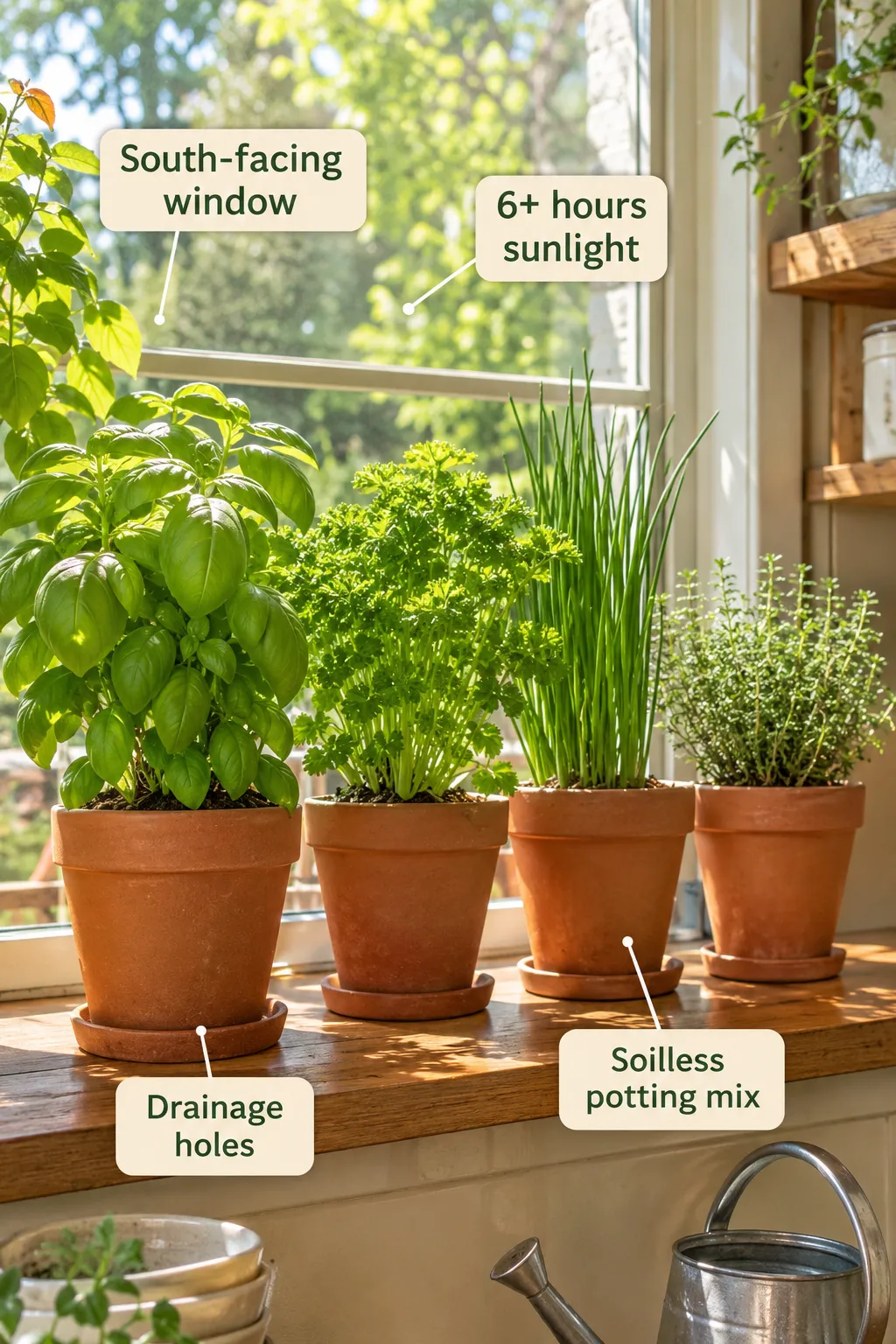
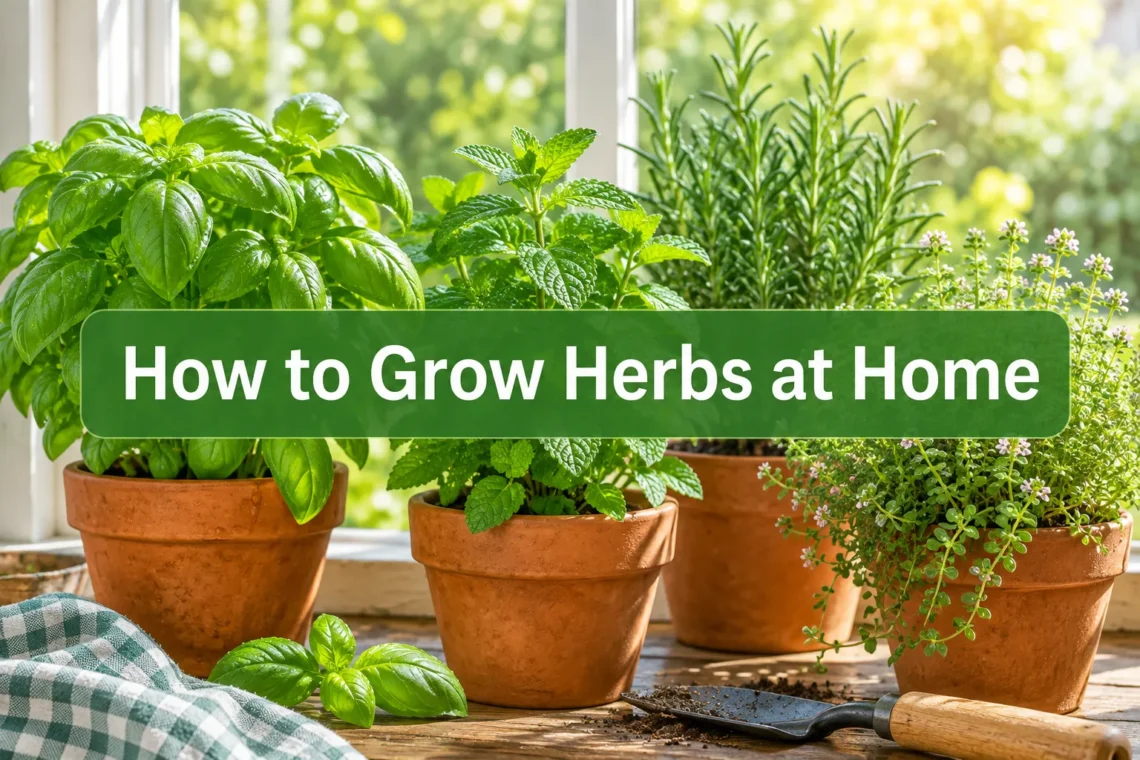
Chives, mint, parsley, and basil are the easiest herbs for a first-time indoor garden because they tolerate inconsistent watering and grow fast enough to show quick wins. These four show up constantly in beginner guides because they forgive mistakes better than cilantro or dill do.
Here’s a quick breakdown:
- Chives: nearly indestructible, regrows after cutting, light feeder.
- Mint: grows almost anywhere, but keep it in its own pot since it spreads aggressively.
- Parsley: slower to start but steady once established.
- Basil: fast and rewarding, though it’s fussier about cold drafts.
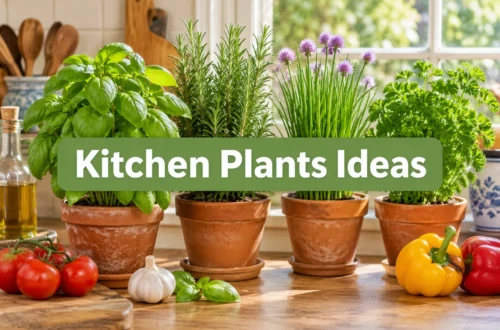
Choose chives or mint if you’ve killed houseplants before. Choose basil if you cook Italian or Mediterranean food often and want fresh flavor weekly. A common mistake is crowding six different herbs into one small pot, which stresses roots and stunts growth. For more starter ideas, see this list of kitchen plants and herbs to grow.
Can You Grow Fresh Herbs Year-Round at Home?
Yes, you can grow fresh herbs year-round at home by moving tender varieties indoors for winter and keeping hardy ones like rosemary and thyme outdoors in protected beds. The trick is matching each plant to the season instead of fighting the weather.
Many gardeners in zones 7 and 8 keep rosemary, sage, and thyme outside through a mild winter with mulch protection, while basil and cilantro move indoors or get replanted each spring, according to the Montgomery County Extension’s seasonal herb guide. In warmer zones 9 and 10, most herbs can stay outdoors nearly all year with occasional shade in peak summer.
If you’re short on yard space, check out our guide to Japandi-style indoor plant arrangements for compact herb display ideas that work indoors through every season.
How Much Sunlight Do Indoor Herbs Actually Need?
Most culinary herbs need at least six hours of direct or bright indirect light daily, and many do best with eight. A dim corner simply isn’t enough, no matter how often you water.
According to Penn State Extension, a south-facing window is ideal in the Northern Hemisphere, while east or west windows work as a second choice. If natural light is limited, a basic LED grow light run for 12-14 hours can replace sunlight entirely, a point echoed by Tom’s Guide’s indoor herb tips.
- Choose a grow light if your windows face north or get blocked by buildings.
- Choose a natural windowsill if you have unobstructed southern exposure.
- Rotate pots a quarter turn every few days so plants don’t lean toward the glass.
Why Do My Herb Plants Keep Dying?
Herb plants usually die from overwatering, poor drainage, or too little light, not from neglect alone. Soggy roots and starved light are the two most common killers of home herb gardens.
Common mistakes include:
- Using a pot with no drainage holes.
- Watering on a fixed schedule instead of checking the soil.
- Placing pots too far from any real light source.
- Skipping pruning, which leads to leggy, weak stems.
If leaves turn yellow and soil feels wet, that’s overwatering. If leaves are pale and stems stretch toward the window, that’s low light. For a broader troubleshooting approach to keeping any indoor plant alive, see our real-talk guide for beginners who kill their plants.
What’s the Best Soil for Growing Herbs in Pots?
The best soil for potted herbs is a light, well-draining, soilless potting mix, not regular garden soil, because garden soil compacts in containers and smothers roots. A mix with perlite or vermiculite keeps air moving around the roots.
The University of Maryland Extension recommends combining a quality soilless mix with a pot that has at least one drainage hole, paired with a saucer to catch runoff. Terracotta pots breathe better and dry faster than plastic, which helps prevent root rot in herbs like rosemary and thyme that hate wet feet.
Can You Grow Herbs in Water Instead of Soil?
Yes, several herbs root and grow well in water alone, especially mint, basil, and chives, though most eventually need soil for long-term health. Water propagation is a great way to multiply plants for free before potting them up.
Snip a 4-6 inch stem below a leaf node, strip the lower leaves, and place it in a jar of water on a bright windowsill. Change the water every few days. Once roots reach about an inch long, transplant into potting mix. For more on this method, check our guide to plants you can grow in water.
How Often Should I Water My Herb Garden?
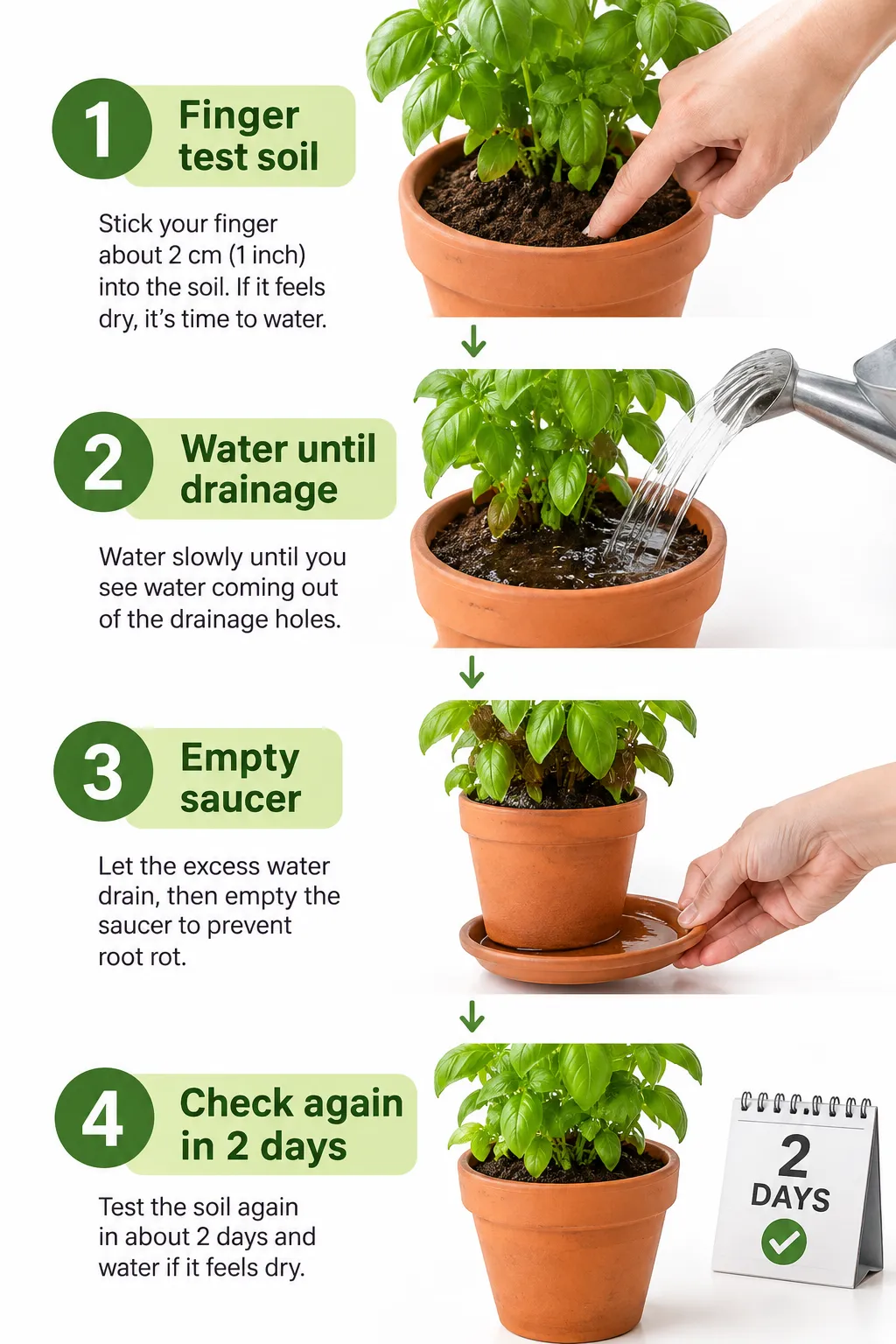
Water your herb garden only when the top inch of soil feels dry to the touch, not on a strict daily or weekly schedule. Overwatering kills far more herbs than underwatering does.
Use the simple finger test: push a finger into the soil up to the first knuckle. If it’s dry, water thoroughly until it drains from the bottom. If it’s still damp, wait. Different herbs have different needs, so group thirsty herbs like basil and parsley together, and keep drought-tolerant Mediterranean herbs like rosemary, sage, and thyme in a separate, drier pot.
Here’s a simple watering reference:
| Herb type | Watering frequency | Light need |
|---|---|---|
| Basil, parsley, cilantro | Every 2-3 days | High, consistent moisture |
| Rosemary, thyme, sage | Once weekly or less | Full sun, dry between waterings |
| Mint, chives | Every 3-4 days | Moderate, tolerant |
What Herbs Grow Best During Winter?
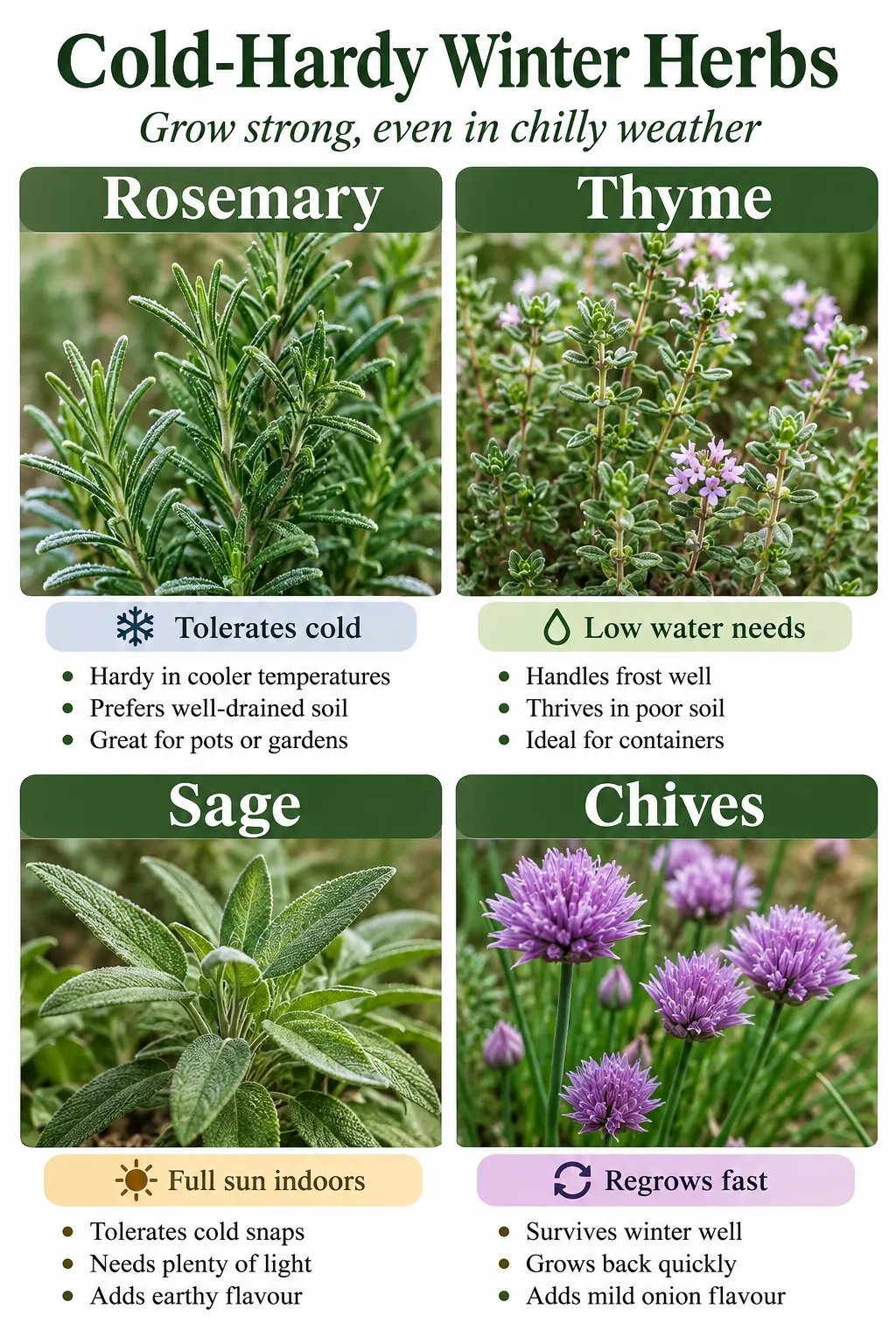
Rosemary, thyme, sage, and chives handle winter conditions best, both indoors on a bright windowsill and outdoors in milder zones 9 and 10. These are the herbs seasoned gardeners trust when the days get short.
Lemon thyme and lemon balm also bring bright citrus notes to winter dishes and tolerate cooler indoor temperatures better than basil. According to the Montgomery County Extension, aim for 65-75°F (18-24°C) indoors and keep plants away from cold drafts near doors and single-pane windows. If you’re planning a winter windowsill garden, our guide to plants for December covers more cold-season options.
When Should You Harvest Herbs Without Killing the Plant?
Harvest herbs once a plant has at least 6-8 inches of growth, and always cut above a leaf node, never more than a third of the plant at once. This encourages bushier, fuller growth instead of stressing the roots.
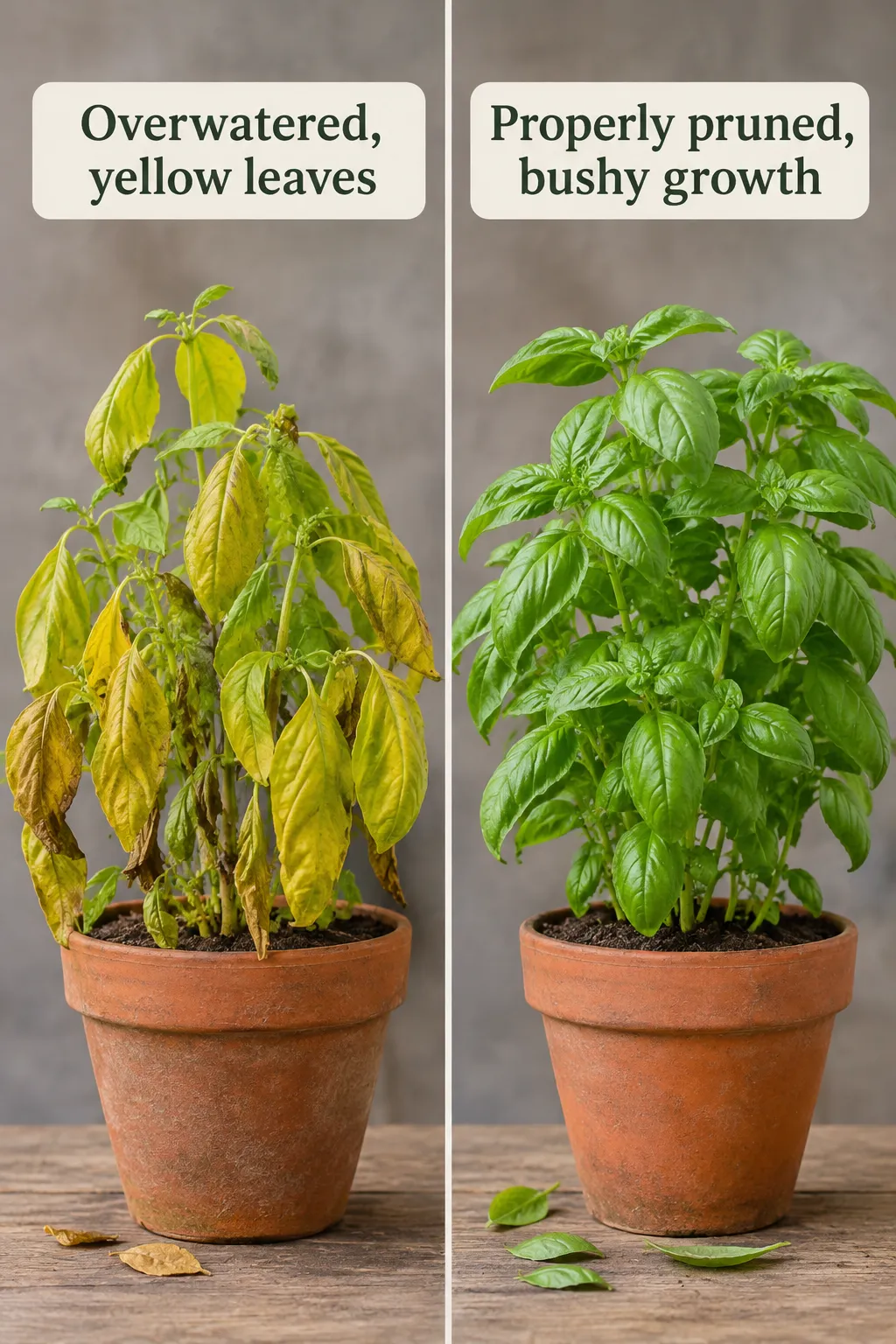
Harvest frequently, not occasionally. Regular trimming is what keeps leafy herbs like basil and mint producing fresh growth all season, according to guidance from the USDA’s nutrition program on home herb gardens. Pinch basil flower buds as soon as they appear, since flowering slows leaf production and changes flavor.
Do You Need Special Equipment to Start Growing Herbs?
No, you don’t need much to start, just a pot with drainage, basic potting mix, and a light source, though a grow light and a small watering can make things easier. Many beginners overbuy tools before they even plant their first seed.
A simple starter kit looks like this:
- A 6-inch pot with drainage holes
- A bag of soilless potting mix
- A small starter pack of herb seedlings or seeds (basil, chives, parsley are common choices)
- A watering can with a narrow spout
- Optional: an LED grow light if window space is limited
If you’d rather skip seed-starting entirely, many garden shops now sell ready-grown starter packs: pick a flavor pack, regular price or sale price depending on season, add to cart, and have fresh herb plants delivered safely to your door in a few days. Shop now while supplies and seasonal variants are in stock, since popular combos like basil, pepper, and tomato starter trios sell out fast each spring.
What Are the Most Common Herb Gardening Mistakes?
The most common mistakes are overwatering, using the wrong soil, picking a spot with too little light, and letting plants get overcrowded in one pot. Nearly every “my herb garden died” story traces back to one of these four.
- Overwatering without checking soil moisture first.
- Using regular garden soil instead of a soilless container mix.
- Placing pots in a spot that gets less than six hours of light.
- Skipping pruning, so plants get leggy and stop producing.
- Planting mismatched herbs (thirsty basil next to dry-loving rosemary) in the same container.
Can You Grow Herbs in an Apartment With Limited Space?
Yes, apartments work fine for herb growing using windowsills, railing planters, or small vertical setups, since most herbs don’t need deep roots or large footprints. Select your space based on available light first, then choose pot size second.
A single sunny windowsill can hold four to six small pots. Balcony rail planters add outdoor growing room without using floor space. If you’re working with very little room, look at our microgreens guide as a complementary fast-growing option alongside slower herbs.
How Long Before You Can Actually Harvest Homegrown Herbs?
Most herbs are ready for a light first harvest in 4-8 weeks from seed, while cuttings or nursery starter plants can often be harvested within 1-2 weeks of planting. Fast growers like chives and mint reach harvest size quicker than slower herbs like rosemary and thyme.
According to Woman & Home’s indoor herb guide, basil grown from seed typically takes about 4-6 weeks to reach a harvestable size indoors, while a nursery-bought starter pot can be trimmed almost immediately once it’s established in its new pot.
Which Herbs Grow Fastest and Need the Least Care?
Chives, mint, and basil grow the fastest with the least fuss, often showing new growth within days of a good trim. These are the “set it and forget it” options for busy beginners.
Because mint spreads through runners, keep it contained in its own pot rather than a shared garden bed. Chives regrow from a single cut almost on repeat. Basil, while a little more sensitive to cold, rewards regular harvesting with dense, bushy growth all summer.
Pamper Your Plants: Feeding, Pruning, and Pest Watch
Herbs grown for their leaves need only light, occasional feeding, not heavy regular fertilizing, since too much nitrogen can actually weaken flavor. A diluted liquid feed every 4-6 weeks during active growth is usually plenty.
Watch for pests like aphids and spider mites, which show up more on stressed, overwatered, or crowded plants. Several herbs do double duty as pest deterrents in a wider garden: basil, mint, and rosemary are commonly planted near tomato and pepper plants to help repel certain insects, a practice long used in companion planting around Mediterranean and Asian vegetable beds. Keep air moving between pots and avoid letting leaves stay wet overnight, which invites fungal problems.
Shop Fresh Herb Starter Packs
If starting from seed feels slow, many garden centers now sell herb starter packs you can add straight to your garden or windowsill. Browse product variants, default title options usually cover a single potted herb, while bundle packs include three to five flavor types like basil, thyme, and pepper together.
Typical listings show a regular price, with a sale price unit price nbsp per nbsp plant shown underneath. You’ll usually see a quantity selector: decrease quantity, increase quantity, regular price regular, price regular price updates as you adjust. Once you’ve set your pack size, hit add to cart and the nursery handles the rest, plants delivered safely to your door, often within a week.
A few things to check before you buy:
- Confirm the pot size matches your windowsill or garden bed.
- Check if the starter pack ships bare-root or already potted.
- Look at reviews mentioning plant survival rate after delivery.
- See if the shop offers a dates grow guarantee or replacement policy.
Digital plant libraries and key resources from extension offices remain the most reliable free alternative if you’d rather skip paid starter packs entirely, and Google Anfrage results on herb care often surface these university pages first for good reason: they’re reviewed by horticulture staff, not sales teams.
FAQ
What herbs repel pests?
Basil, mint, rosemary, and lavender are commonly used as companion plants believed to help repel certain insects like aphids, mosquitoes, and some beetles when planted near vegetables such as tomatoes and peppers. Results vary by garden, but these herbs are a low-risk addition worth trying alongside other pest management steps.
Do you pick herbs from the top or bottom?
Pick herbs from the top of the stem, just above a leaf node, rather than stripping leaves from the bottom. Cutting from the top encourages the plant to branch out and grow bushier, while bottom harvesting can leave bare, leggy stems that produce less over time.
What herbs can be planted in October?
In many regions, October works for cool-season herbs like parsley, chives, cilantro, and thyme, especially in zones 9 and 10 where frost is still weeks away. In colder zones, October is better for starting herbs indoors or transplanting hardy perennials before the ground freezes.
Can you grow herbs outside all year?
In warmer zones 9 and 10, many herbs like rosemary, thyme, and sage can grow outside nearly year-round. In colder zones 7 and 8, tender herbs like basil need to come indoors for winter, while hardy perennials often survive outside with mulch protection, as outlined by the Montgomery County Extension’s seasonal herb guide.
Conclusion
Growing herbs at home isn’t complicated once you match light, water, and pot size to the plant in front of you. Start with two or three forgiving herbs like chives, mint, and basil, give them six or more hours of light, and check soil moisture with your finger instead of a calendar.
Harvest often, prune regularly, and don’t be afraid to move tender herbs indoors when the weather turns. Whether you start from seed, a cutting in water, or a ready-made starter pack delivered to your door, the payoff is the same: fresh flavor, cut minutes before it hits your plate, for less than store-bought herbs cost over a season. For more indoor growing ideas, browse our full herbs category or explore houseplants for low light spaces if your windowsill isn’t as sunny as you’d like.