

Last updated: November 2, 2026
Quick Answer
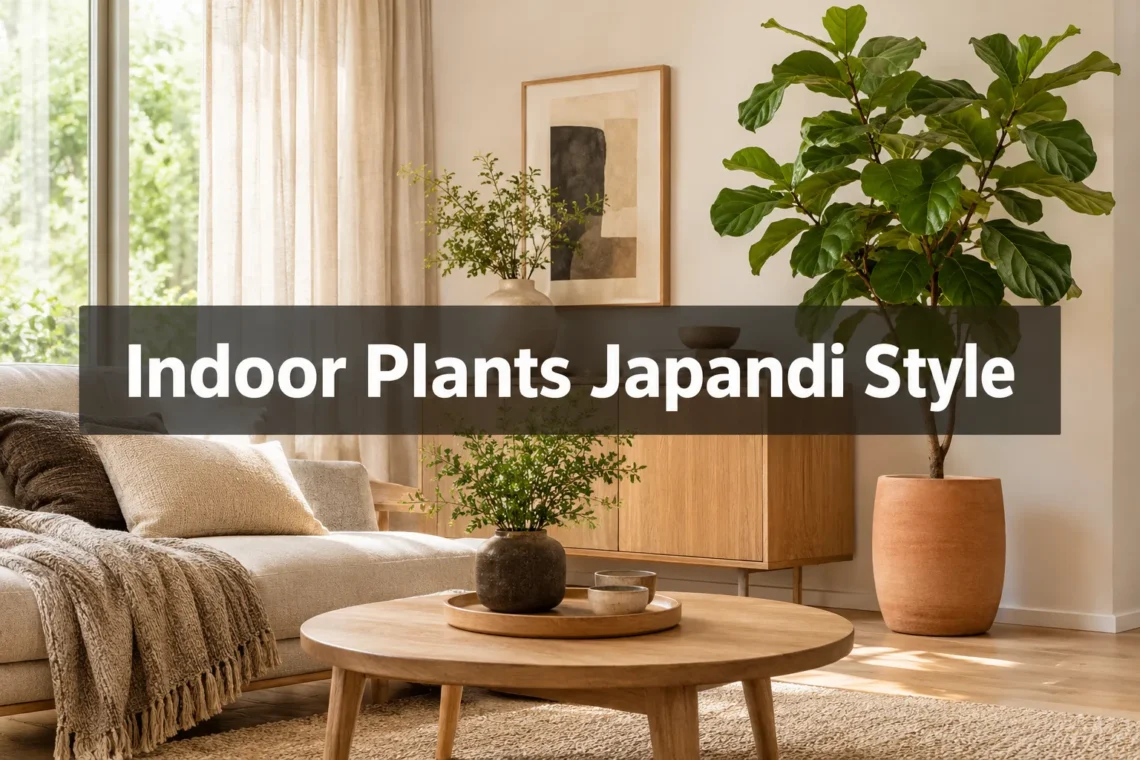
Indoor plants Japandi style means using one or two sculptural, non-flowering plants per room, set in matte neutral pots, with lots of open space around them. The look blends Japanese restraint with Scandinavian warmth, so greenery reads as calm architecture, not clutter. Think one fiddle leaf fig, not a shelf full of succulents.
Key Takeaways
- Japandi design favors one statement plant per room over clusters of small pots.
- Living rooms work best with 2-4 plants max, each with its own clear shape.
- Non-flowering, deep-green foliage (snake plant, ZZ plant, monstera) feels calmer than blooms.
- Matte ceramic, terracotta, or stone pots in neutral tones support the Japandi mood.
- Low-light apartments do well with ZZ plants, snake plants, or cast-iron plants.
- Asymmetry beats symmetry: one floor plant plus one small shelf plant, never matching pairs.
- Budget-friendly Japandi styling is possible with thrifted pots and common nursery plants.
- Beginners should start with one forgiving plant before adding a second.
What Is Japandi Style and How Does It Use Plants?
Japandi style is a mix of Japanese minimalism and Scandinavian hygge, built around natural materials, muted colors, and uncluttered rooms. Plants play a supporting role here rather than the starring one, adding life without breaking the calm. According to Architectural Digest, the aesthetic leans on neutral palettes, natural wood, and a strong connection to nature, with greenery used sparingly.

In practice, this means picking plants for their shape and texture, not for a jungle effect. A single olive tree in a corner does more for the room than five mismatched pots lined up on a windowsill. Cosentino’s design guide notes that greenery should feel like a restrained accent inside the broader neutral, earthy scheme.
Best Low Maintenance Indoor Plants for Japandi Decor
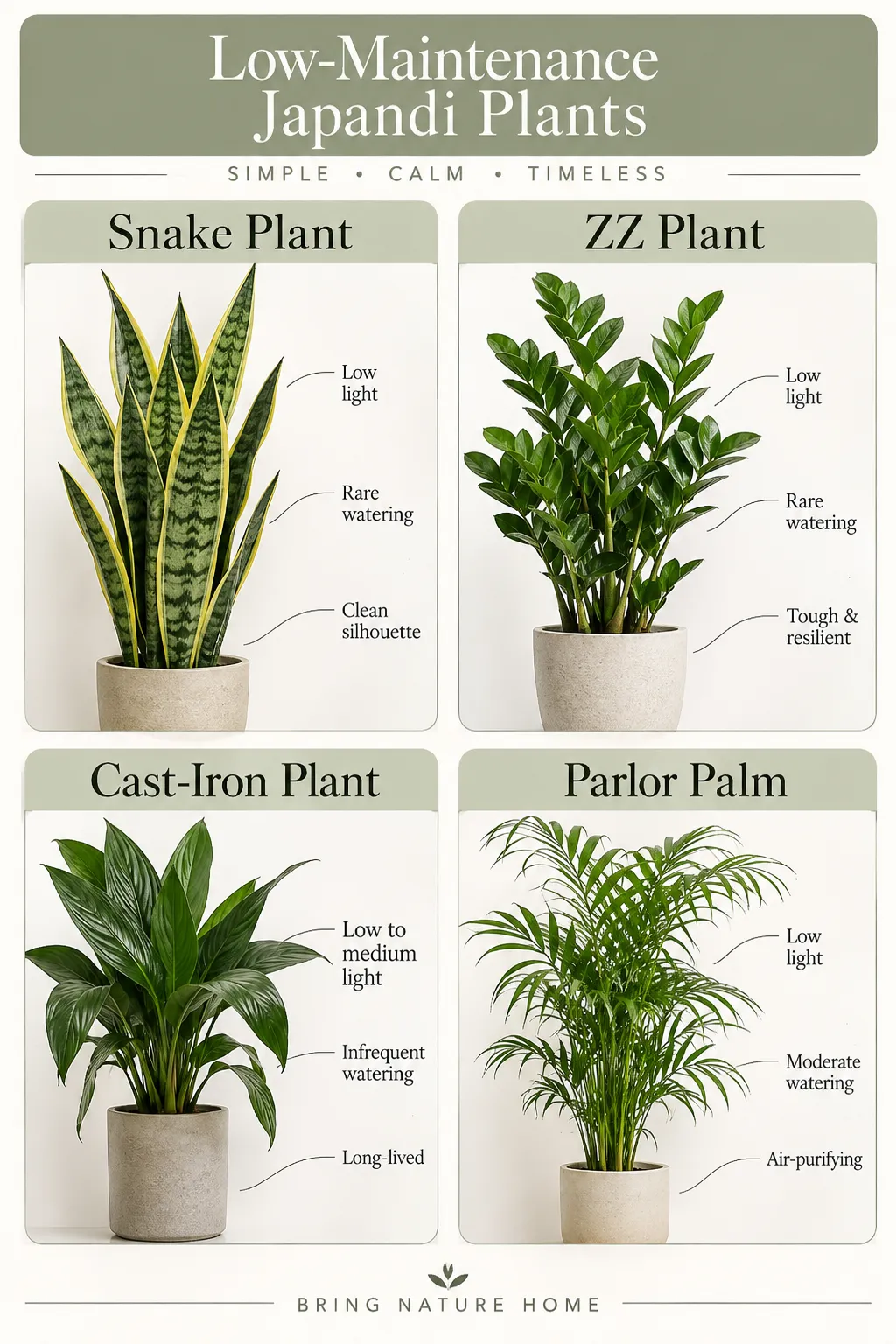
The best low-maintenance Japandi plants are snake plant, ZZ plant, parlor palm, dracaena, and pothos, because they tolerate missed waterings and uneven light. These species also keep clean lines that fit the minimalist mood without extra pruning.
A few go-to picks:
- Snake plant (Sansevieria): stiff upright leaves, almost impossible to kill
- ZZ plant (Zamioculcas): glossy, architectural, handles neglect well
- Parlor palm: soft texture, pet-safe, good for small rooms
- Pothos: trailing option for shelves, forgiving with watering gaps
For more forgiving species, Gardenner’s beginner houseplant guide is a good next stop if you’ve killed a plant before.
Choose snake plant or ZZ plant if you travel often or forget to water. Choose parlor palm if you have curious pets, since it’s non-toxic.
How to Style Indoor Plants in Japandi Minimalist Rooms
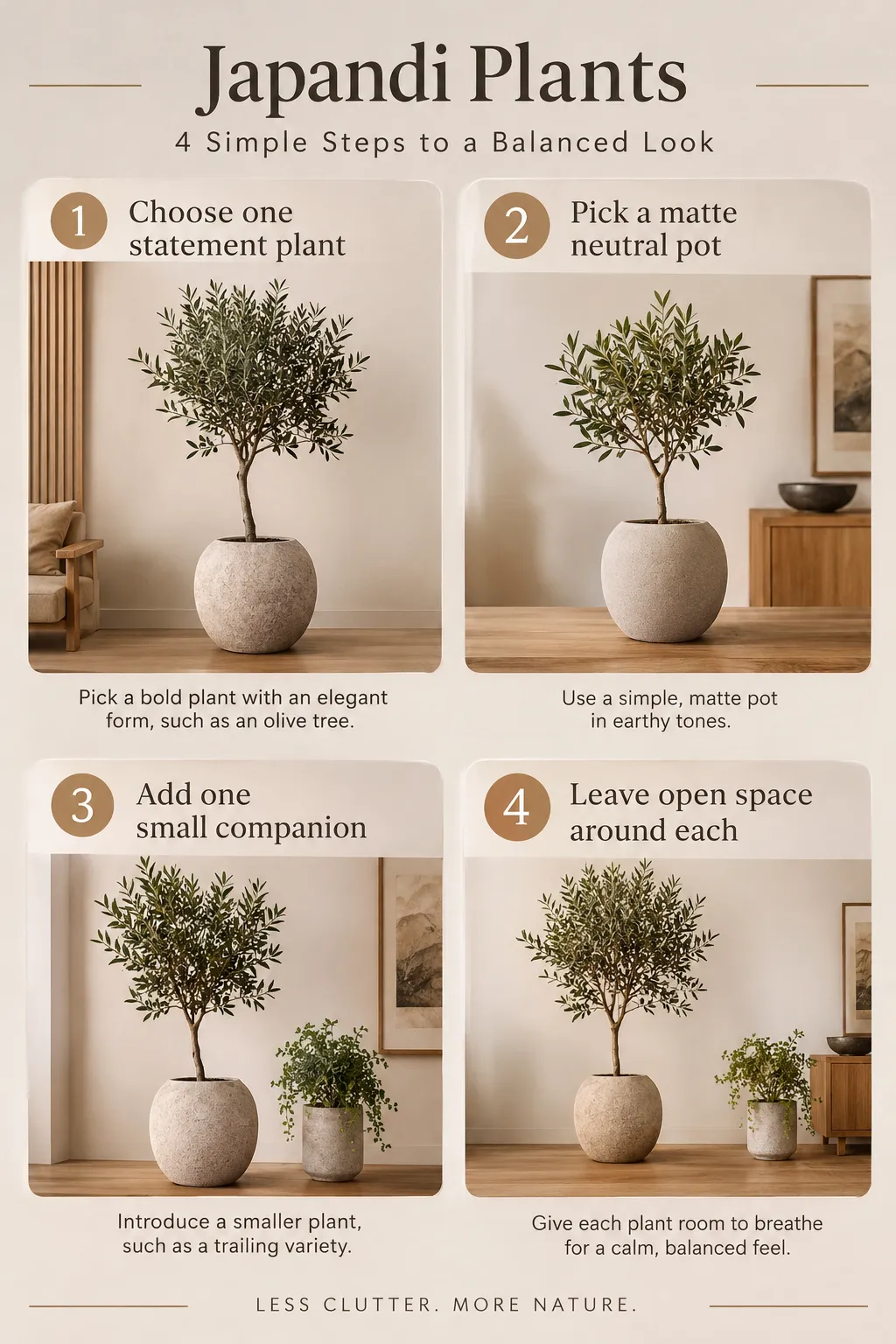
Styling plants Japandi style means placing one large plant as a focal point, then adding at most one small companion nearby, with open space left on purpose. Crowding plants together breaks the calm the whole style depends on.
A simple formula used across current Japandi guides:
- One big sculptural floor plant (fiddle leaf fig, olive tree, or bird of paradise)
- One or two smaller shaped companions (ZZ plant, cast-iron plant, Chinese money plant)
- Generous negative space around both
Lawn and Garden Ideas echoes this pairing approach, calling out fiddle leaf figs and snake plants as the most common Japandi duo. If you need a vertical anchor for a tall plant, tall planter ideas for empty corners can help you pick the right height and base.
Japandi Plant Pots and Planters: Where to Buy
Japandi-friendly pots are matte ceramic, unglazed terracotta, or natural stone in off-white, sand, or gray tones. The pot should quietly support the plant’s shape, not compete with it visually.
Look for:
- Matte stoneware with no shiny glaze
- Unfinished terracotta with a slight texture
- Concrete or stone planters for floor plants
- Woven natural-fiber baskets as pot covers for smaller plants
Verdeia’s Japandi plant collection is a useful reference point for the kind of neutral container shapes that fit this look. A quick side note worth knowing: when you’re searching for these pots on Google, you might see a message like “Google Anfrage wird verifiziert – kannst du in wenigen Sekunden fortfahren.” That just means the search is loading; aktualisiere diese Seite nicht, and don’t click weiter until the page finishes checking the request. It’s a normal part of browsing, not a plant-care issue.
If DIY potting is more your speed, succulent planter projects show how to build a neutral-toned pot in an afternoon without buying new.
Japandi vs Scandinavian Indoor Plant Styling Differences
Japandi plant styling is more restrained than classic Scandinavian styling, which often allows more greenery and brighter pops of color. Scandinavian interiors can carry several plants grouped together for texture, while Japandi sticks to one or two with heavy emphasis on empty space.
Key differences:
| Feature | Scandinavian | Japandi |
|---|---|---|
| Plant count | Several, grouped | One or two, spaced out |
| Color | Can include bright blooms | Mostly deep green, non-flowering |
| Pots | Varied materials/colors | Matte, neutral, natural |
| Arrangement | Clustered shelves | Asymmetric, sparse |
This matters for anyone shopping decor “inspired by Scandi” but aiming for Japandi calm: fewer plants, plainer pots, less color.
Small Space Japandi Indoor Plant Ideas
Small spaces work best with one mid-size plant instead of a floor giant, paired with a single trailing plant on a shelf. The goal is the same restraint, scaled down.
Good options for tight rooms:
- Pilea peperomioides on a side table
- A small ZZ plant near a window
- One trailing pothos on a high shelf, nothing else nearby
Skip anything that needs frequent repotting in a cramped apartment; it adds visual noise fast.
Common Mistakes People Make With Japandi Plant Decorating
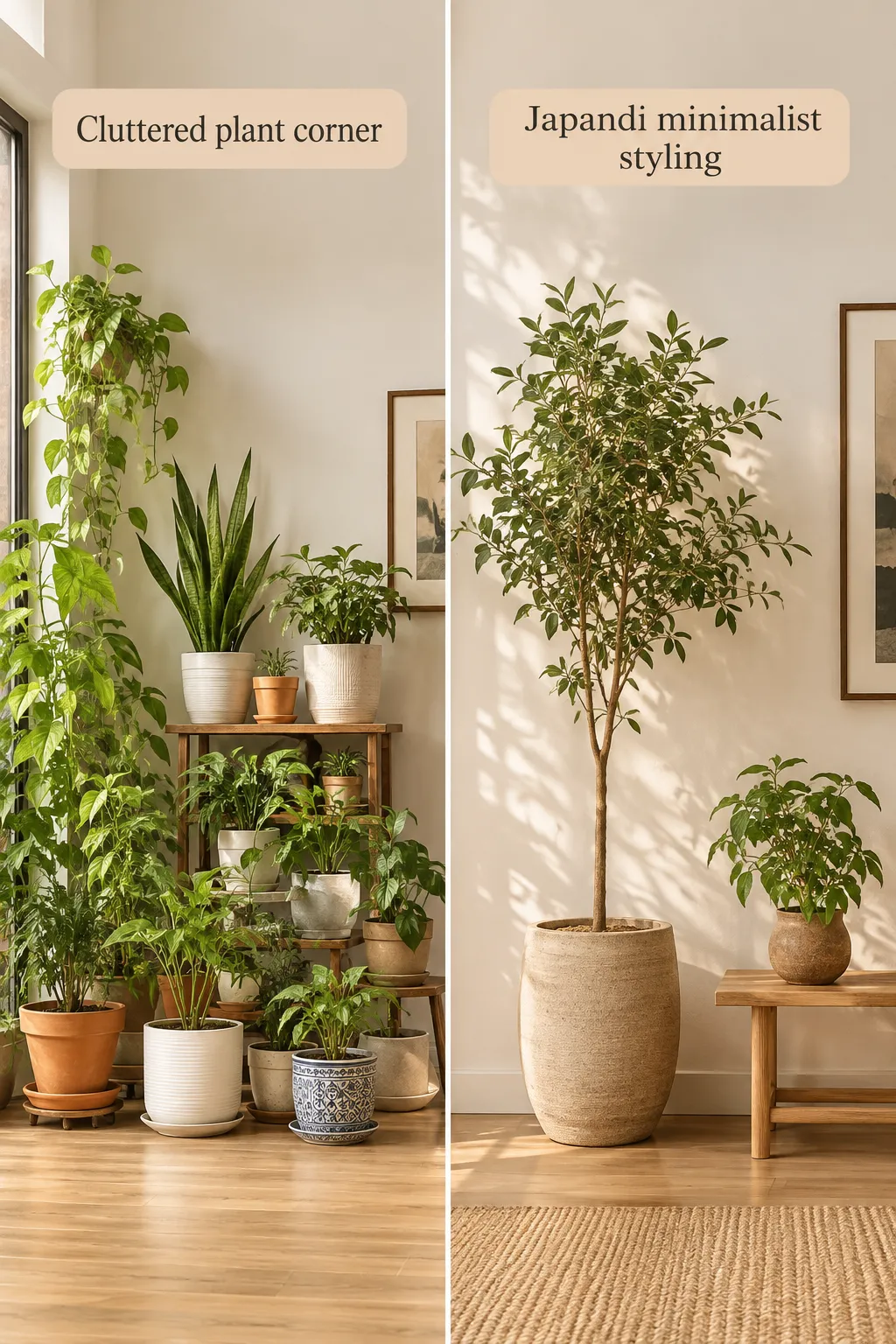
The most common mistake is adding too many plants at once, which turns a calm Japandi room into a cluttered jungle corner. A close second is choosing glossy or brightly colored pots that fight with the neutral palette.
Other mistakes to watch for:
- Lining up matching plants in a symmetrical row (Japandi favors asymmetry)
- Picking flowering plants for permanent display instead of as a brief seasonal accent
- Skipping pot upgrades, leaving plastic nursery pots visible
- Overwatering a “forgiving” plant because it’s labeled low-maintenance, not actually indestructible
The Spruce’s Japandi design guide points out that clutter is the fastest way to undo the calm the style is built on.
Indoor Plants That Work for the Japandi Aesthetic
The plants that work best for Japandi interiors have architectural silhouettes and deep, matte-green foliage rather than ruffled or brightly colored leaves. Fiddle leaf fig, olive tree, bird of paradise, and bonsai are the most common statement choices.
Supporting plants with clean lines include:
- Snake plant
- ZZ plant
- Cast-iron plant (Aspidistra)
- Rubber plant
- Bird’s nest fern
Ideal House’s guide to greenery in Japandi decor groups these picks the same way, favoring texture over flower color.
Japandi Plants for Low Light Apartments
ZZ plants and snake plants are the top picks for low-light Japandi apartments because both tolerate dim corners without losing their shape. Cast-iron plant is a close third for rooms with almost no direct sun.
If your whole apartment runs dim, check Gardenner’s guide to houseplants for low light before buying anything that needs bright windows, since a wrong pick here is the fastest way to lose a plant.
How to Arrange Plants Japandi Style
Arranging plants Japandi style means placing them asymmetrically, never in matching pairs or straight rows, with clear floor or shelf space left around each one. One plant anchors a corner; a second, smaller one sits apart on a different surface.
A simple arrangement checklist:
- One tall plant in an empty corner, away from furniture clutter
- One small plant on a shelf or side table, not next to the tall one
- At least a foot of visible empty space around each plant
- No two plants the same height or pot color
Budget Friendly Japandi Indoor Plant Decoration
A budget Japandi look is achievable with one mid-priced plant, a thrifted neutral pot, and nothing else added for months. Spending less on quantity and more thought on placement gets you the same calm effect as an expensive styled room.
Cheap wins:
- Repaint a plastic pot matte beige instead of buying ceramic
- Buy pothos or snake plant cuttings instead of mature plants
- Use one piece of driftwood or a stone as a styling accent instead of a second plant
What Size Plants Work Best for Japandi Minimalism?
Japandi minimalism works best with one plant tall enough to reach eye level or higher, paired with one small plant under two feet tall. Mixing only two scales keeps the room reading as calm rather than busy.
Avoid medium-sized plants in multiples; they tend to blend together and lose the sculptural effect the style is after.
Japandi Indoor Plants for Beginners
Beginners should start with snake plant or ZZ plant, since both survive irregular watering and low light while still looking intentionally shaped. Add a second plant only after the first one has survived a full season.
For more beginner-safe options and common care mistakes, Gardenner’s real guide for plant killers is worth a read before your first purchase.
How Often to Water Indoor Plants Japandi Style
Most Japandi-favored plants (snake plant, ZZ plant, cast-iron plant) need watering only every 2-3 weeks, letting soil dry out fully between waterings. Overwatering, not underwatering, is the main risk with these species.
A simple rule: check the soil with a finger before watering, and skip it if the top two inches feel damp. This applies whether you’re growing one statement plant or a small Japandi grouping near a window, as described in Home & Gardens’ Japandi living room ideas.
FAQ
Tall indoor plants japandi style
Tall Japandi plants include fiddle leaf fig, olive tree, bird of paradise, and dracaena. Each works as a single corner anchor, not grouped with other tall plants.
Small indoor plants japandi style
Small Japandi plants include Pilea peperomioides, bird’s nest fern, and small snake plants. Use just one or two on shelves, never clustered.
Large indoor plants japandi style
Large Japandi statement plants are fiddle leaf fig, olive tree, and bonsai trained into tree form. One per room is the standard recommendation.
Best indoor plants japandi style
The best overall picks are fiddle leaf fig or olive tree as a focal plant, paired with ZZ plant or snake plant as a smaller companion.
Indoor plants japandi style low light
ZZ plant, snake plant, and cast-iron plant handle low light best while keeping the clean silhouette Japandi style needs.
Japandi plants outdoor
Outdoor Japandi spaces often use bamboo, Japanese maple, or potted olive trees near a patio to extend the indoor neutral palette outside.
Japandi tree indoor
An indoor Japandi tree is usually a fiddle leaf fig, olive tree, or trained bonsai, chosen for sculptural branching rather than dense foliage.
Best plants for japandi style
Fiddle leaf fig, olive tree, snake plant, ZZ plant, and bird of paradise are consistently named as the top Japandi plant choices across current design guides.
Conclusion
Japandi plant styling isn’t about owning more plants. It’s about choosing fewer, better-shaped ones and giving them room to breathe. Start with one statement plant, pick a matte neutral pot, and resist the urge to fill every empty shelf.
If you’re not sure where to begin, grab a snake plant or ZZ plant, put it in a plain stone-colored pot, and leave the rest of the room alone for a month. You’ll notice the calm before you notice anything missing. For more plant-specific care tips as you build out your space, browse Gardenner’s houseplant and indoor growing section for guides that match this slower, simpler approach.


3 Comments on “Indoor Plants Japandi Style: Calm, Minimal Ways to Decorate With Greenery”