


Last updated: November 15, 2026
Rosemary kills more confident gardeners in winter than almost any other herb. It looks tough, woody, and Mediterranean-proof. Then one cold snap or one soggy pot and it’s gone, brown and brittle within weeks.
Rosemary plant care in winter comes down to one core idea: this plant hates wet, cold roots far more than it minds cold air. Get the moisture and temperature balance right, indoors or outdoors, and rosemary sails through the season just fine.
I’ve killed one rosemary plant by overwatering it indoors and nearly lost another by leaving it outside through an unexpected freeze. Both mistakes taught me the same lesson, which this guide is built around.
Quick Answer
Rosemary survives outdoors through winter only in USDA zones 8 through 11, where temperatures rarely drop below 20°F. In colder zones, move potted rosemary indoors before the first frost and give it bright light, cool temperatures around 55 to 65°F, and minimal water. The single biggest killer of winter rosemary, indoors or out, is overwatering and poor drainage, not cold air itself.
Key Takeaways
- Rosemary is winter hardy outdoors only in zones 8-11, according to The Spruce.
- Bring potted rosemary indoors before nighttime temps drop near 20°F for extended periods.
- Indoor rosemary needs at least 6 hours of bright light daily or a grow light.
- Water only when the top 1-2 inches of soil feel dry, less often than summer.
- Rosemary does not fully go dormant, but its growth slows a lot in winter.
- Overwatering, poor drainage, and low light are the top causes of winter rosemary death.
- Skip heavy fertilizing in winter since the plant isn’t actively growing.
- Light pruning before winter is fine, but avoid hard cuts right before bringing it indoors.
What temperature does rosemary need to survive winter
Rosemary can handle short dips to around 10 to 15°F once it’s established and hardened off, but sustained freezing temperatures below 20°F will usually kill it outdoors, according to Homestead Gardens. Ideally, rosemary wants nighttime temps no colder than 20 to 30°F, and it thrives best in the 45 to 75°F range overall.
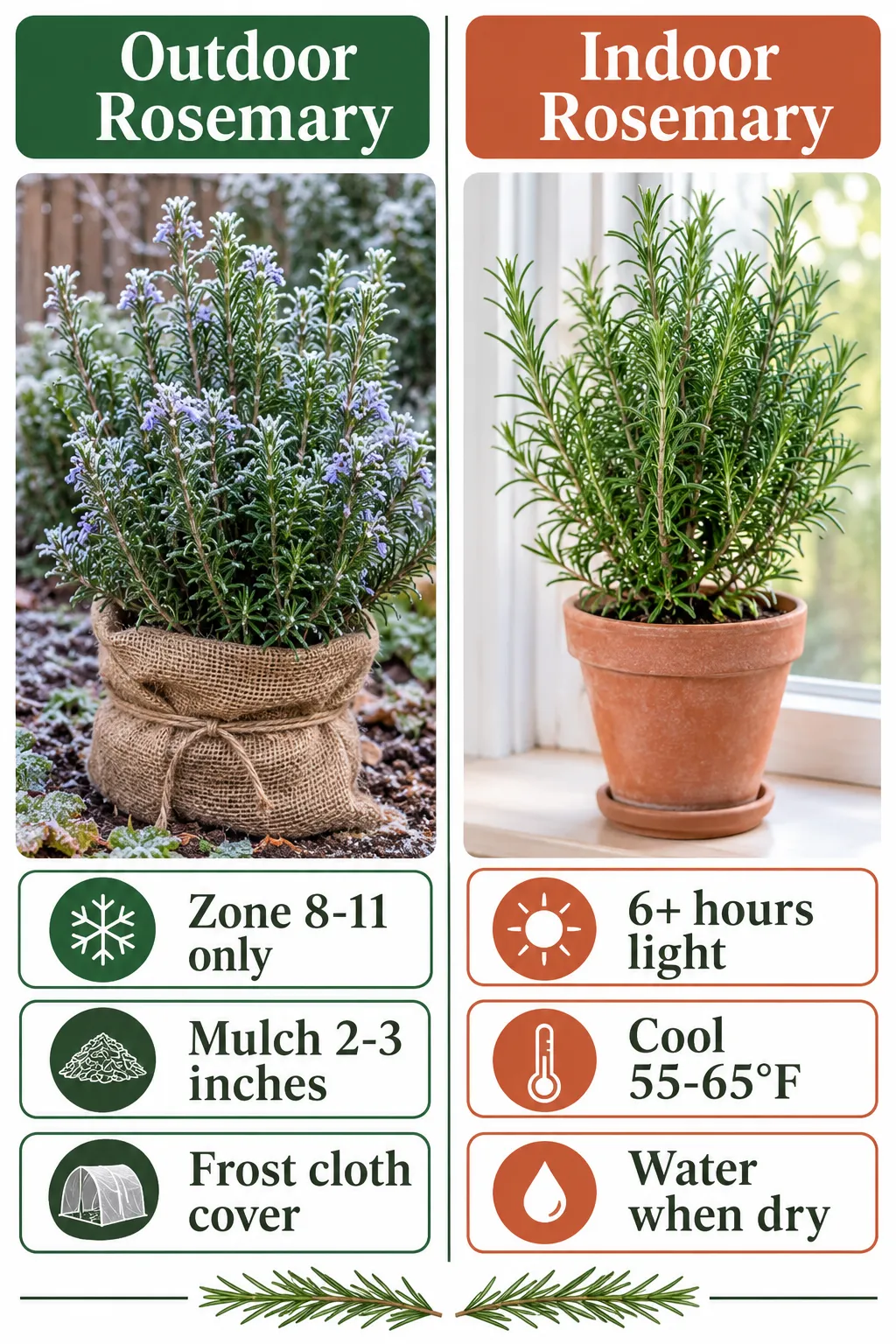
Different rosemary varieties have different cold tolerance too. Some cultivars, like ‘Arp’ and ‘Hill Hardy,’ are bred for more cold resistance and can survive briefly colder conditions than standard rosemary, per The Spruce.
Decision rule: if your area regularly drops below 20°F for multiple nights, don’t risk it outdoors in the ground. Pot it up or plan to bring it inside.
Can you grow rosemary indoors during winter
Yes, rosemary can be grown successfully indoors during winter, but it needs bright light, cool temperatures, and careful watering to stay healthy, as noted by Almanac. Many gardeners in cold climates treat this as their default winter strategy.
Indoor rosemary struggles most with low humidity, dim light, and warm, stuffy rooms, which is the opposite of its native Mediterranean hillside habitat. A cool, bright, airy spot like an unheated sunroom or a south-facing window works best.
If you’re moving multiple herbs and houseplants indoors for the cold months, it helps to plan the whole transition at once. This step-by-step checklist for bringing houseplants in for winter covers the timing and inspection steps that apply to rosemary too.
How often should I water rosemary in the winter months
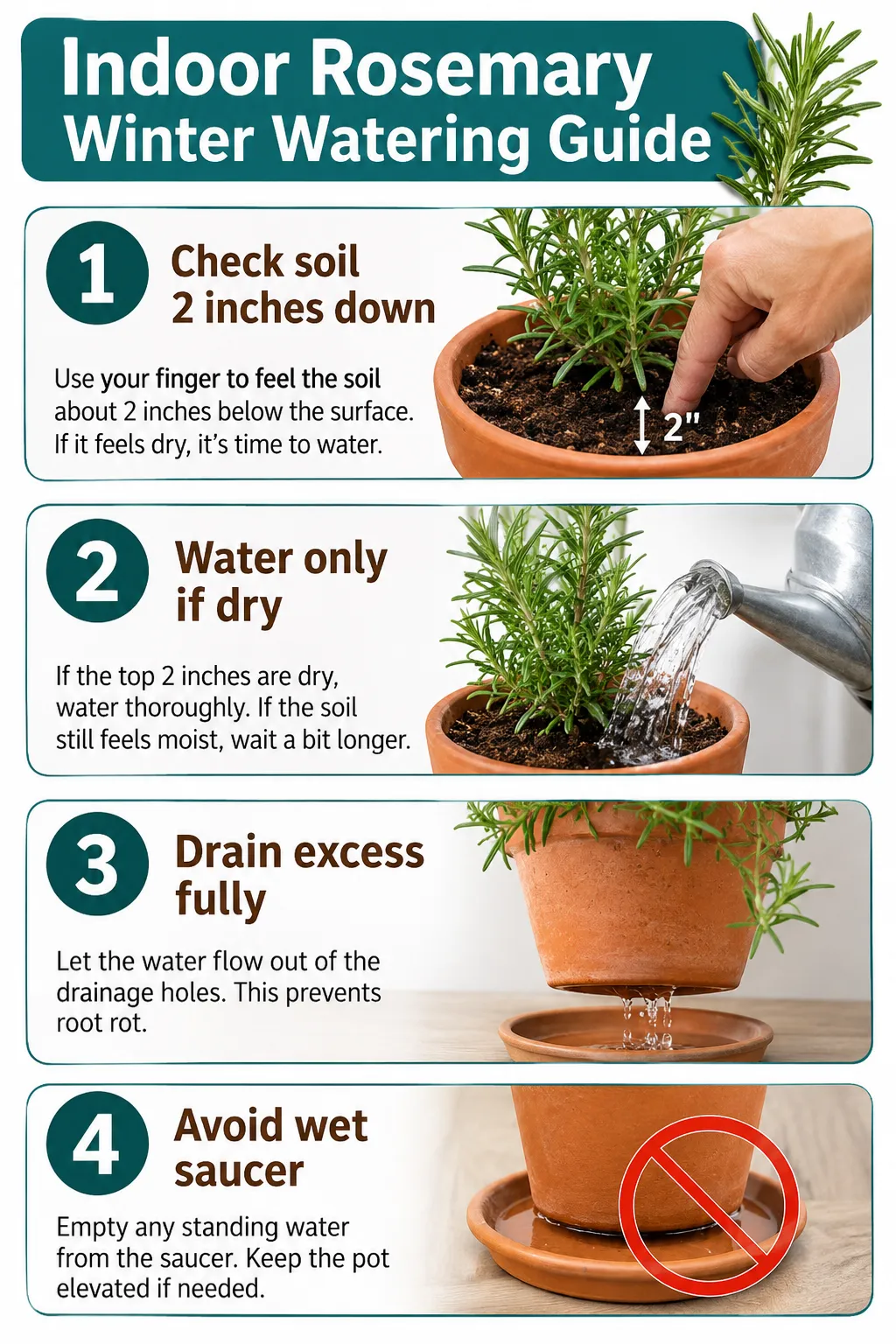
Water indoor or outdoor potted rosemary only when the top 1 to 2 inches of soil feel completely dry, which in winter often means once every 1 to 2 weeks instead of every few days. Rosemary’s growth slows down in cooler months, so it uses far less water than in summer.
Checking the soil with your finger is more reliable than a set schedule. Stick your finger in up to the second knuckle. If it’s still damp, wait.
Common mistake: watering rosemary on the same schedule you used in July. This is the number one way people kill it indoors over winter.
- Always use pots with drainage holes.
- Empty saucers after watering so roots never sit in standing water.
- Reduce watering frequency as light and temperature drop in late fall.
Why is my rosemary dying in winter
Rosemary usually dies in winter from root rot caused by overwatering, not from cold itself, especially in container or indoor settings. Poor drainage, stagnant air, and low light make the problem worse.
Brown, mushy stems near the soil line almost always point to root rot. Dry, crispy brown tips with otherwise healthy green growth usually point to low humidity or too little light instead.
If you’re also seeing yellowing leaves on other houseplants this season, our guide on indoor plants yellow leaves: causes and fixes by plant breaks down similar diagnostic patterns.
Do outdoor rosemary plants need protection from frost
Yes, outdoor rosemary in zones 7 and colder, or any zone expecting a hard freeze, needs frost protection like mulch, frost cloth, or a cold frame to survive winter. Even in borderline zone 8 areas, an unusually cold night can still damage unprotected plants.
Basic outdoor winter protection steps, based on guidance from The Spruce and Almanac:
- Add 2 to 3 inches of mulch around the base before the first hard freeze.
- Cover plants with breathable frost cloth or a bedsheet on predicted freeze nights, removed the next morning.
- Use a cold frame or cloche for extra insulation in borderline zones.
- Avoid plastic sheeting directly on foliage, since it traps moisture and can cause rot.
If you’re planning a winter container garden alongside your rosemary, check out 10 hardy porch picks for winter plants in pots outdoors for companion plants that handle the same conditions.
Can I bring my outdoor rosemary inside for winter
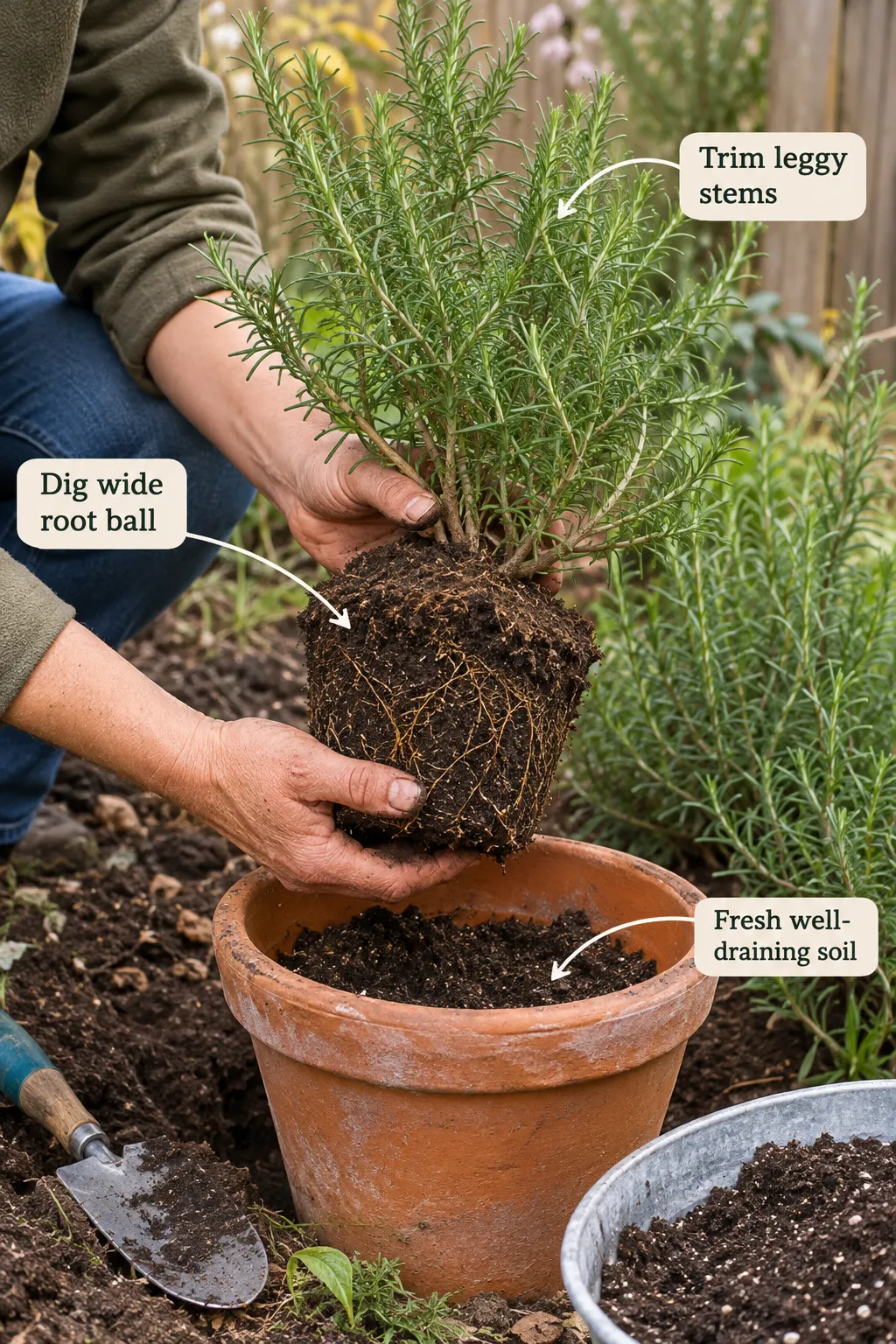
Yes, you can dig up and pot outdoor rosemary to bring it inside for winter, and this is the safest option in zones 7 and colder. Do this before the first frost, not after plants show cold damage.
Transition tips from Botanicaly:
- Dig a wide root ball and pot it in well-draining soil with a container that has drainage holes.
- Trim back any leggy or damaged growth lightly before the move.
- Keep the plant in a shaded spot outdoors for a few days first to reduce transplant shock.
- Place it near a bright window once indoors, and expect some leaf drop as it adjusts.
Edge case: rosemary grown directly in garden soil for years has a large, tangled root system. Digging it up can be riskier than starting a new cutting indoors instead.
What’s the difference between keeping rosemary inside vs outside in winter
The main difference is control: indoors you control light, temperature, and humidity directly, but you risk overwatering and low light; outdoors the plant handles its own environment but faces real frost risk in cold zones. Neither option is automatically easier.
| Factor | Indoors | Outdoors (zones 8-11) |
|---|---|---|
| Frost risk | None | Low, but possible |
| Main risk | Overwatering, low light | Unexpected hard freeze |
| Watering needs | Low, infrequent | Natural rainfall, minimal |
| Light needed | 6+ hours bright or grow light | Natural sunlight, no effort |
Choose indoors if you live in zone 7 or colder, or your rosemary is in a pot already. Choose outdoors if you’re in zone 8-11 and the plant is established in the ground with good drainage.
Best grow light for indoor rosemary in winter
A full-spectrum LED grow light positioned 6 to 12 inches above the plant for 10 to 12 hours a day works best when natural winter light isn’t enough. South-facing windows alone are often not bright enough in deep winter, especially in northern regions.
Signs your rosemary needs supplemental light include stretched, leggy stems, pale new growth, and leaning hard toward the window. A simple clip-on LED grow light is usually enough for a single plant and doesn’t need to be expensive or elaborate.
Does rosemary go dormant in winter
Rosemary doesn’t go fully dormant like deciduous plants, but its growth slows significantly in cooler, lower-light winter conditions, according to NYBG’s plant guidance. It stays evergreen and can still be harvested lightly through the season.
This semi-dormant state is exactly why overwatering becomes dangerous. The plant simply isn’t using water at the same rate it did during active summer growth.
Rosemary leaves turning brown and dying, what do I do
Brown, dying rosemary leaves usually mean root rot from overwatering, underwatering stress, or insufficient light, and the fix depends on which cause matches your symptoms. Check the roots first before assuming the worst.
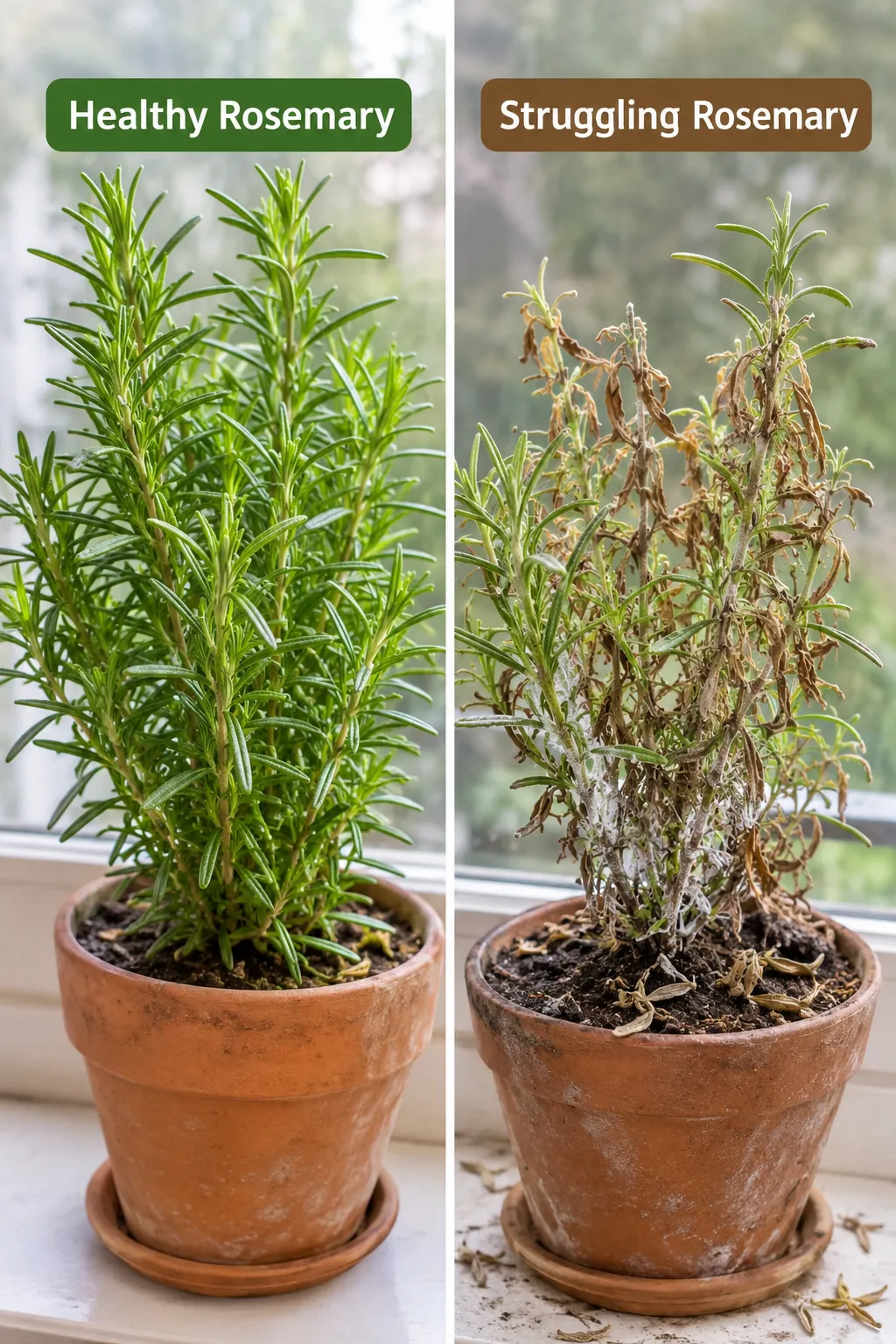
Steps to diagnose and fix it:
- Gently remove the plant from its pot and check the roots. Mushy, dark roots mean rot; firm, white or tan roots mean the plant is fine below the soil.
- If root rot is present, trim away affected roots and repot in fresh, dry, well-draining soil.
- If roots look healthy but leaves are crispy and brown, move the plant to a brighter spot and increase humidity slightly.
- Remove dead or badly damaged stems with clean scissors to redirect energy to healthy growth.
How much light does indoor rosemary need in winter
Indoor rosemary needs at least 6 hours of direct or very bright indirect light daily to stay healthy through winter. A south or west-facing window is the best natural option in most homes.
If your home doesn’t get that much natural light in winter, pair a bright window with a grow light rather than relying on the window alone. For more on herbs that handle lower winter light better than rosemary does, see what herbs to plant in January: full starter guide.
Common mistakes people make caring for rosemary in winter
The most common winter rosemary mistakes are overwatering, placing it in a warm dark room, skipping drainage, and ignoring airflow. Each of these alone can kill an otherwise healthy plant within a few weeks.
- Overwatering: the top cause of winter death by a wide margin.
- No drainage holes: water pools at the bottom and roots rot.
- Too warm, too dark: a warm kitchen counter away from windows stresses the plant.
- Poor airflow: stagnant indoor air invites powdery mildew and pests like aphids and spider mites, per UNH Extension.
- Fertilizing in winter: feeding a slow-growing plant can cause weak, leggy growth.
A small fan on low nearby for an hour a day can meaningfully cut down on mildew and pest risk indoors.
Is it better to grow rosemary indoors or outdoors in a cold climate
In zones 7 and colder, indoors is the safer and more reliable choice for rosemary plant care in winter, since outdoor plants face real freeze risk that can kill the roots outright. Outdoor overwintering only makes sense in zones 8-11 where winter lows stay above roughly 20°F.
If you’re torn, container growing gives you flexibility either way: keep the pot outside in mild fall weather, then move it in once nights consistently dip below 30°F, as suggested by Homes & Gardens.
Do you need to prune rosemary before winter
A light prune before winter is helpful, but avoid heavy pruning right before the first frost or right before moving the plant indoors. Hard pruning stresses the plant at exactly the wrong time.
Good pre-winter pruning practice, per The Spruce:
- Trim no more than about one-third of the plant.
- Remove dead, woody, or damaged stems only.
- Do this at least 2-3 weeks before the first expected frost or indoor move.
- Save major shaping prunes for spring when active growth resumes.
Frequently Asked Questions
Can rosemary survive a light frost outdoors?
Yes, established rosemary can usually survive a brief light frost, but repeated hard freezes below 20°F will likely kill it unless it’s a cold-hardy cultivar.
Should I mist indoor rosemary for humidity?
Misting isn’t very effective for rosemary since it prefers airflow over dampness. A humidity tray or simply improving air circulation works better.
Can I keep rosemary in a basement over winter?
Only if the basement has a bright window or grow light. A dark basement, even if cool, will cause the plant to decline from lack of light.
Does rosemary need a dormant period to produce new growth in spring?
No, rosemary doesn’t require true dormancy, but a cooler resting period in winter does help it conserve energy for stronger spring growth.
Is it normal for indoor rosemary to drop some leaves in winter?
Yes, light leaf drop is normal after a move indoors or during adjustment to lower light. Heavy leaf drop paired with browning stems signals a bigger problem.
Can I harvest rosemary from an indoor plant all winter?
Yes, light harvesting is fine year-round. Just avoid cutting more than a third of the plant at once during its slow winter growth phase.
Conclusion
Rosemary plant care in winter really comes down to matching the method to your climate and staying disciplined about water. If you’re in zone 8-11, outdoor overwintering with some frost protection usually works fine. If you’re colder than that, bring it inside, give it bright light, cool air, and let the soil dry out between waterings.
Start by checking your zone and your forecast this week. Then pick your plan: protect it outside, or pot it up and move it in before that first hard freeze catches you off guard.
For more seasonal plant care guidance, browse our full houseplants and indoor growing collection.