
Last updated: November 6, 2026
Quick Answer
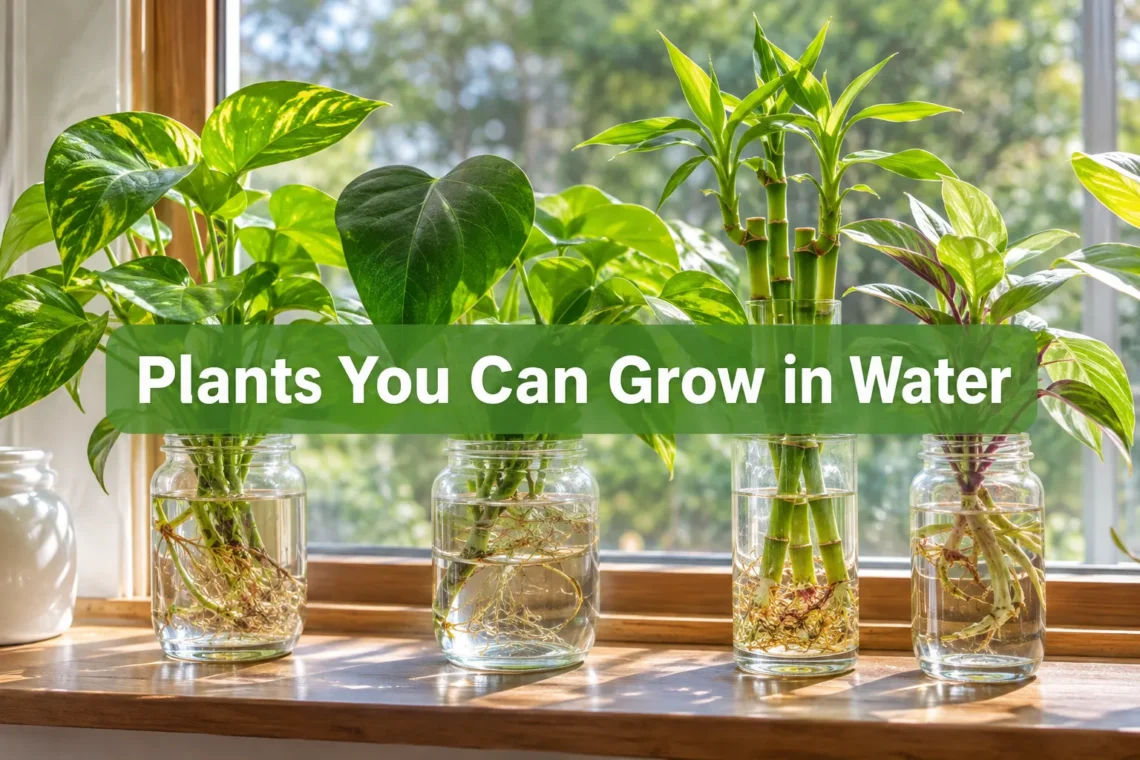
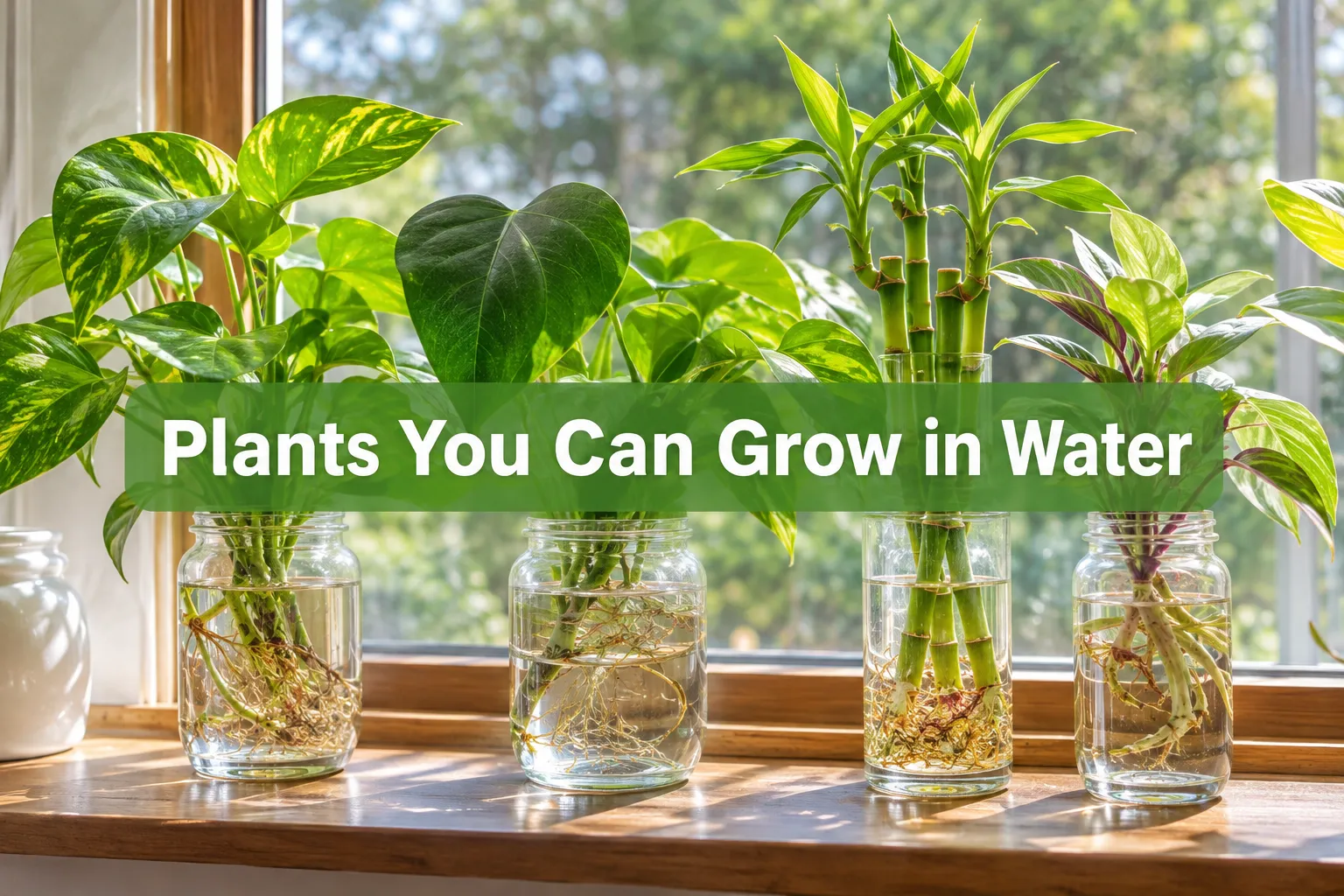
Dozens of popular houseplants root and live happily in plain water, no soil required. Pothos, philodendron, Chinese evergreen, spiderwort, and lucky bamboo are among the easiest plants you can grow in water, often sprouting visible roots within two to four weeks in a simple jar on a bright windowsill. This guide walks through 15 beginner-friendly cuttings, how to keep them alive long term, and the mistakes that kill most water-grown plants.
Key Takeaways
- A core group of houseplants, including pothos, philodendron, and spider plant, can live in water indefinitely if the water is changed regularly.
- Most cuttings show root growth within two to four weeks when placed in bright indirect light.
- Tap water works for most common houseplants, but sensitive species do better with filtered, bottled, or rested rain water.
- Algae growth is the biggest long-term headache in a clear container; an opaque container or tinted glass helps slow it down.
- Not every popular houseplant tolerates long-term water culture, even if the cutting roots. Begonia and African violet are examples that often struggle.
- True hydroponics uses nutrient solutions and aeration, while growing in a jar or vase is simpler and relies on occasional light fertilizer.
- Lucky bamboo, pothos, and Chinese evergreen are considered low-maintenance enough for both novice and experienced growers.
What plants can actually survive in water long term
Several houseplants don’t just root in water, they can live there for months or years with basic care. This matters because not every plant that roots in a jar will actually thrive there long term.

The plants most reliably known for true long-term water culture include pothos (Epipremnum aureum), philodendron, Chinese evergreen (Aglaonema commutatum), spiderwort (Tradescantia zebrina), English ivy (Hedera helix), lucky bamboo (Dracaena sanderiana), and the peace lily (Spathiphyllum spp.). These species have evolved to root easily from stem nodes, and many gardeners keep them in water permanently as a low-maintenance houseplant option, according to The Spruce.
Spider plant (Chlorophytum comosum) and prayer plant (Maranta leuconeura) are two more that transition well from cutting to permanent water dweller, especially in a bright container on a kitchen counter.
Decision rule: Choose pothos or philodendron if you want the single most forgiving option. Choose lucky bamboo if you want an upright, sculptural look without worrying about leaf drop.
Worth noting: lotus (Nelumbo spp.) is a true aquatic plant, not a houseplant cutting, and belongs in a pond or large tub rather than a vase on a shelf, per USDA Agricultural Research Service.
How do you propagate plant cuttings in water
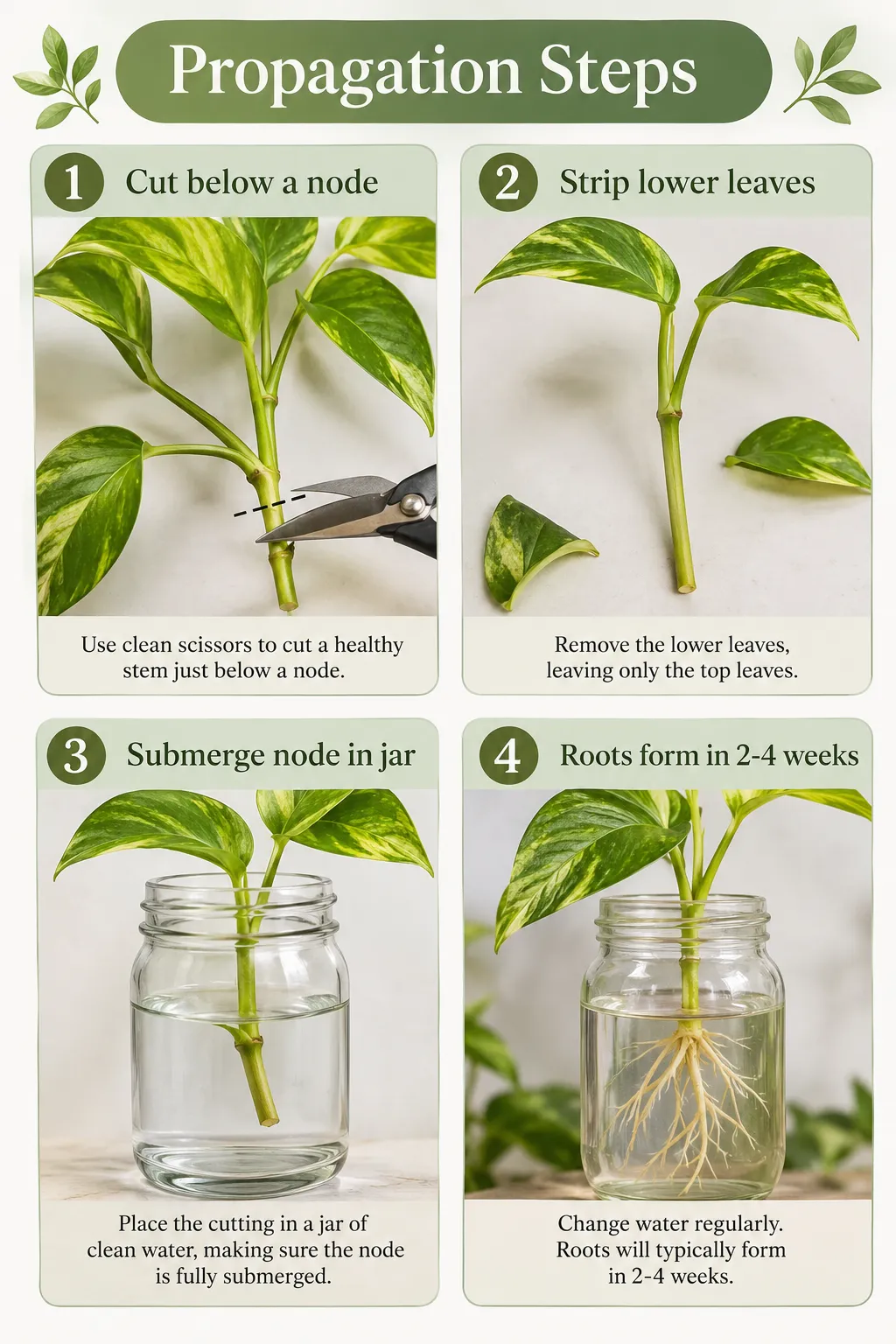
Water propagation means cutting a healthy stem below a leaf node, stripping the lower leaves, and submerging the node in a jar of water until roots form. This is the most beginner-friendly way to expand a plant collection, according to multiple 2025-2026 gardening guides.
Here’s the basic process:
- Select a stem with at least one node and two to three leaves.
- Cut just below the node with clean, sharp scissors.
- Remove any leaves that would sit underwater, since submerged leaves rot and cloud the water.
- Place the cutting in a jar or vase, making sure the node stays underwater.
- Set the container in bright indirect light, not direct sun exposure.
- Change the water every five to seven days.
- Watch for roots within two to four weeks, per Planta’s water propagation guide.
Pothos, philodendron, and spiderwort tend to be the fastest rooters. Begonia and coleus also propagate well this way, though coleus stems can get leggy if light is too low.
Best plants to grow in water for beginners
For beginners, the safest bets are plants that root fast, tolerate a range of light, and forgive inconsistent water changes. These are the 15 cuttings experienced growers most often recommend for jars and vases.
| Plant | Light Needs | Difficulty |
|---|---|---|
| Pothos (Epipremnum aureum) | Bright indirect | Very easy |
| Philodendron spp. | Bright indirect | Very easy |
| Chinese Evergreen | Low to bright indirect | Easy |
| English Ivy | Bright indirect | Easy |
| Spider Plant | Bright light | Easy |
| Spiderwort | Bright indirect | Very easy |
| Lucky Bamboo | Bright indirect, no direct sun | Very easy |
| Peace Lily | Low to medium light | Moderate |
| Pancake Plant | Bright indirect | Moderate |
| Prayer Plant | Medium light | Moderate |
| Monstera | Bright indirect | Easy |
| Sweetheart Hoya | Bright indirect | Moderate |
| Ti Plant | Bright light | Moderate |
| Aluminum Plant | Bright indirect | Moderate |
| Croton | Bright light | Harder, needs consistent warmth |
Dieffenbachia and dracaena cuttings also root in water, but both are toxic if chewed by pets, so place them carefully, per Martha Stewart.
If you’re assembling a full windowsill garden, pair this list with our guide to houseplants for beginners who always kill their plants for broader care context.
Why are my water plants getting brown or dying
Brown, mushy stems usually mean the water has gone stagnant or the node sat too deep and started rotting rather than rooting. Yellowing leaves often point to low light or water that hasn’t been changed in too long.
Common causes:
- Stagnant water: bacteria build up and smell sour.
- Too little light: stems stretch, leaves pale, growth stalls.
- Submerged leaves: anything underwater that isn’t a node will decay and cloud the jar.
- Cold drafts: many of these plants are tropical and dislike temperatures below 60°F.
Common mistake: Leaving a cutting in the same water for three or four weeks without checking it. Fresh water and a quick jar rinse every week prevents most problems, according to GardenBetty.
How often should you change the water
Change the water every five to seven days for most houseplant cuttings, and more often if the container sits in direct sun or a warm room. Clear jars in bright spots need more frequent changes because algae growth speeds up with light exposure.
A quick rule: if the water looks cloudy, smells off, or has a greenish tint, change it immediately rather than waiting for the weekly schedule. Rinsing the container with warm water (no soap residue) each time also helps prevent algae growth and keeps roots healthy.
Do water plants need fertilizer or nutrients
Water-grown houseplants benefit from a diluted liquid fertilizer every four to six weeks, since plain tap water or rain water lacks the nutrients soil normally provides. Without any feeding, growth slows and leaves may pale over time.
Use a balanced liquid houseplant fertilizer at quarter strength. Full-strength fertilizer in a small jar can burn roots quickly since there’s no soil to buffer it. This is one difference between a jar-grown plant and true hydroponics, which uses a precisely balanced nutrient solution.
Water plants vs soil plants: which is easier
For sheer simplicity, water culture wins on cleanliness and visibility, while soil wins on long-term growth and size. Water growing lets you watch roots develop and skip the mess of potting soil, but most plants eventually grow larger and healthier once moved to a container with soil.

| Factor | Water Growing | Soil Growing |
|---|---|---|
| Mess | Minimal | Higher |
| Root visibility | Full | None |
| Long-term growth | Slower, limited | Fuller, faster |
| Nutrient control | Manual, light | Soil provides baseline |
| Best for | Starter cuttings, décor | Mature, established plants |
Many gardeners use both: root the cutting in a jar, then transplant to soil once roots reach two to three inches, as recommended by the Almanac.
How to prevent root rot in water plants
Root rot in water culture happens when water sits too long without oxygen or when a container has no airflow at the base. Keep roots from fully packing the jar, and swap the water weekly to keep it oxygenated.
Signs of root rot include mushy, brown or black roots with a foul smell, instead of the firm white or tan roots seen on healthy cuttings. If you spot rot, trim the damaged roots with clean scissors, rinse the remaining healthy root ball, and move the cutting into fresh water immediately.
What’s the difference between hydroponics and growing in water
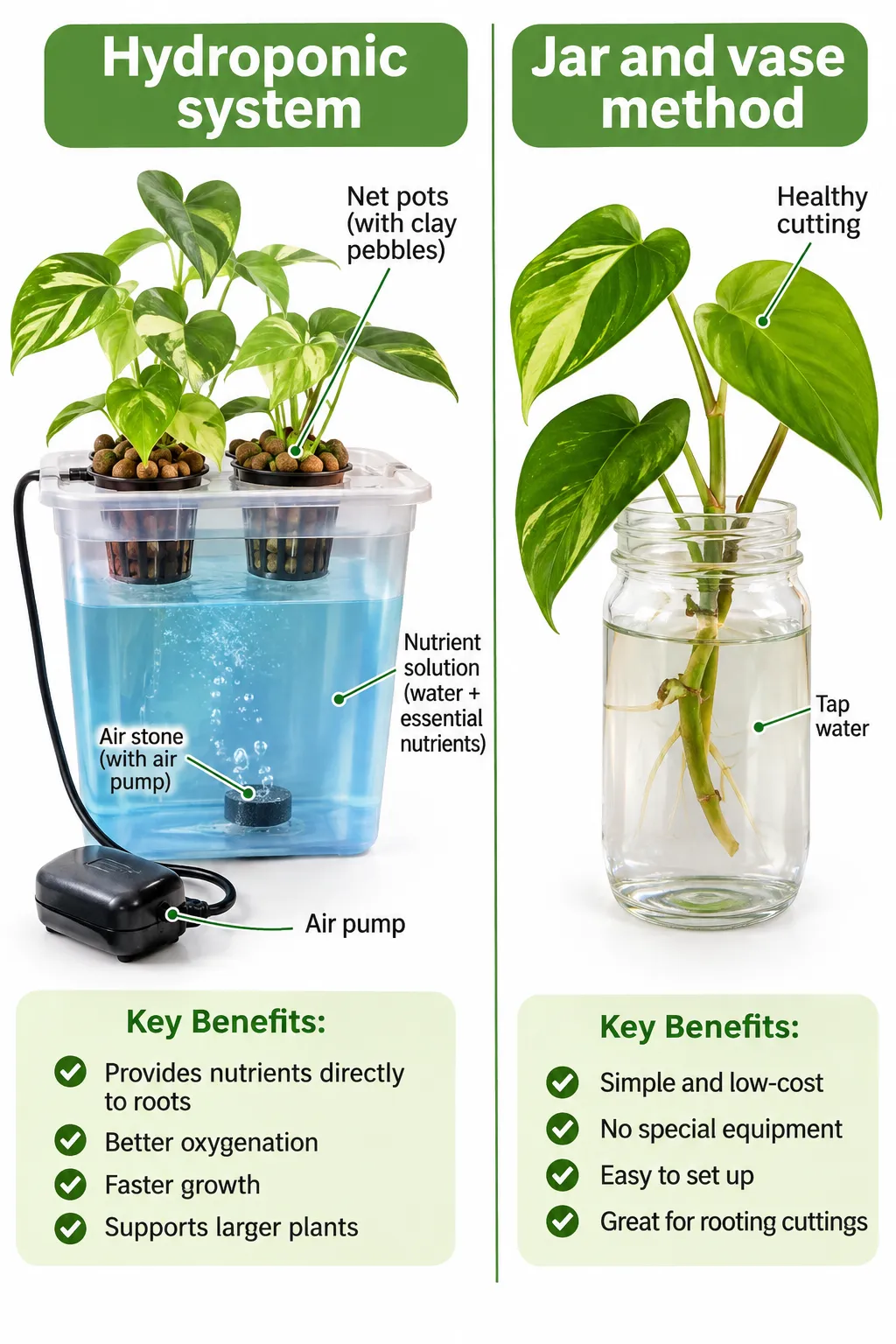
Hydroponics is a structured nutrient-delivery system, often with aeration and measured fertilizer solutions, while growing a cutting in a jar or vase is a simpler, lower-tech version of the same idea. Both skip soil, but hydroponics is built for sustained, vigorous growth and larger harvests.
Jar and vase growing is essentially an entry point into hydroponic thinking. Experts increasingly expect more structured semi-hydro setups built around jars and vases as interest grows, according to recent coverage from The News Tribune. If a houseplant becomes a vigorous grower in a jar, that’s often a sign it would do even better in a dedicated hydroponic setup.
Can you use tap water or do plants need filtered water
Tap water works fine for most common houseplants like pothos and philodendron, but sensitive species such as peace lily or prayer plant may show leaf-tip browning from chlorine or fluoride over time. Letting tap water sit out for 24 hours before use lets chlorine evaporate.
For fussier plants, filtered, bottled water, or rested rain water is the safer bet. Bottled water and rain water also tend to have fewer minerals than tap water, which some growers prefer for long-term container water clarity.
How long can plant cuttings live in water only
Many popular houseplants, including pothos, philodendron, and lucky bamboo, can live in water only for months or even years if the water is refreshed regularly and light conditions stay consistent. Growth is usually slower and leaves smaller than the same plant grown in soil.
That said, water-only growth has limits. Roots eventually need more surface area and nutrients than a jar provides, so plants grown exclusively in water for years often plateau in size compared to a soil-grown counterpart.
Are water plants safe for cats and dogs
Some popular water-grown houseplants are toxic to pets if chewed, including pothos, philodendron, dieffenbachia, and peace lily, according to the ASPCA’s plant toxicity database. Non-toxic options for pet households include spider plant and some Tradescantia varieties, though supervision is still smart.
If pets have access to the room, keep toxic cuttings on high shelves or in rooms pets can’t reach, and double-check any new plant against a reliable toxicity list before bringing it home.
What kind of jar or vase is best for water plants
A clear glass jar or vase works well for watching root growth, but a tinted or opaque container helps prevent algae growth by blocking light from reaching the water. Either works, but the choice affects maintenance frequency.
Look for a container with a narrow enough neck to hold the stem upright without tipping, and enough depth that the node stays submerged while leaves stay dry above the waterline. Mason jars, bud vases, and repurposed glass bottles are all common choices among both novice and experienced growers.
For styling ideas that pair well with a jar-and-vase setup, see our guide to Japandi-style indoor plants or tall planter ideas for empty corners.
Plants that don’t work well for water propagation
Not every popular houseplant is a good candidate for long-term water culture, even though cuttings may root initially. African violet, begonia, and succulent-type plants tend to rot quickly if kept in standing water rather than moved to soil once rooted.
Woody or fibrous-stemmed plants, along with most cacti, generally fail in water culture because their stems aren’t built to take up water the way softer-stemmed tropical plants do. If a cutting smells bad or turns mushy within a week, it’s likely not suited to the water-only method, and should be composted rather than forced.
FAQ
Which plants can grow in water only?
Pothos, philodendron, lucky bamboo, Chinese evergreen, spiderwort, English ivy, spider plant, and peace lily are among the houseplants that can grow in water only for extended periods. These species root easily from stem cuttings and tolerate low-nutrient water as long as it’s changed regularly and light stays bright and indirect.
What plant removes 78% of airborne mold?
Specific percentage claims about mold removal vary by study and aren’t consistently verified across sources, so it’s best to treat such figures as unconfirmed. For general indoor air quality guidance, see our breakdown of indoor plants for air purification and what actually works.
Why is Gen Z obsessed with plants?
Younger renters often can’t make permanent home changes, so low-commitment houseplants offer a sense of control, routine, and decor that moves with them. Social media also turns plant care into a visible hobby, and water-grown cuttings are easy to photograph and share, fueling renewed interest in low-mess hydroponics.
Do hydroponic plants grow faster?
Hydroponic systems can speed up growth because nutrients are delivered directly to roots without soil resistance, and oxygen levels are often better controlled. Simple jar and vase water growing doesn’t match full hydroponic speed, but it still roots many cuttings faster than soil propagation for the same plant.
Conclusion
Growing plants in water is one of the lowest-stress ways to expand a houseplant collection, and a jar on a sunny windowsill is often all it takes to get started. Start with a forgiving plant like pothos or philodendron, change the water weekly, keep it in bright indirect light, and watch for roots within a few weeks.
Once roots are established, decide whether to keep the plant in its container long term or move it into soil for fuller growth. Either way, the next step is simple: pick one of the 15 plants above, find a clean jar, and take your first cutting this weekend.
For more on keeping common water-grown plants like pothos healthy through the seasons, check our pothos winter care checklist and browse our full houseplants and indoor growing category for related guides.



3 Comments on “Plants You Can Grow in Water: 15 Easy Cuttings for Jars and Vases”