Last updated: November 8, 2026
Quick Answer
Garden Trends 2027 center on slower, hands-on gardening that trades scrolling for soil time, plus a shift toward nature-led planting, moody color palettes, edible beauty, and structures like greenhouses that work as living garden rooms. Expect less minimalism, more layered English-inspired borders, and a renewed focus on native plants, water-wise design, and food growing that actually gets used rather than wasted.
Key Takeaways
- The biggest 2027 garden trend is participation: hands-in-soil rituals replacing passive screen time, according to the Garden Media 2027 trends report.
- Ancient Blue is the 2027 Color of the Year, and true blue blooms occur in fewer than 10% of flowering plants, per coverage of the trend.
- Nature-led, pollinator-friendly gardens are becoming more structured and intentional, not just wild patches, says Martha Stewart’s design trends roundup.
- Maximalist, English-garden-inspired planting is overtaking minimalism, with ornate “Gilded Garden” style gaining ground per Monrovia’s 2027 study.
- Edible plants with ornamental value, called edimentals, are a top buying trend for small gardens and large plots alike.
- Container gardens at entryways and more structured, “planted at size” landscaping are reshaping curb appeal, notes Veranda’s curb appeal trends piece.
- Lawns are not disappearing but shrinking in favor of mixed beds, grasses, and native groundcovers.
- Soil health and traceable regenerative inputs matter more to buyers than flashy new gadgets.
What are the biggest garden trends for 2027?
The leading Garden Trends 2027 theme is gardening as an antidote to digital burnout, with people choosing slower, tactile garden rituals over passive entertainment. This idea anchors the Garden Media Group’s flagship 2027 report, now in its 26th year of tracking the industry.
The report names seven trends, and most point directly to what gardeners will plant, build, and buy:
- Show Up Culture: phone-free, low-pressure garden gatherings with friends
- OutdooRx: therapeutic horticulture as everyday wellness
- Let’s Go Rococo: ornate, maximalist garden design, far from the stripped-back look of recent years
- Where the Wild Things Aren’t: unstructured, feral-feeling play areas for kids
- Drop It Like It’s Hot: limited plant “drops” that function more like community events than simple sales
- Proof of Soil: verifiable, traceable regenerative soil inputs
- Ancient Blue: the rare blue color story running through flowers, pots, and furniture
Garden design trends also show up strongly in Monrovia’s 2027 study, which flags Moody Botanicals, Palm Springs-style succulents, and entertaining-ready “New Garden Party” layouts as big influences on what nurseries will stock next year.
A nature-led garden with a clear hand
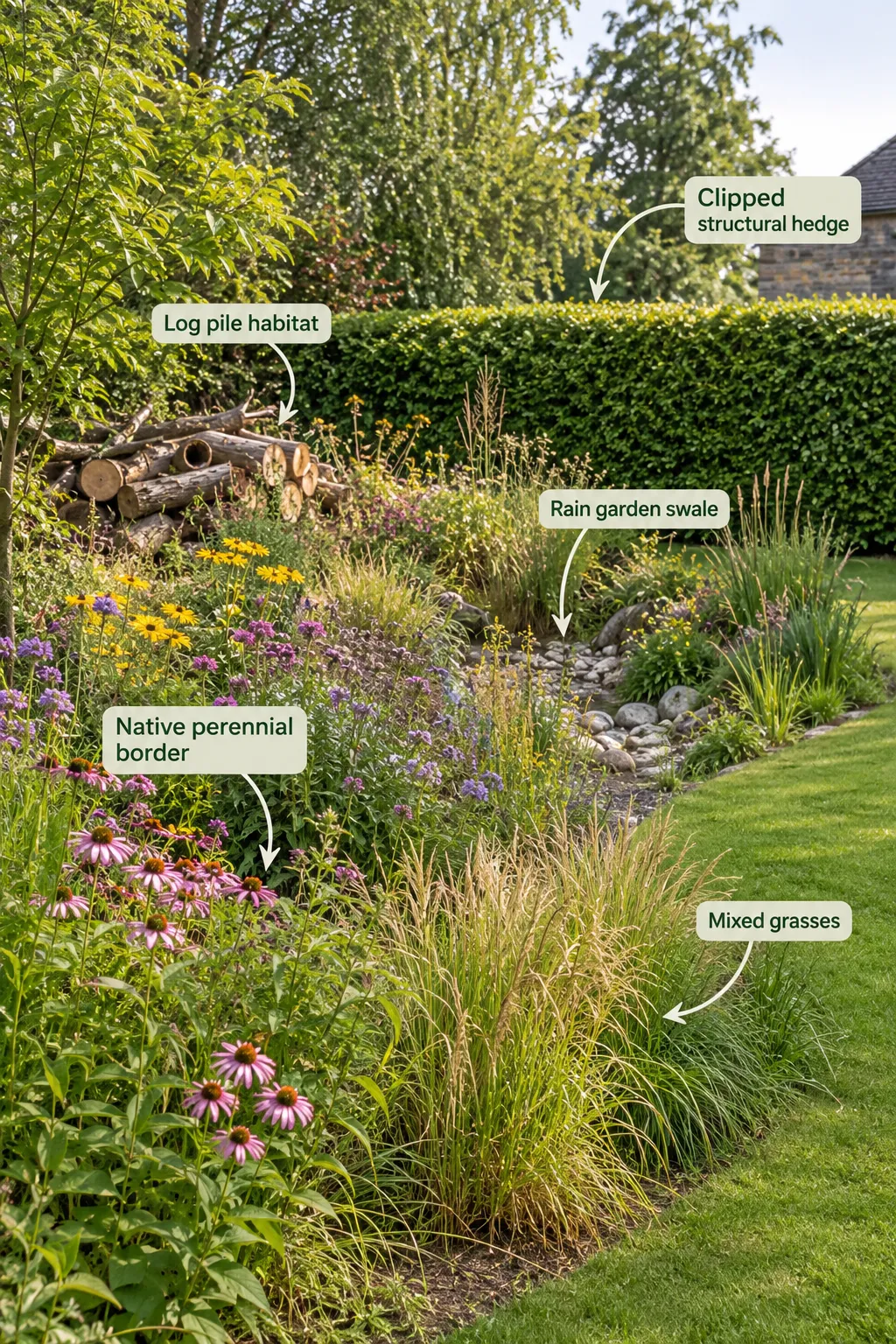
A nature-led garden for 2027 looks wild at a glance but is carefully structured underneath, blending native plants with clipped hedges and clear paths. This is not a return to rough wildflower meadows; it is a polished ecosystem that still reads as natural.
Veranda’s landscaping coverage highlights backyard ecosystems that give birds and pollinators real habitat while keeping strong visual structure through repeated shapes and layered heights, as covered in its 2027 landscaping trends feature. Martha Stewart’s design team describes a similar shift toward intentional pollinator gardens rather than messy patches, in its garden design trends 2027 piece.
Decision rule: choose a nature-led approach if your site gets full sun for at least six hours and you’re willing to leave seed heads standing through winter for birds. Skip it if your garden is fully shaded with poor soil, since many native pollinator plants need open, sunny ground to thrive.
Common mistake: people plant a pollinator mix and never edit it, so the bed turns into a tangle by year two. Edit yearly, just like you would a border of roses.
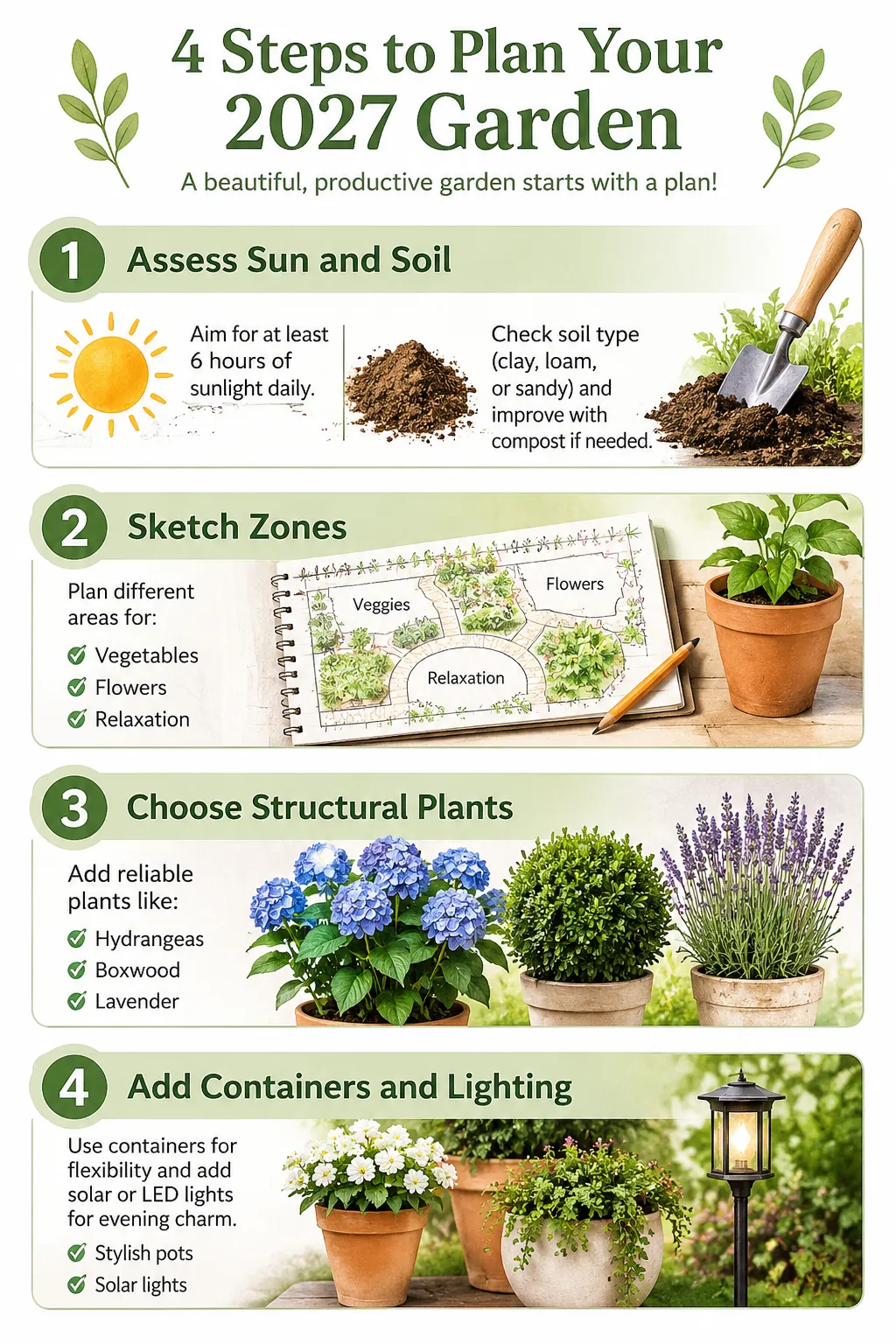
Start with the conditions, not a fragile planting formula
Before copying any planting formula from social media, assess your own site: sun hours, soil type, drainage, and wind exposure. A plant list that works in one garden can fail completely in another with different conditions.
Walk your space across a full day and note where sun and shade fall. Dig a small hole and fill it with water; if it drains within an hour, you have decent drainage. If it sits, plan for raised beds or moisture-loving plants instead.
Let rainfall work within the garden
Rain gardens and simple swales let water soak into soil rather than running off, which cuts the need for extra irrigation and supports healthier root systems. This fits naturally with the nature-led planting direction gardeners are adopting for 2027.
A shallow, planted depression that catches roof runoff can handle a surprising amount of water. Fill it with moisture-tolerant natives so it looks intentional rather than boggy.
Think beyond an insect hotel
An insect hotel alone does little without food and shelter nearby; the better 2027 approach layers bare soil patches, log piles, and native flowering plants together. Insects need year-round resources, not a single novelty structure.
Leave a small untidy corner with twigs, bark, and bare earth. Add flowering plants that bloom across spring, summer, and fall so pollinators always have a food source.
Put productive plants into the composition
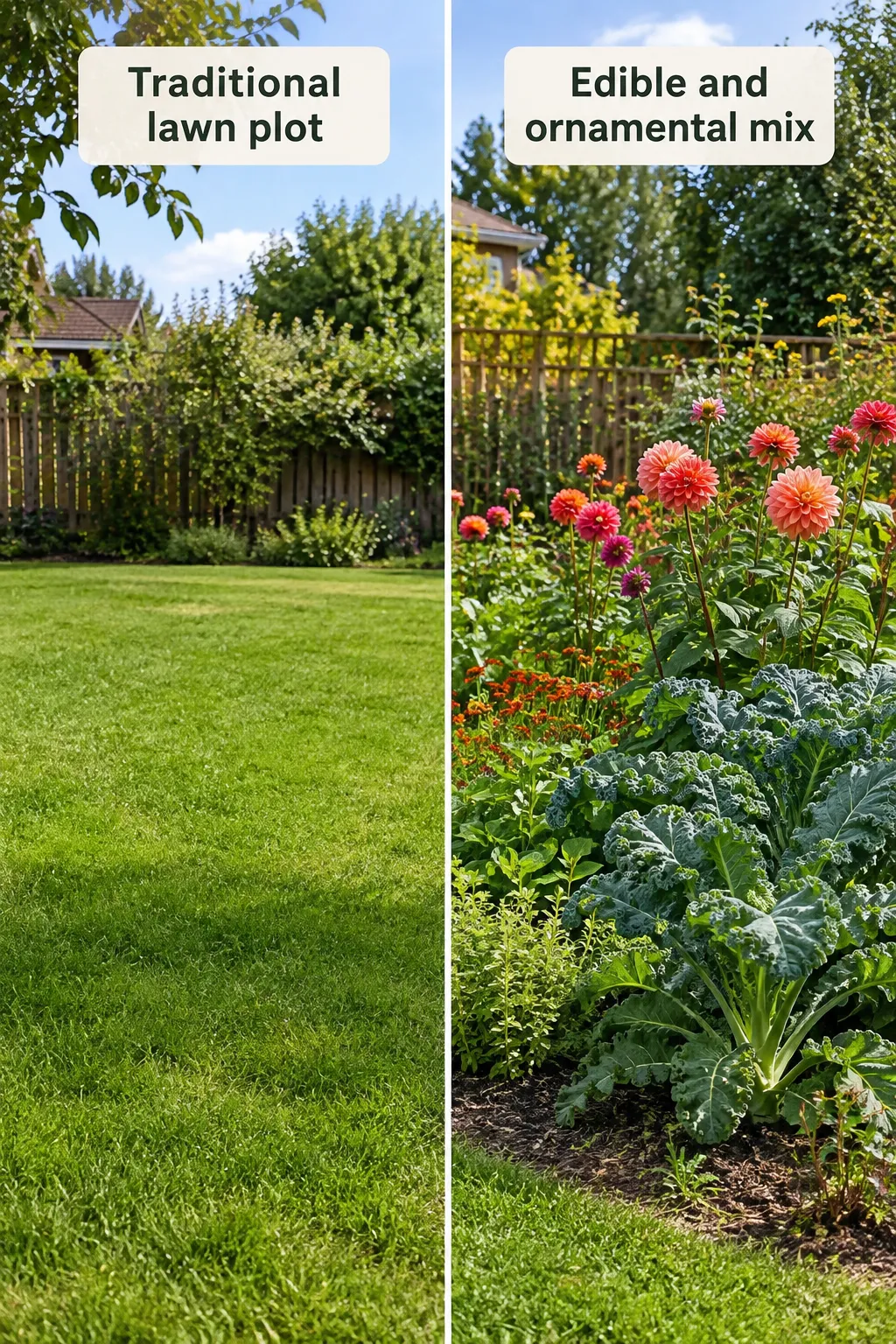
Edible plants belong in the main border now, not hidden in a separate vegetable patch, because many food crops look as good as ornamentals. This “edimental” approach is one of the clearer threads in 2027 garden buying, flagged in Bob Vila’s gardening trends roundup and in Australian trend coverage from Better Homes and Gardens.
Rainbow chard, purple basil, and espaliered fruit trees all pull double duty as food and design elements. For indoor crops that complement an outdoor edible bed, see this guide to growing microgreens at home.
What should I plant in 2027?
Plant a mix of native perennials for structure, a handful of blue-toned blooms for the Ancient Blue color story, and at least one edimental crop per bed. This spreads risk across pollinator support, trend-forward color, and usable food, so the garden earns its space year-round.
Good starting choices for 2027 planting lists include:
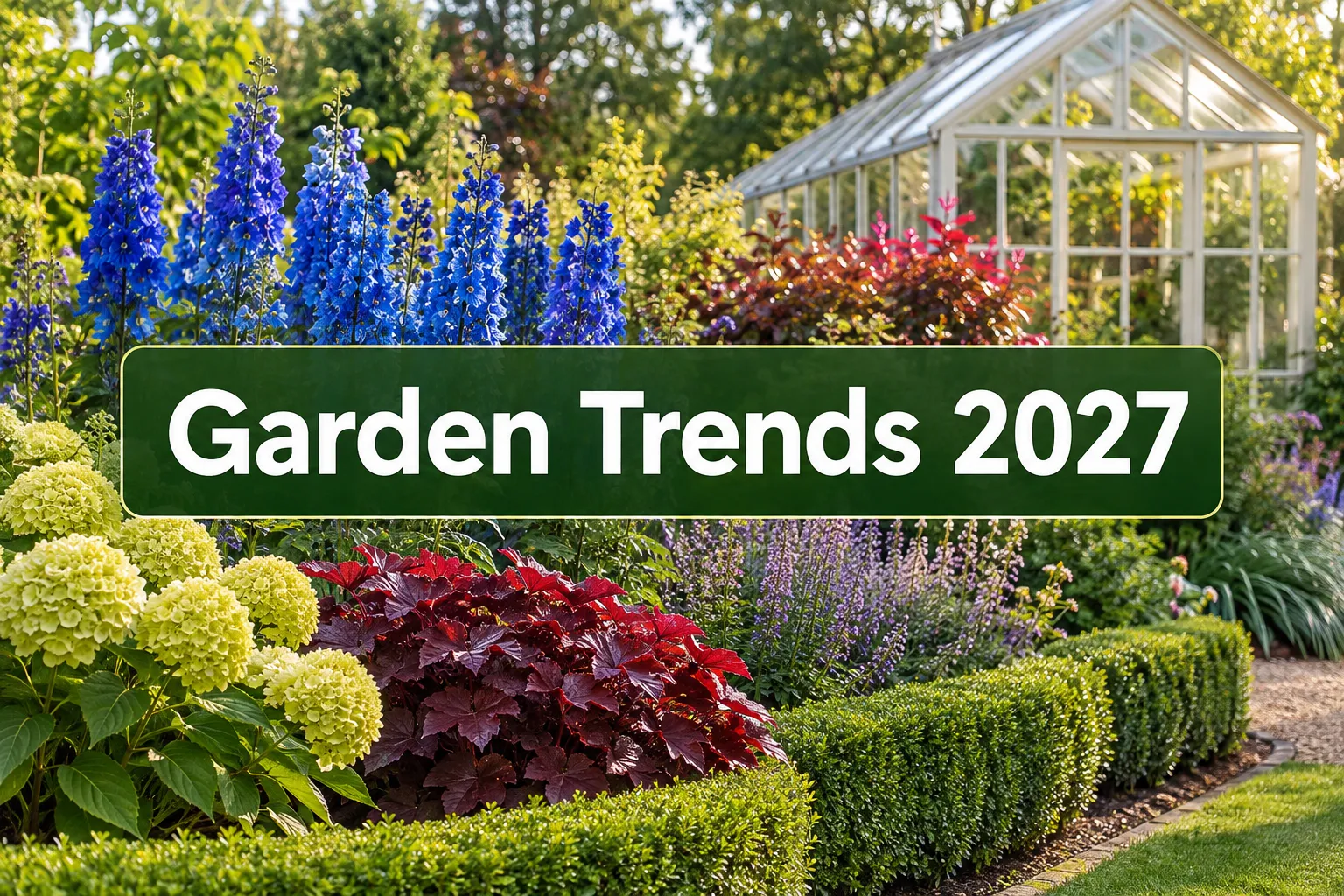
- Salvias and delphiniums for blue tones
- Native asters and coneflowers for pollinators
- Dark-leafed heucheras or dahlias for moody contrast
- Kale, chard, or dwarf fruit trees for edimental value
- Boxwood or clipped yew for structure through winter
Edge case: in very hot, dry climates, swap thirsty blue bloomers like delphiniums for drought-tolerant alternatives such as Russian sage or catmint, which still read blue-gray from a distance without heavy watering.
Keep the lawn that earns its place
Lawns are shrinking rather than disappearing in 2027, with homeowners keeping a smaller patch for actual use (play, pets, gathering) and converting the rest to beds, grasses, or groundcover. A lawn that nobody walks on is the one most likely to go.
If your lawn hosts weekend football games or a trampoline, keep it and maintain it well. If it’s purely decorative and rarely touched, consider replacing a third of it with low native groundcover to cut mowing time and water use.
Connect patios, pergolas and garden rooms
Outdoor rooms built around patios, pergolas, and dining areas are a strong 2027 design trend, since gardeners want spaces built for entertaining rather than just viewing. Monrovia’s “New Garden Party” concept, from its design trends study, reflects this shift directly.
A pergola draped in climbing roses or clematis links the house to the garden visually and gives shade for long summer evenings. Lighting strung along beams extends use into the night without needing major electrical work.
Make maintenance a design decision
Low-maintenance 2027 garden trends favor structural plants, mulched beds, and fewer high-fuss specimens, chosen deliberately at the planning stage rather than discovered through trial and error. Deciding on maintenance level before you plant saves years of frustration.
Choose shrubs and grasses that hold their shape without constant pruning if you have limited time. Save the fussier roses or dahlias for a small, contained bed you can realistically tend each week.
Use technology where it earns its place
Smart irrigation timers and soil moisture sensors are useful 2027 garden tools, but only when they solve a real problem like uneven watering across a large bed. Technology that adds complexity without saving real time or water isn’t worth the cost.
A simple drip line on a timer beats a smart sprinkler system for most home gardens. Save bigger tech investments for larger properties or greenhouse climate control.
Small gardens reward precise planning
Garden Trends 2027 for small spaces lean on vertical growing, container clusters, and multi-use furniture rather than cramming in more plants. Precision matters more in a small footprint, since one wrong placement can block light or paths for everything else.
Stack pots at varying heights near a doorway, train climbers up a trellis instead of letting them sprawl, and pick dwarf fruit varieties bred for pots. For indoor backup in tight homes, tall planter ideas for empty corners can extend the growing space upward.
Bring back cottage character without copying the past
English cottage garden character is returning for 2027 through abundance and layering, without recreating a strict historical plan plant for plant. Think overflowing borders, self-seeding flowers, and a slightly loose edge rather than a museum replica.
Let roses tumble over a low fence, mix in foxgloves and hollyhocks for height, and allow a few plants to self-seed into gravel paths for that lived-in look.
Let the greenhouse contribute to the whole garden
A greenhouse in 2027 works best as a connected garden room, not an isolated utility shed, extending the growing season and sheltering tender edimentals and blue-toned blooms through colder months. This fits the broader trend toward food growing paired with ornamental display.
Companies like Bloomcabin design greenhouse and winter garden structures meant to sit visually within the wider garden rather than apart from it, which matches where 2027 design is heading. A well-placed greenhouse near the main border lets gardeners start seedlings early and keep tender edibles growing through shoulder seasons.
Does a greenhouse suit a modern nature-led garden? Yes, if it’s positioned to echo the garden’s materials and lines rather than standing as a stark glass box; a greenhouse with a stone base or dark-framed structure blends more naturally into a layered, nature-led planting scheme.
Best garden structures to build in 2027
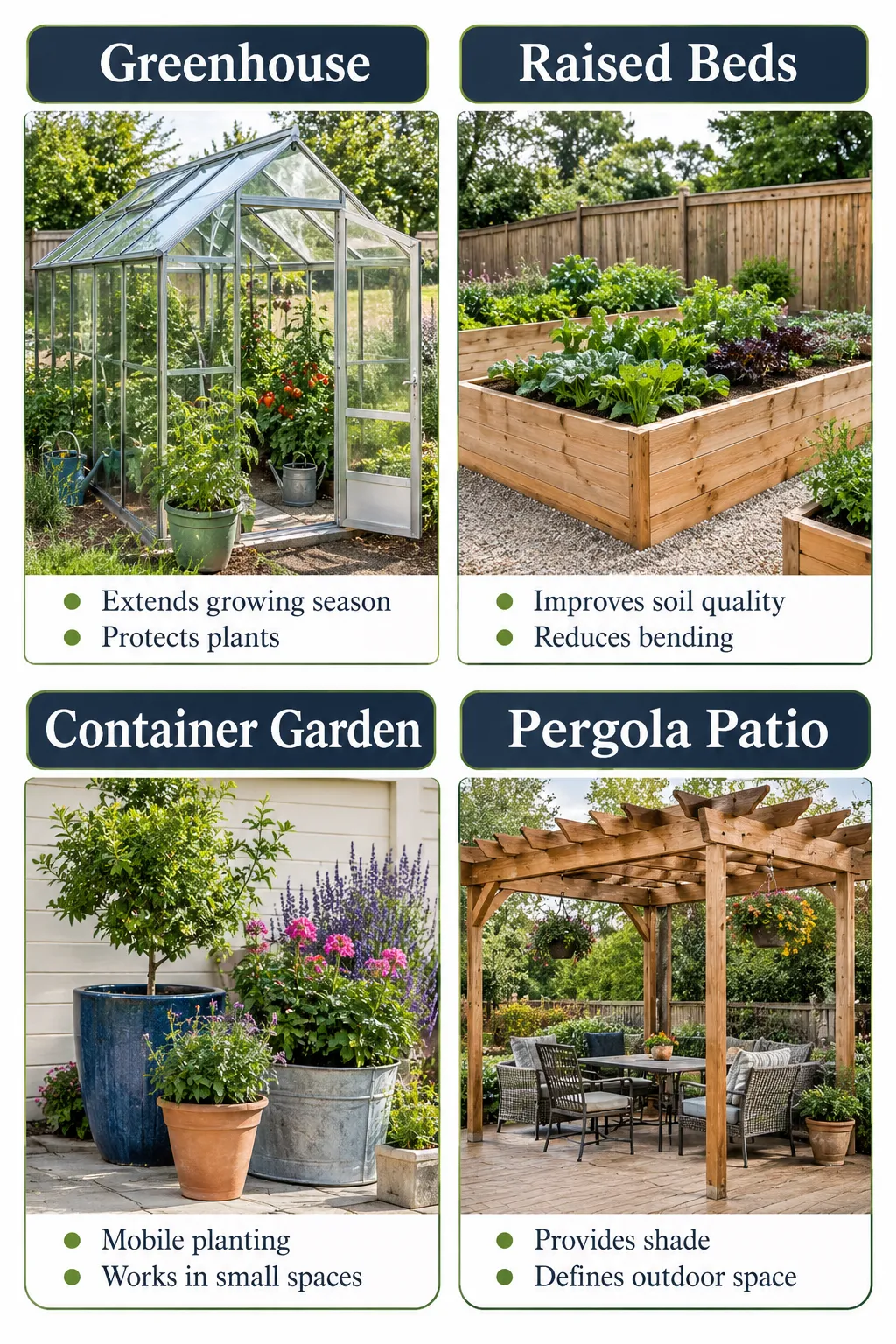
Raised beds, pergolas, and small greenhouses are the structures worth building in 2027, because each supports both the design trends and the practical side of food growing. Structures that multitask (shade plus seating, or storage plus trellis) earn their footprint fastest.
| Structure | Best for | Approx. cost range |
|---|---|---|
| Raised bed | Soil control, easy edibles | Low to moderate |
| Pergola | Shade, entertaining, climbers | Moderate |
| Small greenhouse | Season extension, tender plants | Moderate to high |
| Container cluster | Small space, flexibility | Low |
How much does it cost to start a trendy garden?
Costs vary widely by scope, but a basic container and raised-bed setup can start modestly, while a greenhouse or full pergola build runs considerably higher depending on materials. The honest answer is: budget for the structure first, then plants, since structures are the harder cost to retrofit later.
A realistic approach is to build one structure per year rather than everything at once. Start with raised beds for food, add a pergola the following year, and treat a greenhouse as a longer-term goal once the rest of the garden is established.
Garden trends for beginners 2027
Beginners should start with one nature-led bed, one edimental crop, and a single structural element like a raised bed, rather than trying every 2027 trend at once. Trying to do Rococo detailing, a greenhouse, and a full pollinator meadow in one season usually ends in an abandoned, overgrown mess.
A simple beginner plan:
- Pick a 2×2 meter test bed
- Mix two or three native perennials with one edible crop
- Mulch heavily to cut weeding
- Water deeply but infrequently to build strong roots
- Review and edit after one full season
For houseplant crossover skills, houseplants for beginners who always kill their plants covers similar foundational habits indoors.
What’s the difference between these garden styles?
Nature-led gardens prioritize habitat and native plants, English cottage style prioritizes abundant layered flowering, and Moody Botanical style prioritizes dark, dramatic foliage color. All three can share the same plant list but differ in how plants are arranged and what color story dominates.
A nature-led garden might use the same salvia as a cottage garden, but place it loosely among grasses rather than in a tidy clipped border. The underlying plant choice overlaps; the arrangement and intent change the feel entirely.
Common mistakes people make with new garden trends
The most common mistake is copying a trend’s look without matching it to local site conditions, which leads to dead plants and wasted budget. A Rococo-style rose border needs different light and soil than a desert-adapted Palm Springs succulent scheme, and mixing the two without planning causes problems fast.
Other frequent errors: planting blue flowers for the Ancient Blue trend in heavy shade where they won’t bloom well, skipping soil testing before building raised beds, and installing a greenhouse without planning ventilation for hot months.
Can I do these trends in a hot climate?
Yes, most 2027 garden trends adapt to hot climates by swapping specific plants while keeping the same design logic. Moody Botanicals can use dark-leafed agave instead of heuchera, and nature-led planting can lean on drought-tolerant natives instead of moisture-loving perennials.
Palm Springs-style succulent and architectural planting, noted in Monrovia’s trend study, is built specifically for hot, dry conditions, so it pairs naturally with desert and Mediterranean climates.
What garden tools and products do I need?
A basic 2027 garden toolkit covers soil testing, mulch, a drip irrigation timer, and quality hand tools, rather than a long list of gadgets. Buy for the specific trend you’re following rather than stocking up generically.
- Soil test kit (checks pH and nutrient levels before planting)
- Mulch (straw, bark, or compost depending on bed type)
- Hand trowel, pruners, and a sturdy fork
- Drip line and simple timer for water efficiency
- Verified compost or regenerative soil amendments, tied to the Proof of Soil trend
Are raised beds still worth it in 2027?
Yes, raised beds remain one of the most useful garden investments in 2027 because they solve poor soil, drainage, and pest access in one step. They are especially useful for small space gardening and for beginners who want control over growing conditions without years of soil amendment.
Raised beds also suit edimental planting well, since you can mix food crops with flowering edges right at eye level, which supports the garden’s overall design rather than hiding food production in a separate plot.
Where can I buy trending plants and garden supplies?
Local independent nurseries, regional plant societies, and reputable online retailers that disclose growing conditions are the most reliable sources for trending 2027 plants and supplies. Limited plant “drops,” a trend covered in the Garden Media report, are increasingly sold through community events rather than big-box retail alone.
Ask nurseries directly about Ancient Blue cultivars and edimental varieties, since demand is rising and stock can move quickly in spring. For structures, companies like Bloomcabin specialize in greenhouse builds that suit the connected-garden-room approach described above.
Are native plants still trending in 2027?
Yes, native plants remain central to 2027 garden trends, now framed as structured habitat rather than loose wildflower patches. Expect native plants paired with clipped hedges, defined paths, and ornamental companions so the overall look stays polished.
This “structured wild” approach appears across multiple 2027 trend reports, including coverage from Martha Stewart and Veranda, both describing pollinator gardens built with intentional design rather than neglect.
Build a realistic plan from the trends
A realistic 2027 garden plan picks two or three trends that fit your site and budget, rather than chasing every idea covered in trend reports. Trying to combine Rococo detailing, a full greenhouse, container clusters, and a wild play zone in one small yard usually overwhelms both budget and maintenance time.
Map your garden into zones: one for structure (hedges, paths), one for food, one for pollinators, and one for entertaining. Assign a trend to each zone rather than layering every trend onto every bed.
Budget time as carefully as space
Time budgeting matters as much as plant budgeting for 2027 gardens, since high-maintenance styles like Rococo borders or extensive edimental beds demand regular attention. Decide upfront how many hours per week you can realistically give the garden, then choose plants and structures that fit that number.
If you have under two hours a week, lean toward structural shrubs, mulched beds, and drip irrigation. If you have more time and enjoy the process, layered borders and a working greenhouse become realistic.
Garden trends 2027: common questions
What is the leading garden trend for 2027?
The leading trend is gardening as a tactile, participatory antidote to digital overstimulation, built around hands-on rituals rather than passive consumption, according to the Garden Media 2027 report.
Is a nature-led garden automatically low maintenance?
No. A nature-led garden still needs regular editing, seasonal cutbacks, and weed management; it looks relaxed but relies on a structured plan underneath.
Is the traditional lawn disappearing?
Not entirely. Lawns are shrinking in size as homeowners convert unused turf into beds and groundcover, but functional lawns used for play or gathering are staying put.
Will food growing still matter in 2027?
Yes. Edimental plants, which combine food value with ornamental appeal, are one of the clearer 2027 buying trends, appearing in both small containers and larger mixed borders.
Does a greenhouse suit a modern nature-led garden?
Yes, when it’s designed to connect visually with the rest of the garden rather than standing apart as a plain utility structure, a greenhouse supports both food growing and season extension within a nature-led design.
What garden trends 2027 spring should I watch for first?
Spring is when Ancient Blue blooms, early edimental crops, and new plant drops typically appear first in nurseries, so it’s the best season to start sourcing trending plants before summer stock runs low.
Are vegetable garden trends 2027 different from ornamental trends?
Not much. Vegetable garden trends 2027 follow the same edimental direction as ornamental trends, favoring crops that look good in a mixed border rather than a separate utility plot.
Conclusion
Garden Trends 2027 come down to a simple shift: slower, hands-on gardening, nature-led planting with real structure, and spaces that serve food, wildlife, and people at once. Start small. Pick one nature-led bed, one edimental crop, and one structure, whether that’s a raised bed, a pergola, or a greenhouse from a specialist like Bloomcabin, and build from there next season.
Test your soil, map your sun, and choose plants and structures that match your actual site rather than a trend board. For more growing guidance between outdoor seasons, browse Gardenner’s houseplant and indoor growing library to keep your plant skills sharp indoors while your 2027 garden takes shape outside.